Hurricane Fiona spared our apple trees, and, indeed, almost spared the plum tree but for the large Norway maple that fell on top of it. 

The plum tree wasn’t snapped, however, and its roots stayed in the ground—it was simply smushed down from its regular 90º to the ground down to something closer to 20º.

With the help of our neighbour Doug, and some tie-down straps from Home Hardware, Lisa and I righted the tree, and lashed it in place at the original 90º, with hopes that nature will now take over and allow it to bear fruit another day.

Here’s its journey, from downed:

Downed plum tree

To raising it up, with Lisa’s help (it’s her arms and knees on the left!):

Raising the plum tree by hand

To holding the tree upright so that Lisa could ratchet it into place:

Raised tree!

Here’s where it rests now. Godspeed, plum tree!

Plum tree in our back year, with yellow tie-down straps holding in vertical.

🗓️

Norman and Heather have been neighbours, up the street in the brick building — “Peter Ghiz’s old office,” in Island parlance — for as long as I can recall. They’re dog people, and so they are ubiquitous in a way that only dog people are in a neigbourhood: I likely say hello to one or the other or both of them every day, sometimes more than once, as they walk Brandy, their current dog (“Whisky, Slivovitz, Tequila… Brandy! goes my thinking process every time I need to recall Brandy’s name). Heather and Norman’s building is at the far northern reaches of the C1A 4R4; in early-pandemic, during the creativity surge, Norman was a helpful postal facilitator for the neighbourhood newsletter. 

Heather and Norman are moving out of the neighbourhood this weekend, heading farther downtown, into the ‘4J7; I will miss their smiling faces and neighbourly chats, and hope that their canine strolls take them north from time to time.

🗓️

From 1994 to 2000 we lived in a little house on the Kingston Road.

One day I was at home alone.

There was a knock on the door. A disheveled man was standing there when I answered; he asked if he could use the telephone.

I invited him in, showed him to the phone. He proceeded to conduct real estate business for what seemed an interminably long period; I don’t recall quite how long, but it was certainly longer than the generally accepted limit on telephone usage in a stranger’s house.

That man was Eddie Rice.

Over the years that followed Eddie came into my life in innumerable ways: he was my city councillor for 8 years (instrumental in getting new lights installed at an important intersection near to my heart); he led the effort to move all residences in Charlottetown from flat-rate to metered water; he was the real estate agent that sold my brother his first home, sold my neighbours theirs.

And, as my first meeting hinted, Eddie was, above and beyond anything else, a character. Irascible, profane, gentle, kind, honest (often too much so). He would often pull his car over if he saw me walking down the sidewalk, and have a chat; I thought this was something I benefited from uniquely until I talked to others and learned it was his metier (and that he’d often relay the stories of stop number one to the people of stop number two).

Eddie had strong opinions about downtown Charlottetown and its preservation, and feared — as some might argue has happened already — that we downtown livers would become primarily animatronic characters in a Disney-like heritage pageant put on for the benefit of cruise ship passengers.

What may have got lost in Eddie’s colourful, acerbic shuffle is that he was a very effective city councillor: engaged, in tune, opinionated, forthright, by times cooperative. He got things done.

Eddie died this week.

He will be missed.

🗓️

Annie Mueller’s What feminism means to me is a stunning piece of writing.

🗓️

Tyler Crane was a presence in our Saturday morning life for years and years: behind the counter (or out in front) at Riverview Country Market, he was universally helpful, funny, kind, generous, a case study in how to be a gentle, present human being.

Tyler died on October 21.

And the thing about that is that until I read the announcement of his death, I didn’t know his name.

Scores and scores of interactions, and I’d never thought to ask.

I should have: it would have only been right to be able to say “thanks Tyler!” when he offered a bag, made a particularly good cappuccino, told me about the night market, filled my laundry soap container for me, gave me the inside scoop on the Ritter Sport chocolate deliveries.

I can’t change that. But I can change the future, and how I behave in it.

And so, in Tyler’s memory, I’m going to start asking people their name.

This morning at The Shed I asked the barista who’s made me some excellent iced lattes this week for his (it’s Adrian—he’s the fellow with the hat).

And, even (or especially) if it’s awkward, I’ll keep at it.

It’s a little thing, but it’s a human thing, and it seems like a helpful way to allow Tyler’s spirit to carry forward.

Excuse me, can you tell me your name?

🗓️

To be able to volunteer in public schools in Prince Edward Island, policies now dictate that a criminal record check be completed:

6.1 A person wanting to volunteer in a school is required to provide the school principal with a valid Criminal Record Check with a Vulnerable Sector Inquiry (CRC/VSI) prior to volunteering.

This is a new requirement since Olivia was a student (or one that was routinely ignored?): I served as a volunteer innumerable times at Prince Street Elementary and Birchwood Intermediate, running movie nights, selling brownies, facilitating Minecraft Club, with nothing other than my interest in doing so required.

It’s the Fall Fair this weekend, and Lisa suggested that we volunteer. So we signed up, and started the paperwork to get a Criminal Record Check: this meant getting a letter from the principal of the school, taking it to the police station along with photocopies of two pieces of ID and an application form; we were promised turnaround in a few days.

Lisa’s check is clear, and ready for pickup today, just a day after it was submitted.

Mine is not.

This is because the “Vulnerable Sector Inquiry” part of the check kicked back a record of a male who shares my birthdate who was pardoned for a sexual offence. The clerk who called me—an incredibly patient and helpful clerk—told me that although this offender isn’t named “Peter Rukavina,” or anything similar, the matching gender and date of birth mean that I need to get fingerprinted before I’m cleared, so as to eliminate the possibility that I am that person, and simply changed my name to avoid detection.

So, I’m out on a technicality for the Fall Fair this weekend, alas. I’ll go and get fingerprinted so that I can live to volunteer another day.

🗓️
Police  •  School  •  Criminal Record Check

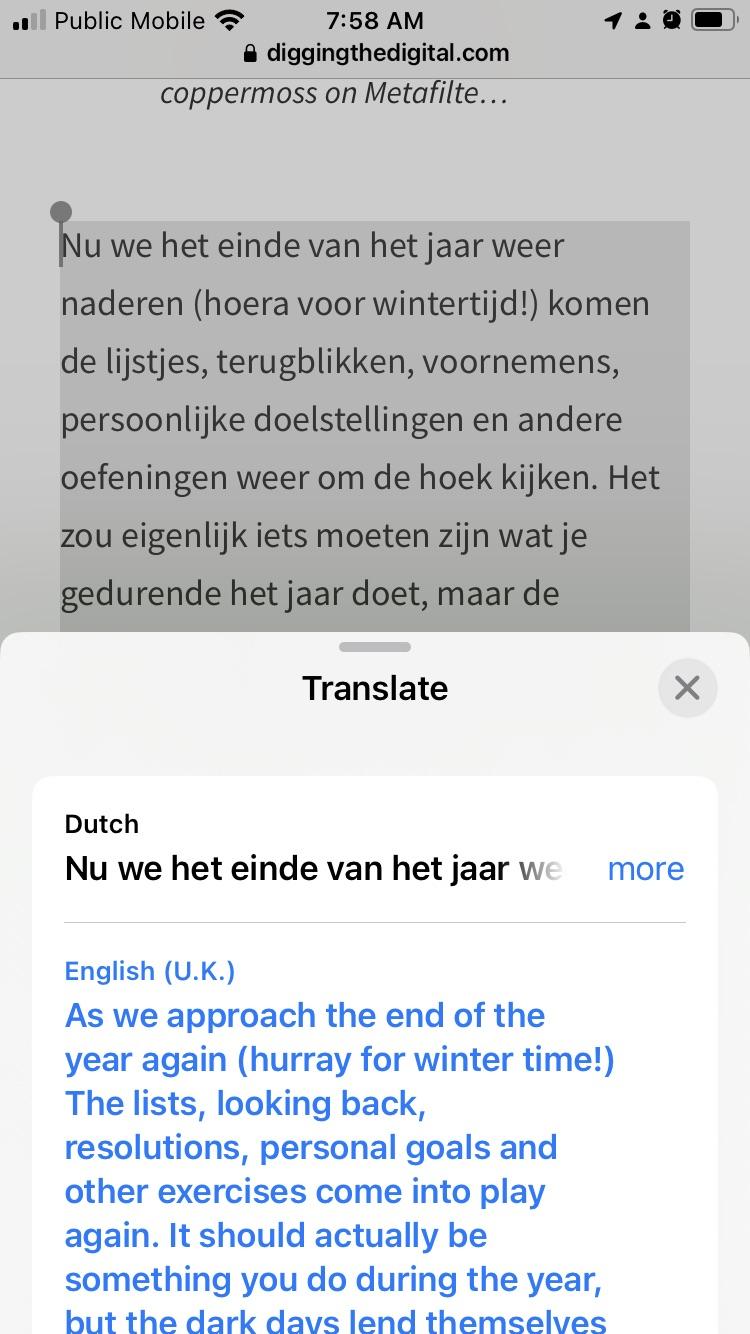
When the built-in translation features for iOS were first launched the list of language pairs was limited, to the point where I stopped even trying to use the feature, as Dutch, Swedish, Danish, German weren’t on the list.

I discovered this morning that, although Swedish and Danish are still absent, Dutch and German have showed up. Which makes it a little bit easier to read the blogs of friends like Frank.

🗓️

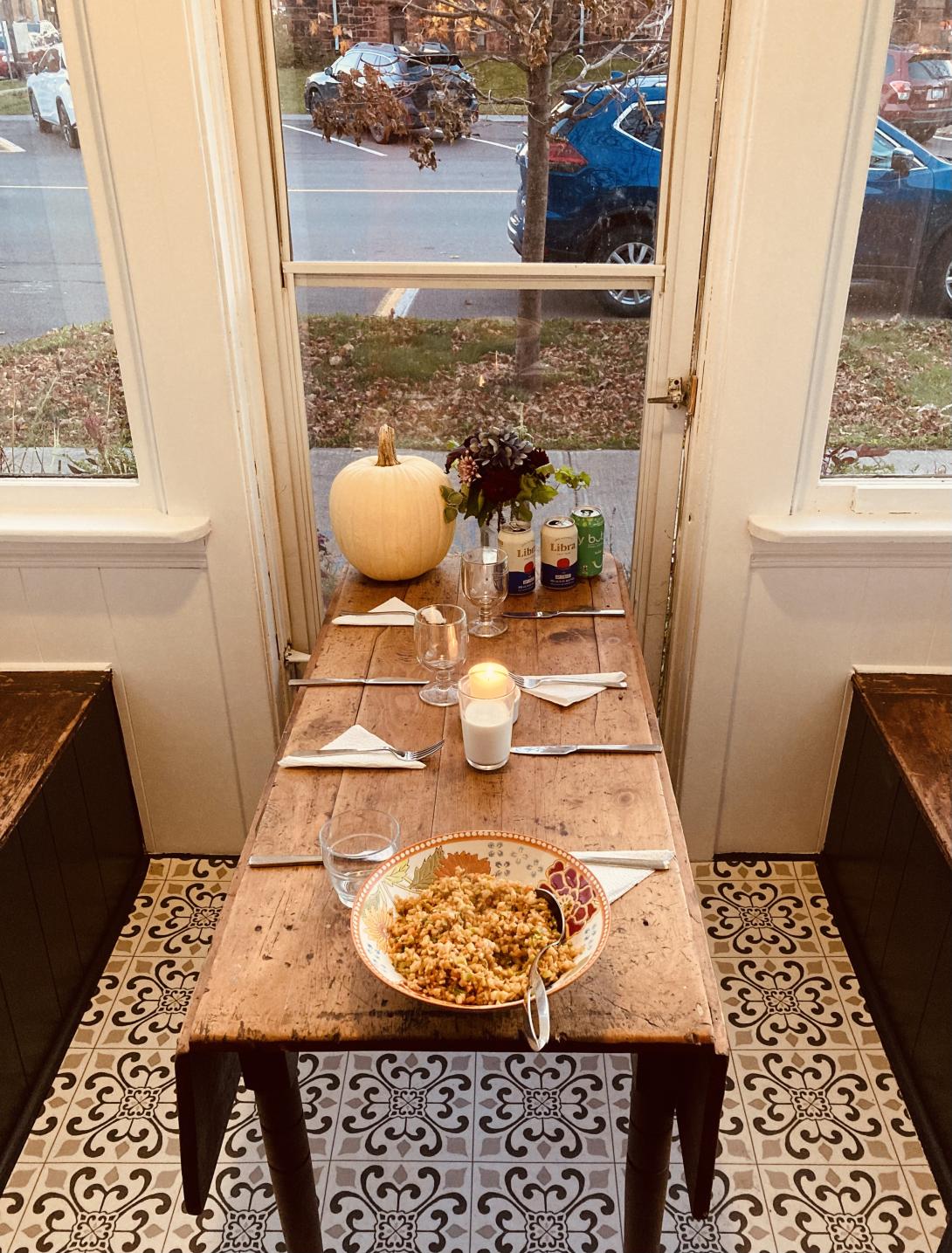
With the dining room table taken up with Hallowe’en-related activities, we needed an alternate place to eat supper.

🗓️
100 Prince Street  •  Vestibule  •  Dinner

In Travel, the autism spectrum, and the pandemic, Edward Hasbrouck writes, in part:

Re-emerging from our COVID-19 cocoons is disorienting and stressful. This psychological phenomenon was anticipated almost 50 years ago by Isaac Asimov (often assessed, in retrospect, as having been on the autism spectrum) in his prescient pandemic must-read novels of physical distancing and virtual meetings, “The Naked Sun” and “The Robots of Dawn”. 

This aspect of the return to a post-pandemic “new normal” is true for everyone, but perhaps especially true for people on the autism spectrum.

For more than a year after the outbreak of COVID-19, I was never further from my home in San Francisco than I could get, and return, in a day, by bicycle. I resumed travelling only after I was vaccinated, at first only to see elderly and ailing relatives.

The first time I travelled to a gathering of strangers in a distant city was for the annual meeting of the Peace and Justice Studies Association in October 2021. After a year and a half in the familiar environs of my home, previously routine travel experiences such as walking down a street in Milwaukee and eating with a group of strangers at a campus conference-center buffet seemed exotically unfamiliar and induced an almost overwhelming sensory overload, as though I were on some psychedelic drug.

My last trips outside Atlantic Canada were three years ago: a work trip to New Hampshire by air and EV in September 2019, followed, two months later, by a trip to Ontario when my father died. I haven’t been outside of North America since the fall of 2018, when Olivia and I travelled to Europe.

Previous to that I enjoyed a privileged life of regular travel to the US, Asia, and Europe; indeed my emotional resilience as a individual, father and partner on this small island was, to a great extent, predicated on being able to regularly leave this small island. Robbed of that opportunity by circumstance (illness, death, grief, caregiving, and the stretch goal of COVID) has changed the foundations of my life in ways that I’m just now beginning to realize.

There is a strong undercurrent of wanting to get out on the open road running through me; it’s a mix of wanting to throw off the shackles of confinement and a need to feed my hungry mind. And yet the complexity of my current situation — partner, kids, school, work, in their various permutations and combinations — makes getting out on that road, especially in a way that affords some spacious clarity, an often-insurmountable-seeming task. To say nothing of the emerging-from-fallout-shelter fears of what the world out there might look and feel like when I’m able to get there.

Edward finishes his post with a question:

As you begin travelling again, or begin travelling further afield, plan to travel more slowly, with rest days and breaks. Leave your plans more flexible. Avoid package tours or cruises that lock in your pace and itinerary. Give your brain a chance to gradually get back into its travel groove. Celebrate the chance to experience the world anew and to see the world with a fresh eye!

Are you travelling again? What seems different than before? Is that because the world has changed, or because your perspective has?

There is no question that my circumstances have changed, fundamentally; at the same time, vestigial perspectives—loneliness, fear, isolation, resignation—remain baked inside me.

I want to emerge into the world, as Edward suggests, and seize a ”chance to experience the world anew and to see the world with a fresh eye.” I want to take this new edition of me on tour, and the prospect of that is exciting, thrilling, hopeful.

And yet I’m afraid that those baked-in perspectives are baked in to an extent that a simple change of scenery isn’t enough to affect.

The only way to find out is to get outta town. I hope to do that. Soon.

🗓️
Travel  •  Edward Hasbrouck  •  Autism  •  Grief  •  Parenting

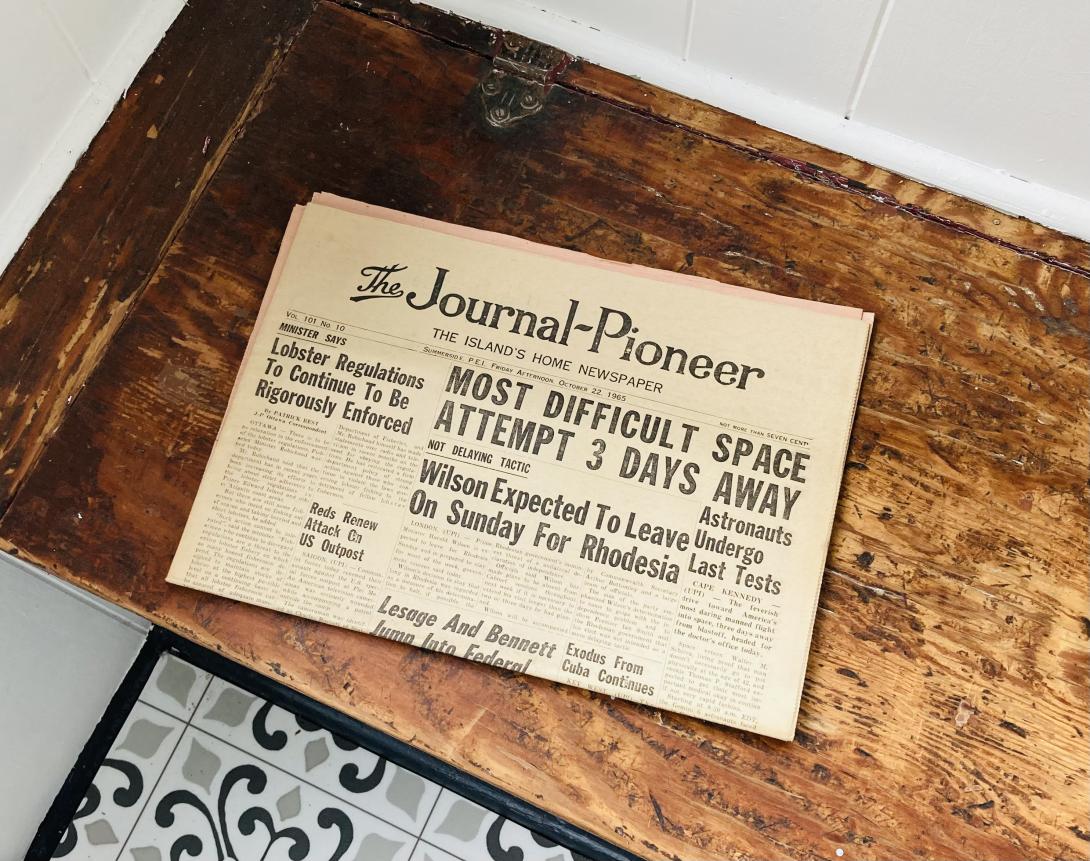
A copy of the Journal-Pioneer for October 22, 1965 appeared in my vestibule this afternoon.

“Most Difficult Space Attempt 3 Days Away.”

You read it here first.

🗓️

About This Blog

Photo of Peter RukavinaI am . I am a writer, letterpress printer, and a curious person.

To learn more about me, read my /now, look at my bio, listen to audio I’ve posted, read presentations and speeches I’ve written, see things I’ve favourited elsewhere, or get in touch (peter@rukavina.net is the quickest way).

I have been writing here since May 1999: you can explore the 25+ years of blog posts in the archive.

You can subscribe to an RSS feed of posts, an RSS feed of comments, an RSS feed of favourites elsewhere, or a podcast RSS feed that just contains audio posts. You can also receive a daily digests of posts by email. I also publish an OPML blogroll.

Instagram • YouTube • Vimeo • ORCID • OpenStreetMap • Internet Archive • PEI.art • Drupal • Github.