The first time I ever touched an Apple Macintosh was the fall of 1984. I was a high school student embedded in the Ontario Science Centre, a position which afforded the privilege of 24/7 access to the building and its many wonders.

Somehow our tiny cabal of students managed to secure a “master key” that opened every door there, and it was behind one of those doors, a temporary cabin that had been set up in an unused exhibit area, that we came across a collection of Apple Lisa and Macintosh computers; the Lisa had been released the year before, the Mac just that January. We figured out to turn them on. And I was immediately mesmerized.

For context: I’d just that same month purchased a new PC for my own use, a Sanyo MBC-550 that existed in a mysterious realm between a bona fide IBM-PC and a completely proprietary computer; it ran a flavour of MS-DOS, and operated just like a PC. Or at least just enough like a PC. Many essays were typed on that computer. And many BBS systems were dialed into.

But that computer was nothing like the Macintosh: there were no graphics to speak of (Windows 3.0 wasn’t to be released until 6 years later), and so whereas at home it was all backslash-this and backslash-that, in the secret Science Centre Mac lab I got to use a mouse, a desktop, a drop-down menu, and all the other innovations that, 33 years later are still very much part of how I use the MacBook Air upon which I now type.

All of which is to say: isn’t it great that, thanks to the Internet Archive, you can now run a classic Mac in a web browser!
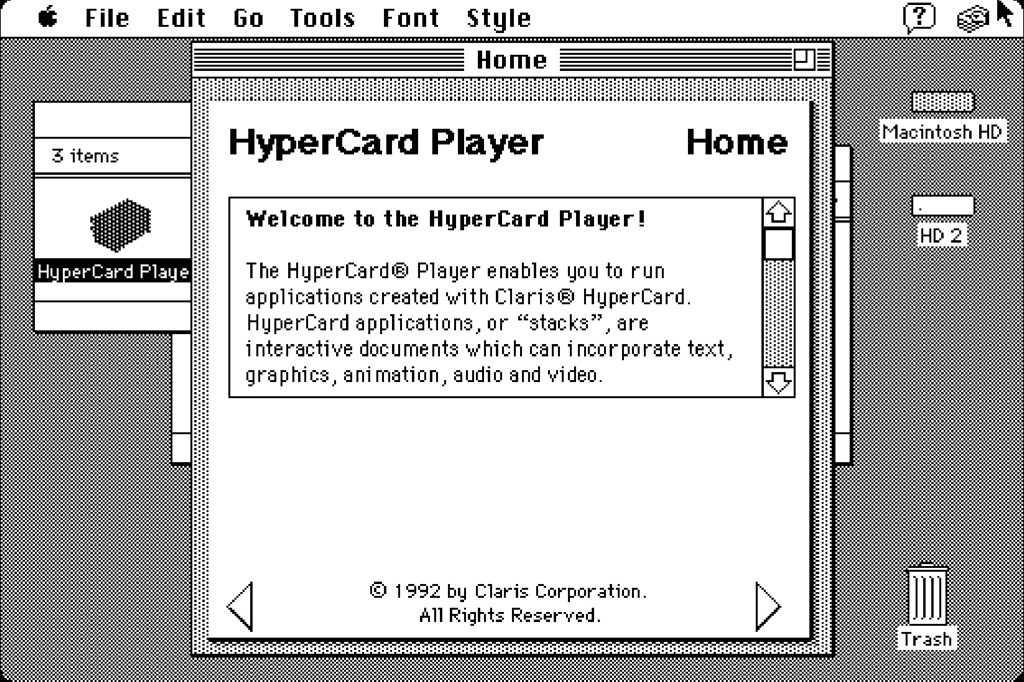
MacPlus in Emulation on my MacBook Air

Some years later, at Trent University, I had more permanent access to a Mac, and got to dive deep into HyperCard, the hypermedia authoring tool that still, all these years later, so many of us from that day pine for lovingly. HyperCard was, for me, the gateway drug for everything that I’ve done since: the agency that it gave one to shape digital information landscapes was profound. This 1987 episode of The Computer Chronicles–also hosted by the Internet Archive–is a delightful look into the mind of Bill Atkinson, the man who created HyperCard, and about the uses it had been put to in those early days, including an effort to digitize The Whole Earth Catalog.
🗓️
Mac  •  Emulation  •  HyperCard

Since he revealed it last year, I’ve been very fond of Premier MacLauchlan’s conception of Prince Edward Island as “the mighty island” and, even better, the “isle of might.”

I was disheartened, however, by the facile video that unleashed this notion on the larger world. I couldn’t put my finger on the heart of my discomfort, though, until I rewatched it with Oliver tonight and heard the following line:

We didn’t get the memo that said “you can’t,” we got the one that said “anything is possible.”

The thing is: there aren’t two memos.

Wiktionary describes the idiom like this:

To be aware of the current state of affairs.

He hadn’t gotten the memo that there were too many strip malls.

Didn’t you get the memo about gasoline prices?

So let’s assume a memo that went out that said “you can’t.”

The idiom works if, say, Bob then goes out and runs a marathon. “I guess Bob didn’t get the memo!”, his friends could rightly exclaim.

But in this or no other situation is there a competing contrary memo; Bob didn’t run a marathon because he read an “anything is possible” memo, he ran a marathon because he didn’t read the “you can’t” memo.

The use in the “mighty island” video thus breaks the idiom, and not in a witty way, but in a “bad copywriting” way.

And this bad copy not only harms the video directly, but it serves to accentuate that the overarching “rah, rah, we’re totally plucky and awesome” tone of the video is a bad fit for a metaphor that is, at its heart, proud, humble, and ironic.

It’s time to go back to the drawing board and get “the mighty island” the brand support it deserves.

🗓️

Once you start knolling, you can’t stop.

🗓️

We used to be religious followers of the 70 Mile Coastal Yard Sale, held each September along the southeastern shore of Prince Edward Island. Among other things the sale allowed us to gain insight into the Christmas gifts of the previous year that didn’t “take”–the bread makers, exercise devices, etc. that had been gathering dust long enough to get put out for sale. Sometimes you’d see the same items available for sale the next year further down the road, as they gradually got repurposed through the community.

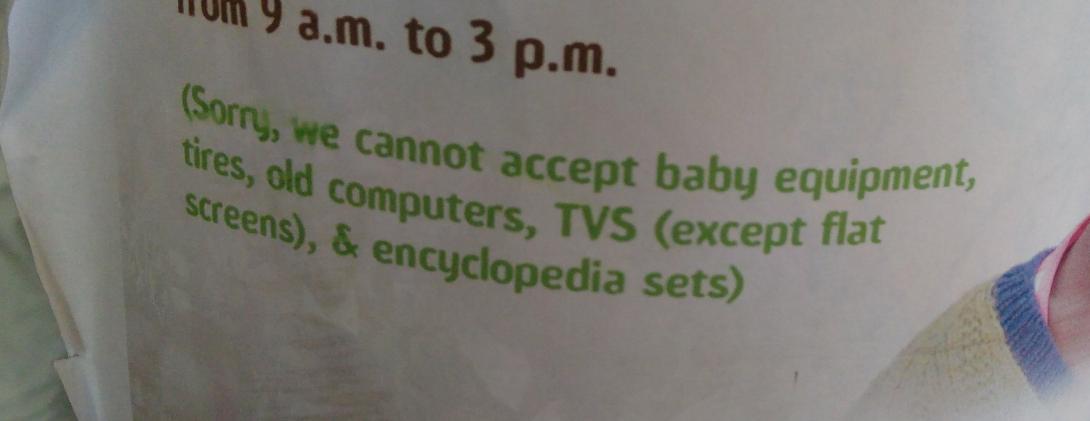
I spotted this Mikinduri Children of Hope Yard Sale notice this morning and noticed they include a list of items that are simply unsaleable enough to be useless for their fundraising purposes: baby equipment, tires, old computers, TVs (except flat screens) and encyclopedia sets.

🗓️
Yard Sale  •  Poster

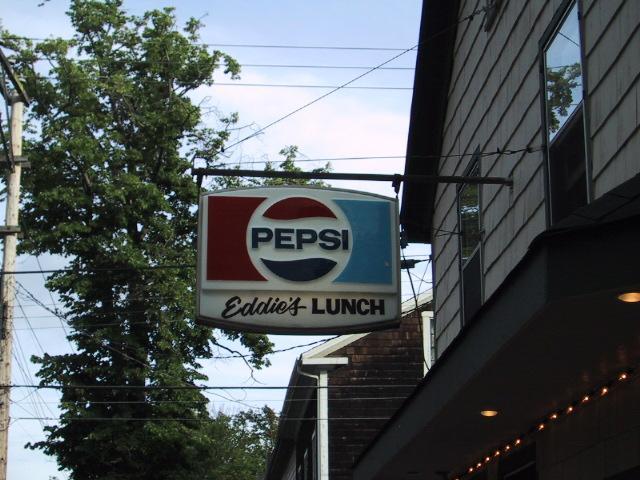
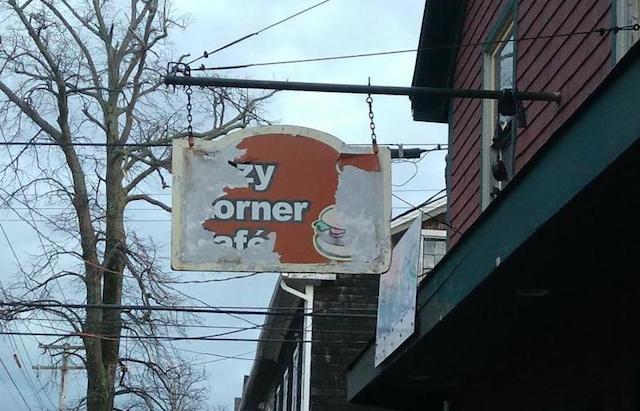
On our walk the other night, passing by 35 Prince Street, I told Oliver about the history of Eddie’s Lunch, Viva’s, Marina Grill and Kozy Korner, which have occupied the corner storefront, in succession, over the last 20 years.

Here’s Eddie’s Lunch in 1999:

Eddie's Lunch, circa 1999

And here’s Kozy Korner, now closed and to be replaced, we are told, with yet another restaurant:

Kozy Korner, 2017

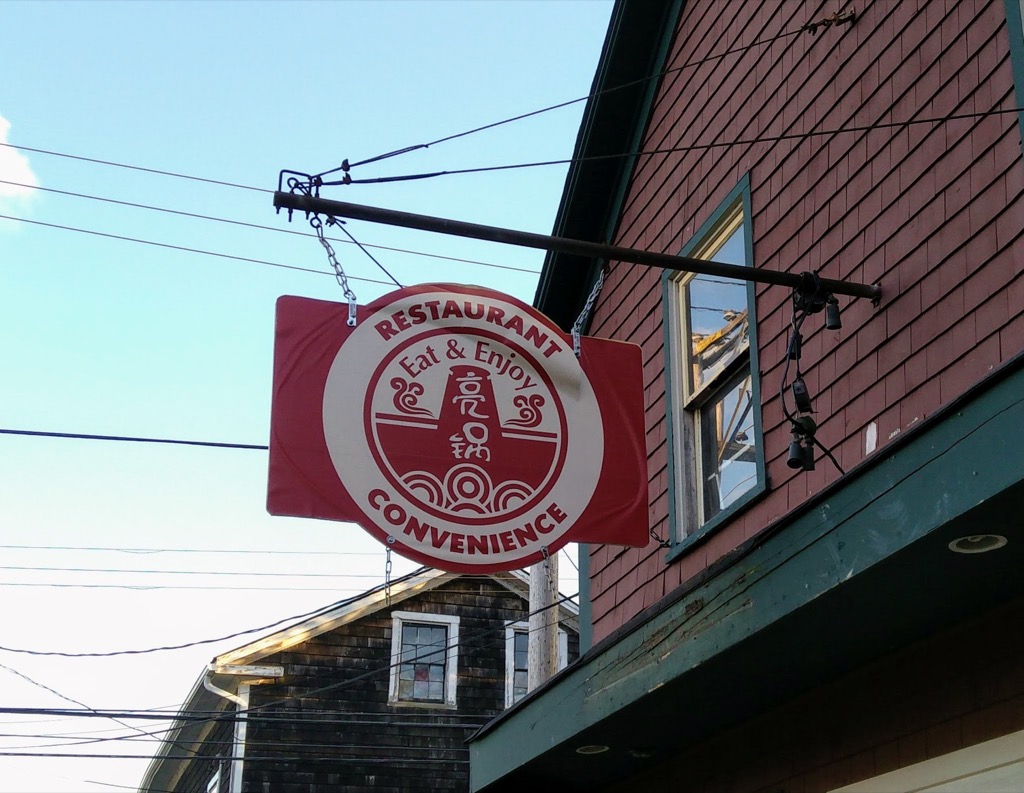
Update in November 2017: the store at 35 Prince Street is again being renovated–from the looks of things it’s a “down to the lathe” renovation inside. A new covering on the old sign has gone up. The new place hasn’t opened yet, and the sign’s already peeling, which doesn’t bode well; perhaps it’s only temporary.

Eat and Enjoy sign in November 2017

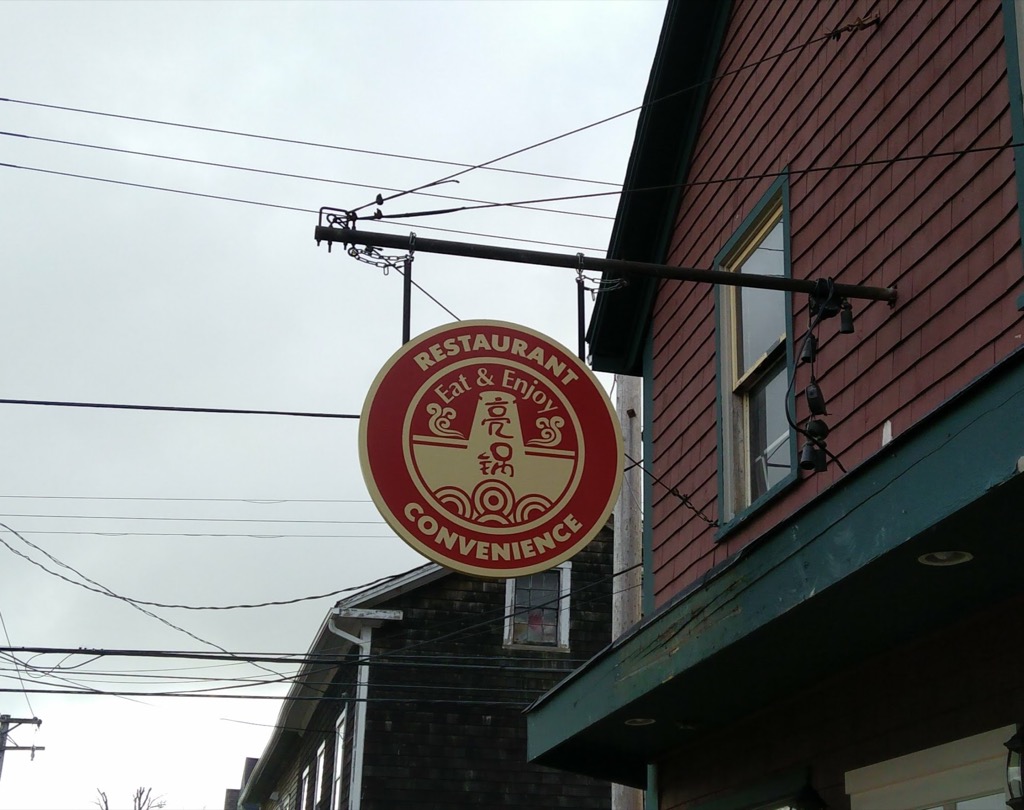
Update in December 2017: the temporary, peeling sign that was pasted over the old sign, has been replaced with a purpose-built sign. There’s a lot of activity inside this week, and the convenience store shelves are stocked with M&Ms, so I suspect that the re-opening is imminent.

Eat and Enjoy Sign, 35 Prince, December 2017

Update in April 2019: The Eat & Enjoy Restaurant opened in January 2018 and lasted about 9 months before it, at its companion convenience store, closed. We ate there once, and had a nice hot pot meal.

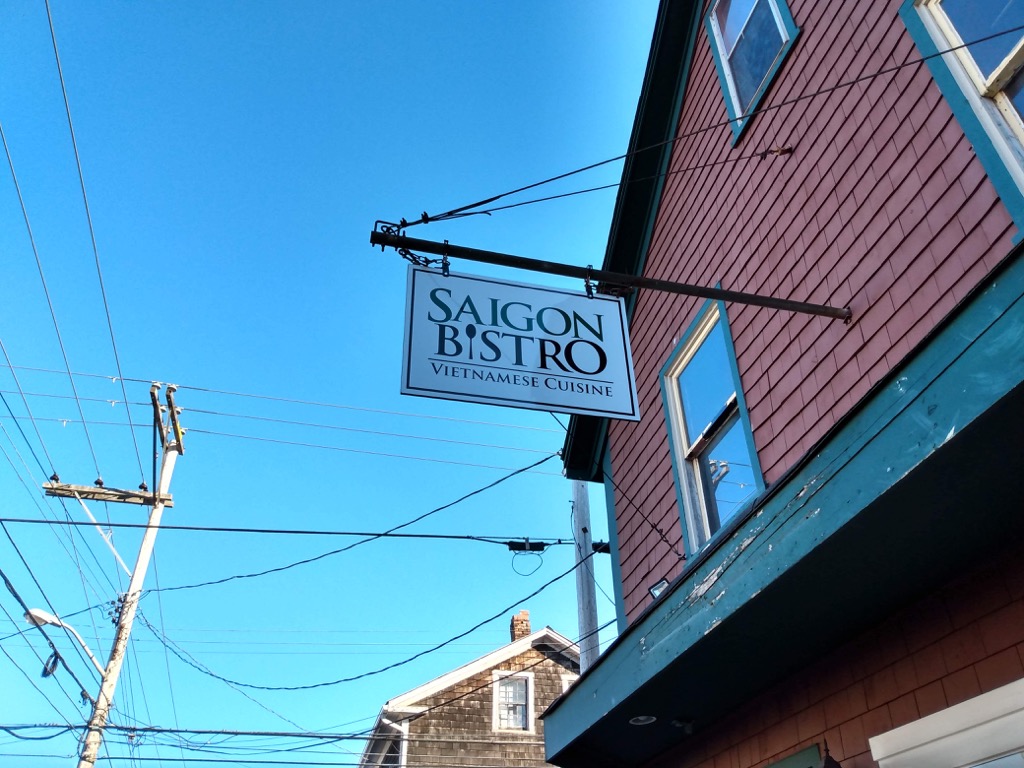
On April 25, 2019 a new place, Saigon Bistro, opened in its place:

Photo of Saigon Bistro sign at 35 Prince St.

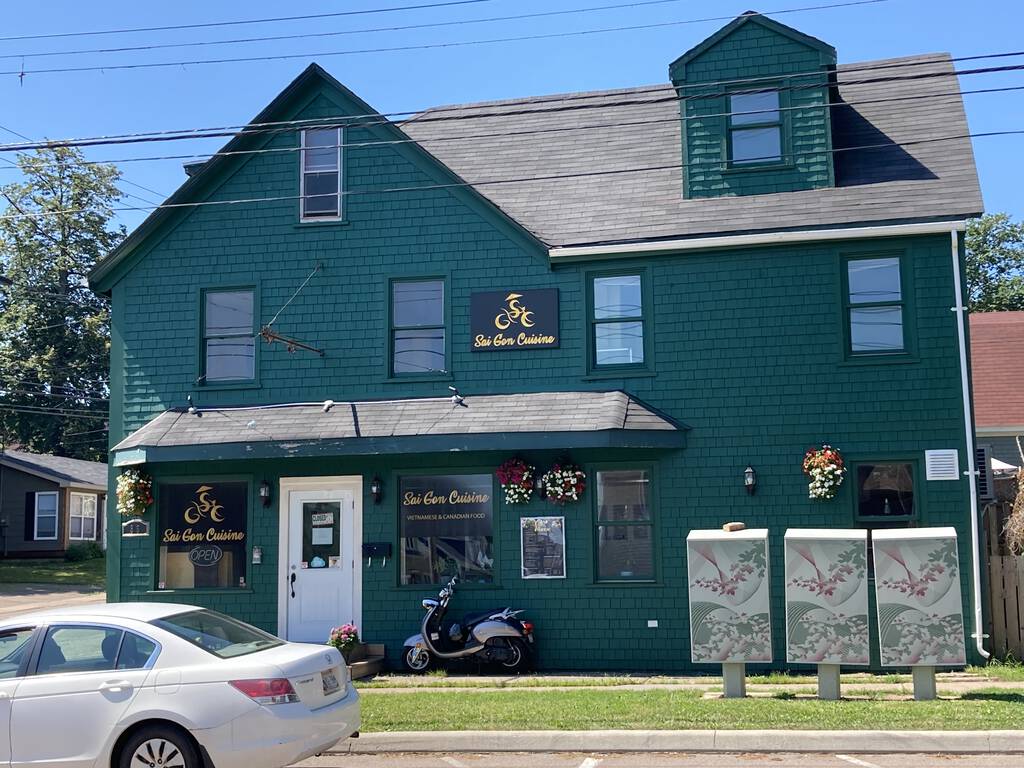
As of July 27, 2020, Saigon Bistro’s signage was replaced with Sai Gon Cuisine, and a repainted-in-green building. For the first time since the Eddie’s Lunch days the main sign is now mounted flush on the building rather than on the hanging signpost:

Sai Gon Cuisine signage.

🗓️
Eddie's Lunch  •  Viva's  •  Marina Grill  •  Kozy Korner  •  Restaurants  •  Charlottetown

Semantic Web Systems resources, by Amy Guy, is a remarkably clear-worded introduction to triples, ontologies, and related topics. If, like me, things like RDF have always existed in the “yah, okay, I sort of understand all that enough to get on” space of your brain, this is a good primer. Especially if you’re trying to grok Solid (in the introduction for which I found the pointer to it).

Triples are almost-human-readable statements, made up of [subject, predicate, object]. When you put lots of triples together and there is overlap in subjects and objects, they form a graph; subjects and objects are nodes (circles), and predicates are arcs (lines).

🗓️
Semantic Web Systems  •  RDF  •  Triples

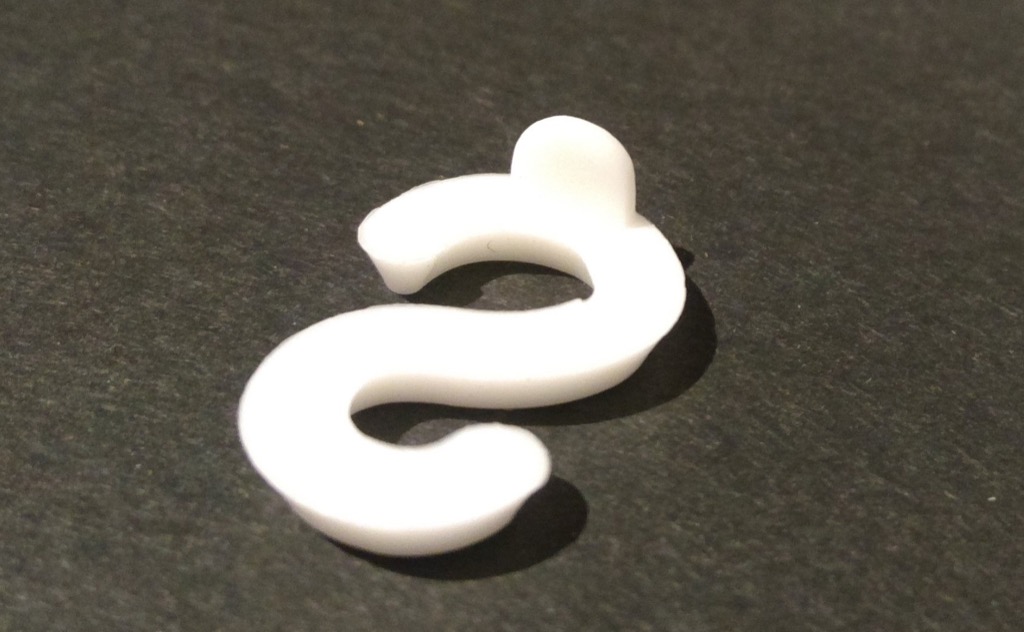
Sarah put a letter S on the night train from Borden to Charlottetown, and it was hanging outside our front door when we opened it late last night, thanks to the kindness of a Handpie Company customer who’d been headed our way.

This was the key to unlock the secrets of taking Pie Man № 1 and adding struts (wings? arms?) to allow him to slot into Sarah’s menu letterboard.

The Letter S

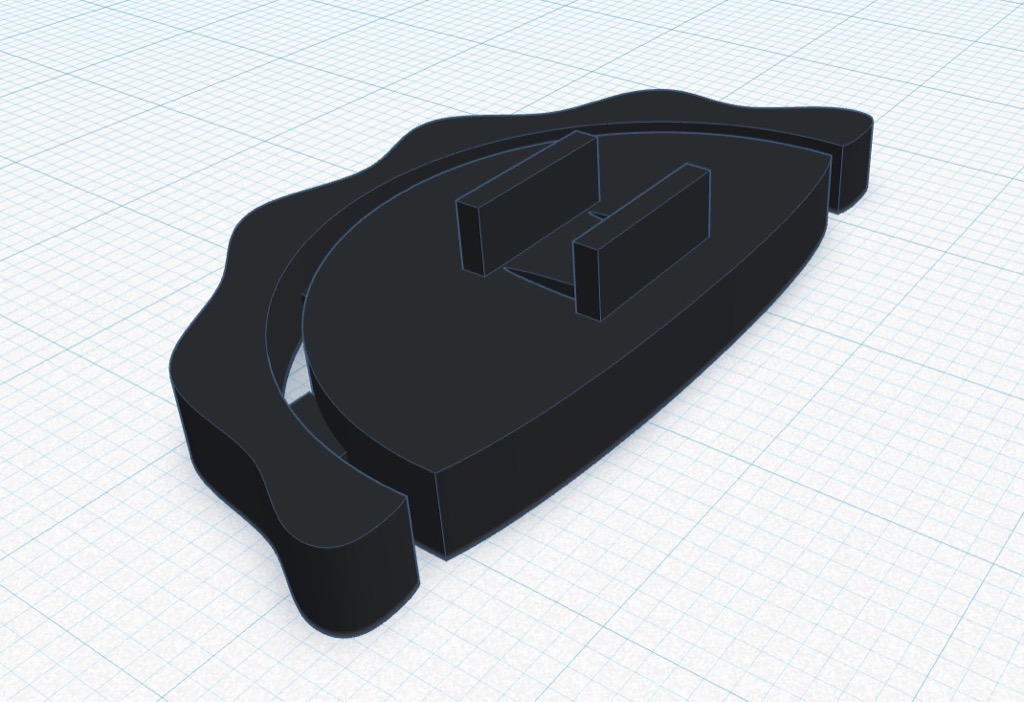
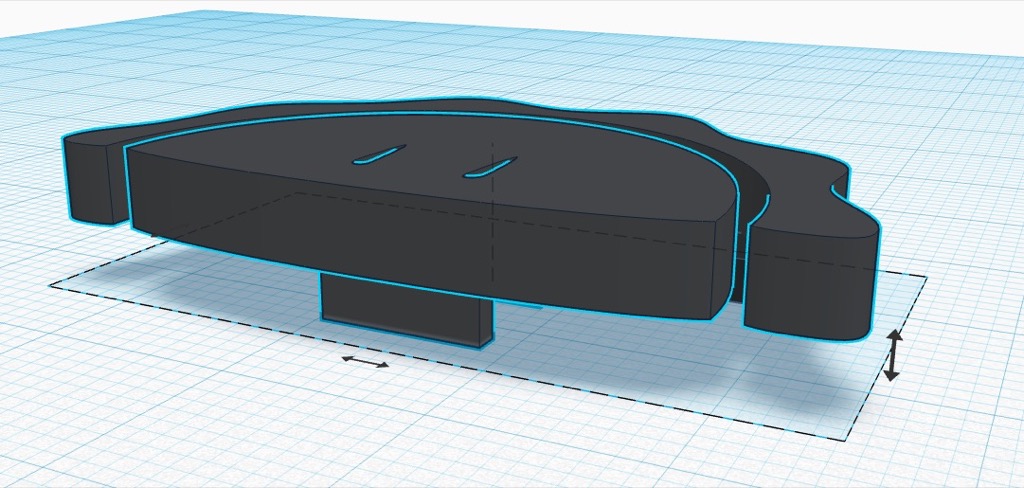
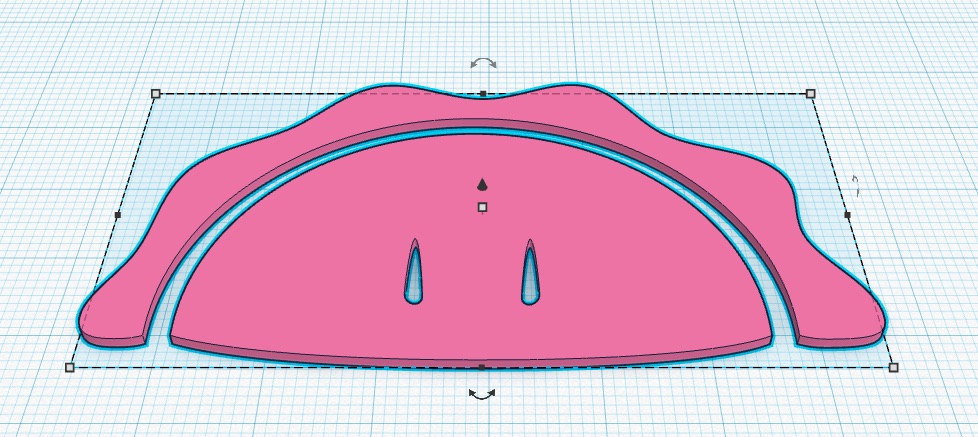
Using my calipers, I measured the depth of the strut and found it to be 3.45 mm deep; earlier Sarah had told me that the spacing between the slots on her letterboard are spaced at 1/4 inches. So I altered the original model of Pie Man in Tinkercad and added two 3.45 mm struts, spaced 1/4 inches apart:

Pie Man in Tinkercad, with struts

I loaded this new model into Cura, exported it as a G-code file, and set it printing on the Monoprice Select Mini. To ensure that it adhered to the bed, I told Cura to give it a wide “brim,” which is a single layer surrounding and loosely coupled to the model.

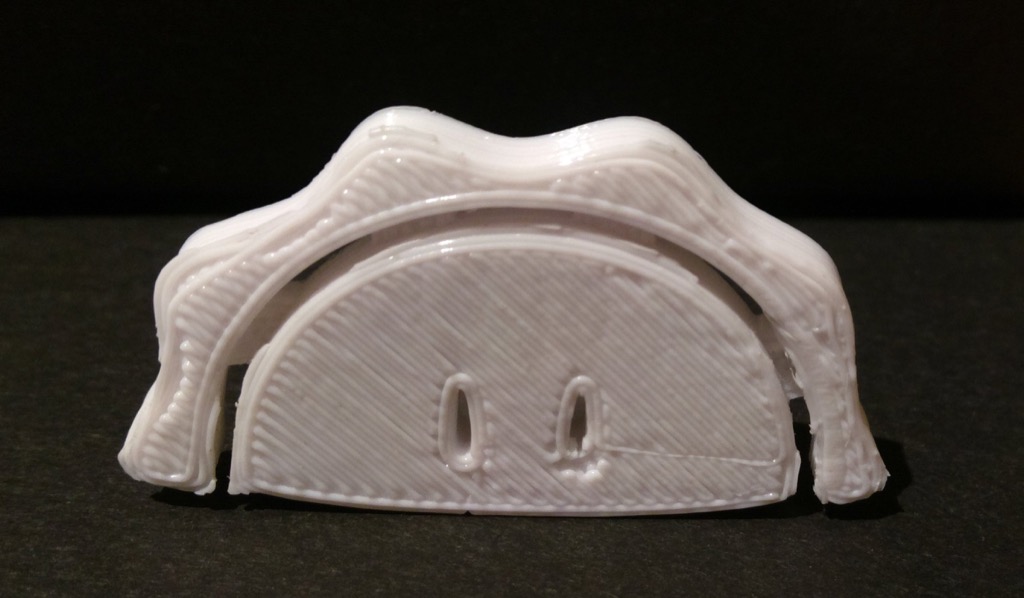
When Pie Man № 2 emerged, it was immediately apparent there was a problem: because the “face” was now printing face down on the bed, it was gnarled and ugly in a most unappealing way. I was able to clean it up somewhat by slicing off the remnants of the brim with a knife, but it still wasn’t Handpie Company-worthy:

Ugly Pie Man

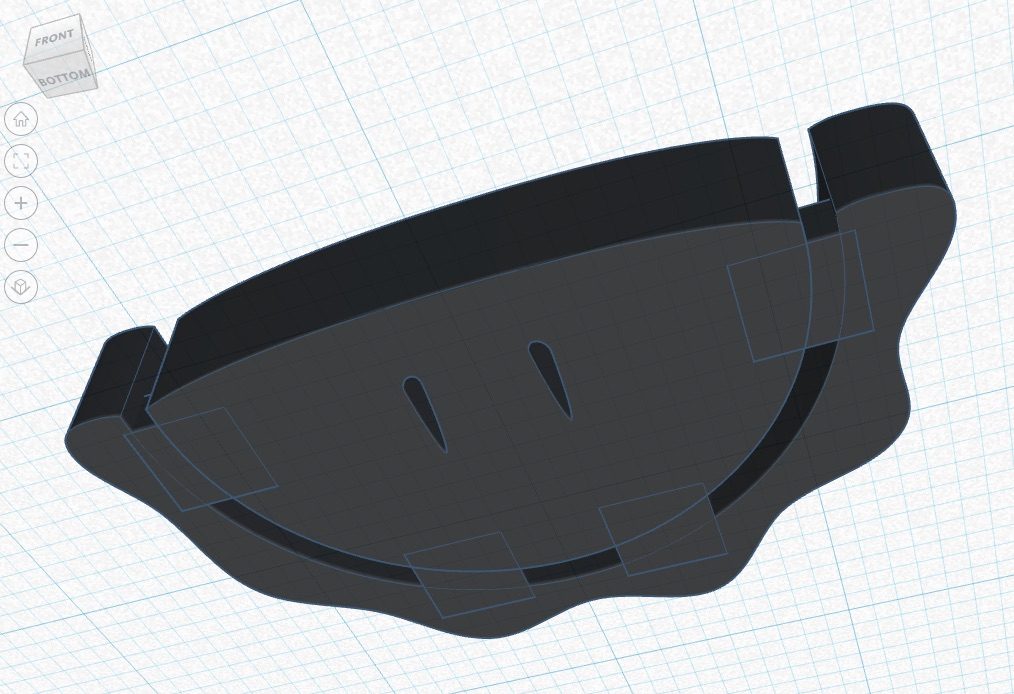
For Pie Man № 3, I decided to try to solve this problem by flipping him over in Tinkercad, so that the face would be face up on printing:

Pie Man upside down in Tinkercad

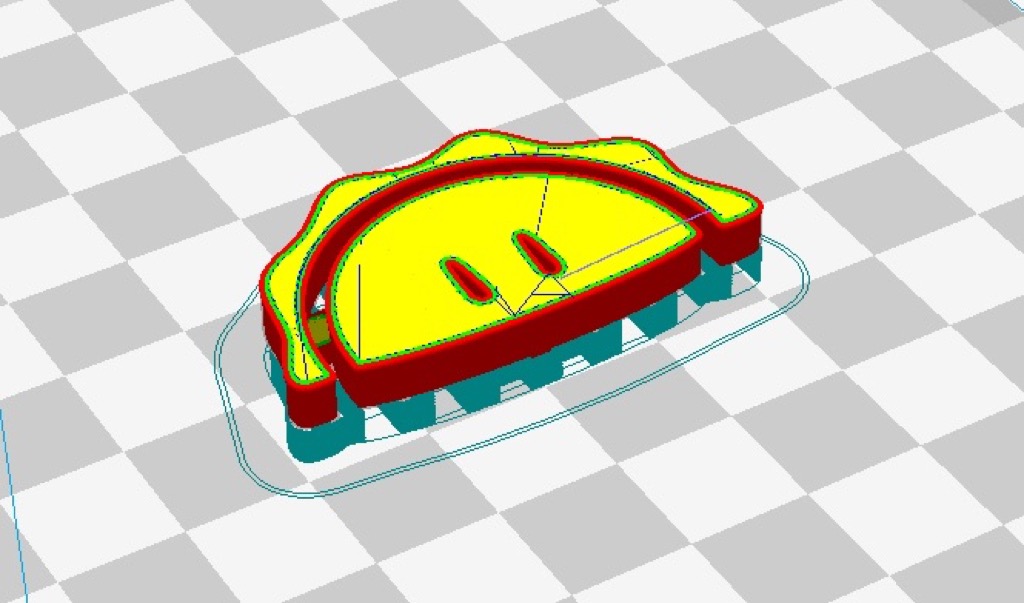
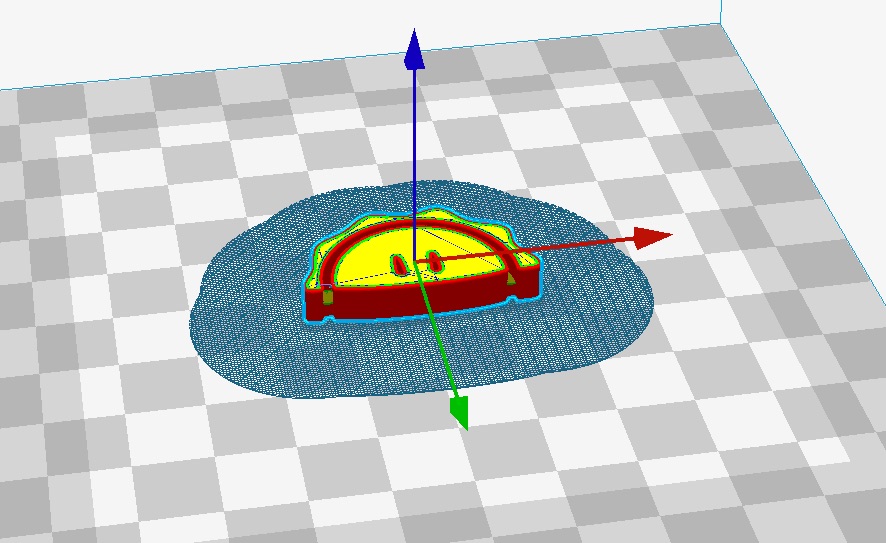
To allow this to print without collapsing in on itself, in Cura I selected the “enable support” option to print support material around the struts that I could later strip away; here’s what Pie Man looked like in Cura just before I output the G-code:

Cura model upside down, showing support material

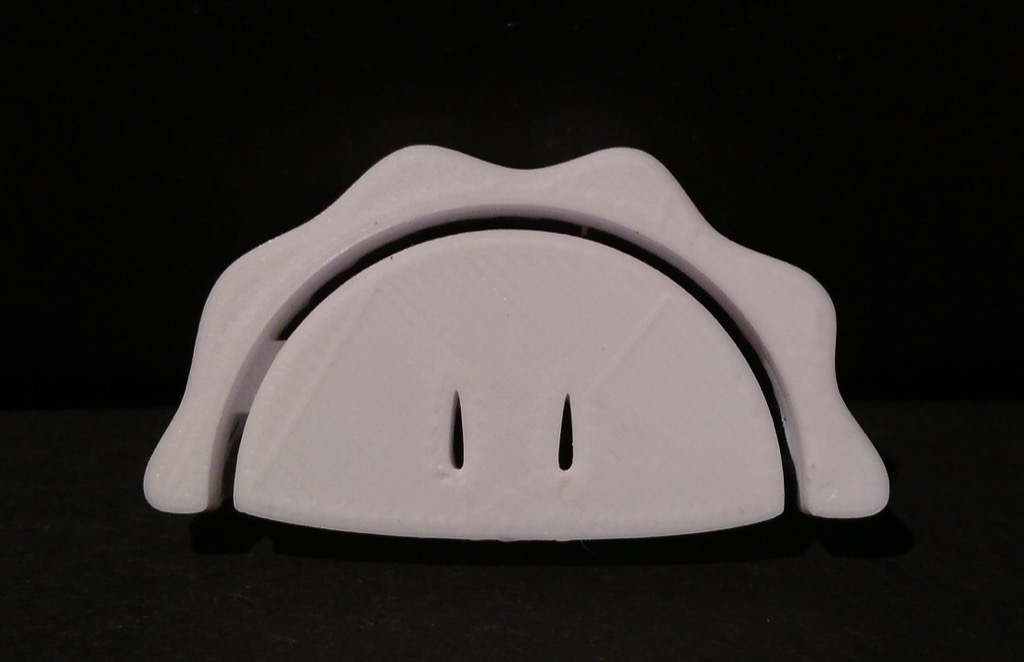
Pie Man № 3 also took 35 minutes to print, and when he emerged from the digital womb, he was a much more impressive sight:

Pie Man 3

Curiously, I did something wrong when I flipped the model in Tinkercad, so only a single one of the “joiners” that keep Pie Man’s hair attached to his face ended up printing (you can see this on the left side). This turns out to have been a fortuitous mistake, as it turns out to be just strong enough with a single connection, and the result is more visually pleasing.

I’ll get Pie Man № 3 up to Sarah for field testing as soon as possible (Are you headed to Borden this weekend? Do you have space for a small, friendly Pie Man in your car? Please let me know).

If it looks like he’ll work out, I’ll print a whole family. Stay tuned.

🗓️

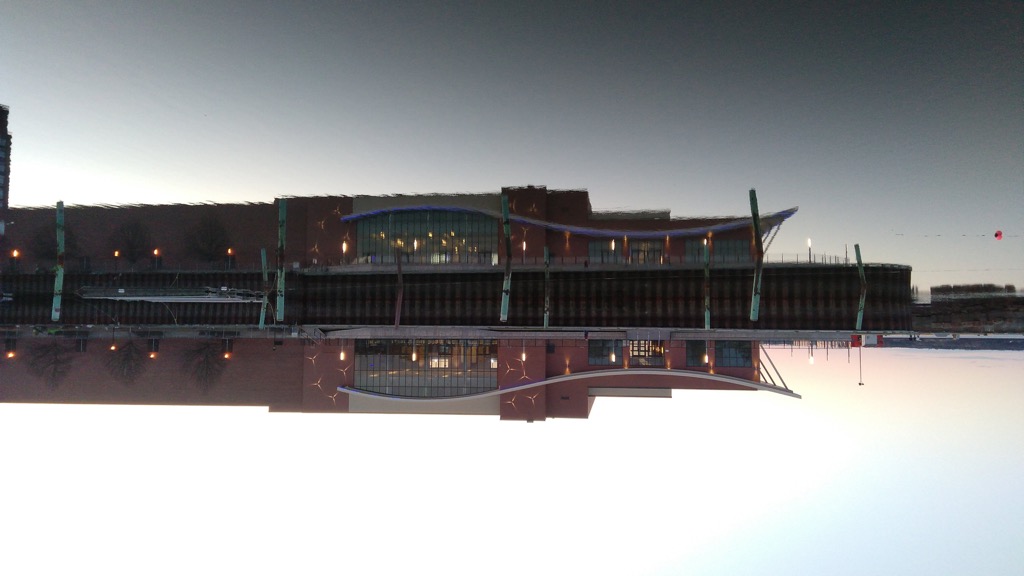
The water at Confederation Landing Park was as smooth as glass last night, so photos we took across the marina look remarkably realistic when turned upside down.

PEI Convention Centre Upside Down

🗓️

With a new season of The Amazing Race now underway, Edward Hasbrouck is back with his episode-by-episode commentary. For episode one he focuses on the difficulty that racers, not allowed to use smartphones, have with seemingly simple navigation tasks:

Travellers today aren’t likely to need to fall back on their ability to handle horses. It’s still common, however, to find yourself in a spot where your smartphone is broken, lost, stolen, or has no signal. It’s still worthwhile, I would argue, to learn and to maintain your ability to function without a smartphone, even if you carry one and use it as your primary tool for many tasks. The more you rely on your smartphone, the more you should have a “Plan B”. 

Before you leave home, make a list of all the things for which you use your phone. Think about each of them, and how you would accomplish the same task without your phone, or whether you would be willing and able to do without it. 

What are those functions for which you have come to rely on your phone, especially when you are away from home? Or for which, if you are younger, you have never used any tool other than a cellphone? (What’s a “phone booth”? What’s a “cybercafe”?) What’s your “Plan B” for travel without your phone? 

I once prided myself on my ability to, using only the lay of the land, find a muffler shop in any city I landed in (this was of necessity: my cars of yore were always in need of muffler work when I traveled cross-country). These days, though, as the urban landscape has changed, and my navigation skills have atrophied in the age of Google Maps, I’m not so sure.

Indeed, when we were in Tokyo in 2013, we were cemented to our smartphone and its Google Maps-powering GPS for almost everything. We didn’t have a plan B (other than “a spare battery”), and had the phone failed us we would have had an interesting time getting back to our hotel via celestial navigation.

It amazes me to think back to my time in Seoul, in the late 1990s, when I lost my travellers cheques and got them replaced with benefit of neither mobile phone nor the ability to speak Korean. As I pointed out when I wrote about that episode earlier, the real question to ask yourself not is now “what do I do without my phone,” but rather “what do I do if I lose my debit card?”

The ability to stick a card into an ATM anywhere from Rochester to Riga and withdraw local cash is something we take for granted, at least when traveling in the north. In many situations losing my debit card would sink me far deeper than not being able to use Google Maps (it’s for this reason that we have the “carry an emergency $50 somewhere” rule when traveling).

🗓️

A couple of months ago I stumbled across this glowing review of the Monoprice Select Mini 3D printer on YouTube. I previously knew Monoprice as a company that sold good quality cables and computer accessories, shipped to Canada at reasonable prices. I didn’t know they dealt in 3D printers, but my good experiences with them on the USB-cable-front prompted me to take a look.

Alas, they were sold out of printers; on a lark I added my email address to the “alert me when this is off backorder” system, and forgot all about it.

Then, three weeks ago, I got the email: we have printers.

For $199.99 US, what did I have to lose? So I immediately ordered one (they were sold out shortly thereafter).

Last Friday afternoon, it arrived in our community mailbox (its box fits exactly in the size of the larger of the two package bins in the mailbox; someone did their package-sizing right!).

I was consumed with other activities until Saturday afternoon when I loaded the box onto a dolly and rolled it along to the office.

On the way I stopped in for coffee at Receiver, and while sitting in the window drinking my macchiato, I had a chat with the personable Sarah Bennetto O’Brien, proprietor of the recently-opened Handpie Company in Borden.

“What’s in the box?”, she asked.

“Oh, it’s my new 3D printer,” I replied, quietly ashamed at the implicit geekiness.

I need not have worried.

“I’ve been looking for someone to 3D print me something!”, Sarah exclaimed.

What followed was an agreement that I would try to print her a tiny Pie Man for her menu letterboard, said “pie man” being the visual identity of the new enterprise:

The Handpie Company logo

The 3D printer wasn’t even out of the box yet, and I had my first customer!

A few days later, Sarah emailed along a high resolution JPEG of Pie Man.

I used the handy Online SVG Image converter tool to convert this JPEG to a vector SVG file:

I then imported this SVG into Tinkercad, Autocad’s web-based 3D design tool:

The Pie Man imported into Tinkercad

I immediately realized that I had a problem: Pie Man is actually two objects, not one. That’s fine for the page, but for a 3D object, if I just printed it as-is it would end up as Pie Man Hair and Pie Man Face.

To bring hair and face together, I used Tinkercad to drop some “struts” into four places; thickening up and sizing Pie Man in the process. I made the struts shallow enough so that, I reasoned, they wouldn’t be noticeable on the final object:

Pie Man in Tinkercad with struts

With Pie Man now successfully held together, I exported him from Tinkercad as an STL file. I imported the STL file into Cura, the excellent and free program for converting 3D models into the G-code that 3D printers use as their Turtle-graphics-like instructions:

Pie Man in Cura, showing layers view.

I tried to find the best settings for the G-code file by reading Monoprice’s thin documentation and by gleaning hints from the Monoprice Select Mini Wiki. I saved the result on the SD card that was included with the printer, pre-heated the hot end and the bed, and set it printing:

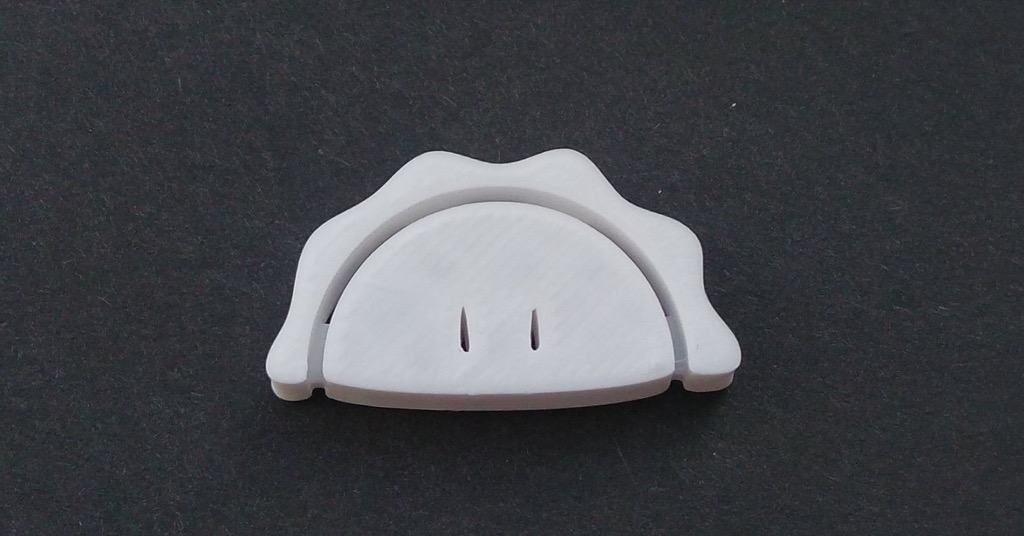
Exactly 30 minutes later, Pie Man № 1 was fully conjured. I peeled him away from the “raft” I’d had the printer create underneath him and, voila, here’s what I ended up with:

Pie Man 3D print number one

I’m very happy with the result: the struts are, as I thought, not too obvious and they don’t detract from Pie Man’s identity, especially when viewed from a distance. His eyes need a little work: I might widen them a little in the model to avoid the mismatchedness that resulted (or I might be able to ream them out with a knife after printing, which might be easier).

The next step is to fine-tune the model for Pie Man № 2, which will have “letterboard” legs attached. To my surprise, this seems like fresh terrain: I thought I’d be able to find existing 3D models to use as the basis for the size and shape of the legs, but I haven’t been able to. So Sarah is going to put a sample letter from her letterboard on the next train from Borden to town, and I’ll use that to work from.

If all goes well, you should see Pie Man, in all his 3D splendor, on the wall at The Handpie Company, before the month is out.

🗓️

About This Blog

Photo of Peter RukavinaI am . I am a writer, letterpress printer, and a curious person.

To learn more about me, read my /now, look at my bio, listen to audio I’ve posted, read presentations and speeches I’ve written, see things I’ve favourited elsewhere, or get in touch (peter@rukavina.net is the quickest way).

I have been writing here since May 1999: you can explore the 25+ years of blog posts in the archive.

You can subscribe to an RSS feed of posts, an RSS feed of comments, an RSS feed of favourites elsewhere, or a podcast RSS feed that just contains audio posts. You can also receive a daily digests of posts by email. I also publish an OPML blogroll.

InstagramYouTubeVimeoORCIDOpenStreetMapInternet ArchivePEI.artDrupalGithub.