This morning’s project: this year’s Christmas card. More work to do for the reverse side, but I was happy with the way the JOY worked out.
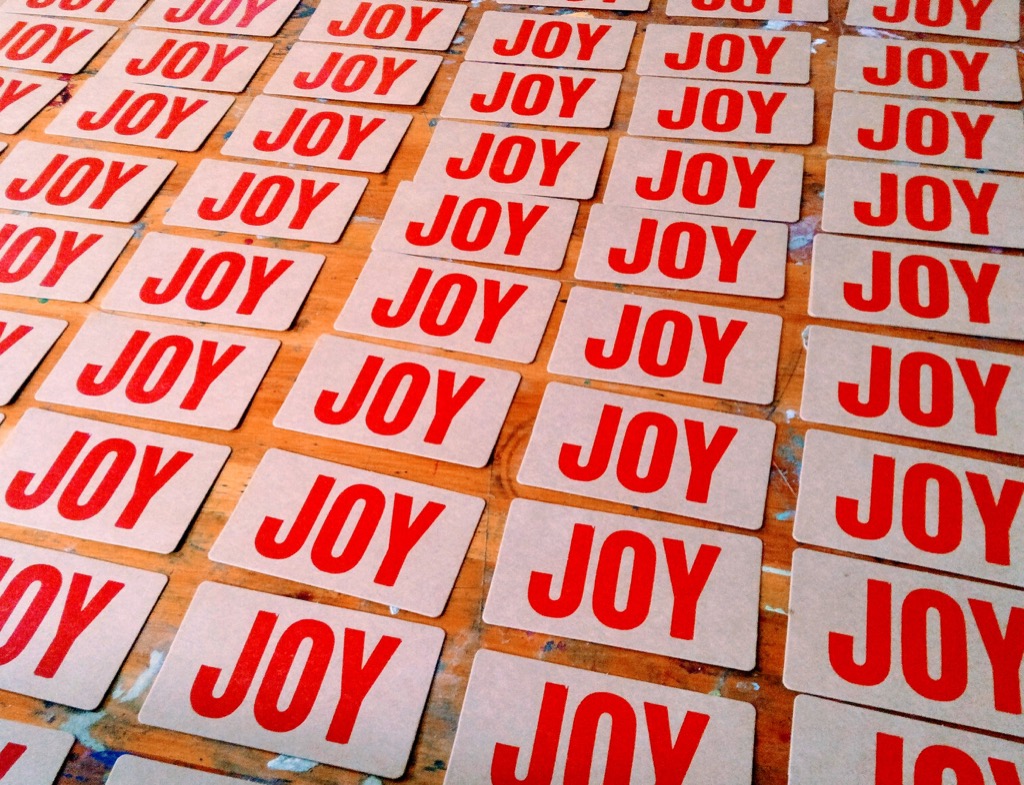

This morning’s project: this year’s Christmas card. More work to do for the reverse side, but I was happy with the way the JOY worked out.
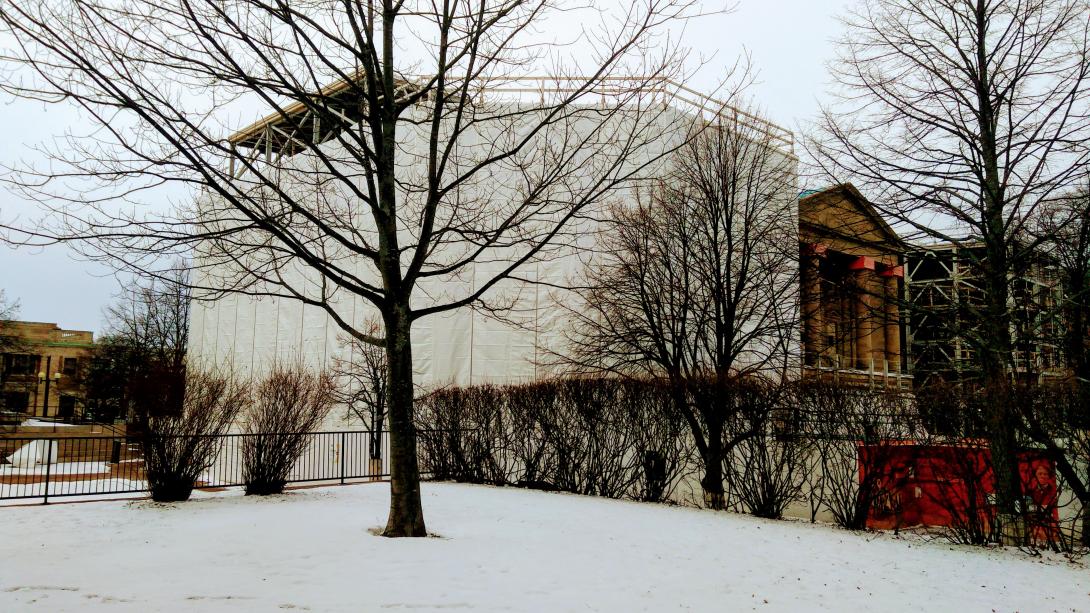
The exoskeleton around Province House is finally getting its skin this week.
Twenty-five years ago, when Catherine and I moved to Prince Edward Island, our early experiences suggested that the Island was a magical place where almost every need could be met simply by asking around.
I arrived, for example, with a 1978 Ford F-100 pickup truck that I wanted to sell and replace with a car; within days of arriving I had it sold. And then replaced with a Nissan Sentra station wagon that also near-magically appeared at the right time.
When Catherine needed studio space, a chance conversation with Charlie, the superintendent of the building on Richmond Street where I was working, revealed that well-known lawyer Lester O’Donnell had just died. Lester had an office on the second floor of the building, a large 3-room suite overlooking the Basilica.
“Would you like to rent it?”, he asked.
Of course we did.
Catherine occupied this lovely, bright space from 1993 to 1995. We were living just a block away at 50 Great George Street in an apartment with no living room, so one of the rooms in the studio became our de facto living room: we’d go home for supper every night, and then come back to the studio to watch TV, read, and so on.
When we moved to Kingston, PEI in the summer of 1995, Catherine gave up the downtown studio and built one for herself in our back yard, a custom-designed 16 by 20 foot wooden building that’s still standing 20 years later. It served her well and, because she’d designed it herself, fit her needs like a glove. She worked there for 5 years, until pregnancy caused her to step back from art work for a while.
Fast forward 13 years: we’ve moved back to town, Oliver’s born, Oliver grows up, Oliver goes to school. Catherine’s back in the market for a studio. She laments the loss of the country studio. She laments the loss of the Lester O’Donnell studio. Then, one day, I’m walking down Richmond Street and I spot Ben Stahl, the artist who took over the studio from Catherine when she moved out in 1995: during our chat it became clear that Ben was in the process of getting ready to move out of the studio, with no heir apparent.
I ran home like the wind and found Catherine: “you’ve gotta phone Charlie: Ben’s moving out of the studio!”
And she did. That very day she made arrangements to move back into the studio more than a dozen years previous.
And she’s been a happy tenant for the decade since.
But now it’s time to move again: the Lester O’Donnell studio is on the second floor, and there are a lot of stairs involved in getting there, too many stairs for Catherine to reasonably manage these days.
Time for another chance conversation, this time with the Parish Administrator here at St. Paul’s Anglican: “there’s not any more space in the basement you’re looking to rent out, is there?”, I asked. As it happened, there was, and after some months of rearranging and cleaning and painting by dedicated church volunteers, the room directly across the hall from the Reinventorium was ready for her to move in this morning:
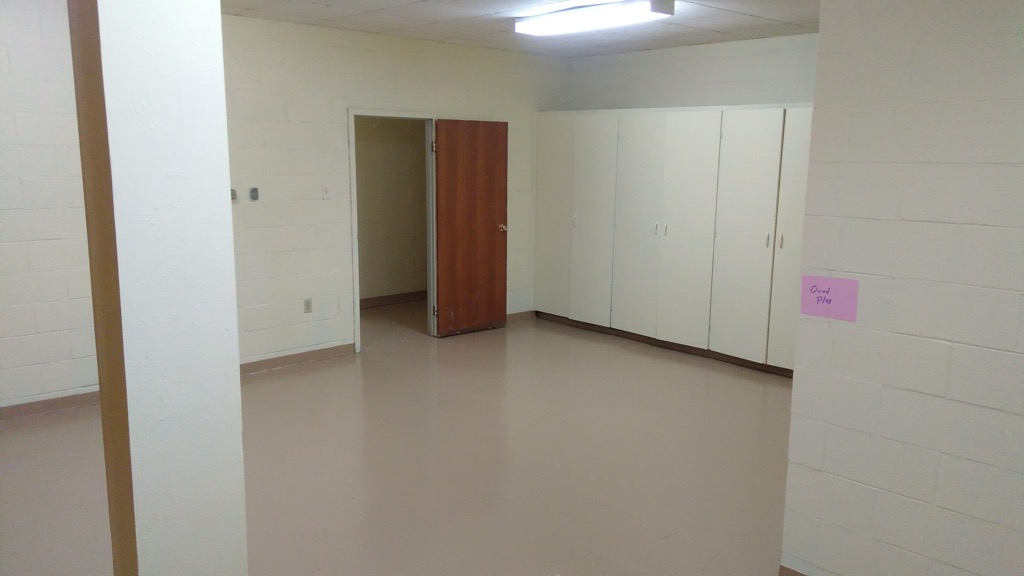
The movers were here for 3 hours, moving things down the block from the old studio, so that space is chock full of the tools of Catherine’s trade now. Lots of boxes to unpack. And the things she left behind to dispose of.
In addition to everything else, this move means that, for the first time in 27 years, Catherine’s work life and my work life will be cheek-by-jowl. We’ve always had our professional spaces and our home spaces; now, across the hall from each other at work, with our house directly across the street, the geography of our daily lives will become compressed into a circle with a diameter of 40 metres.
As I wrote to a friend earlier in the month, the prospect of this is equally terrifying and exciting.
Exciting because it means that we’ll see a lot more of each other than we have in a long time; what with being in love and all, that’s only good.
Terrifying because, well:
Catherine got a good introduction to the building this morning as her arrival coincided with a lunchtime Christmas decorating lunch for all the staff and tenants of the Parish Hall. Turkey soup, biscuits, partridge berry cake and fellowship. So far, the world colliding is going well.
The Autism Coordination Act received Royal Assent in the Legislative Assembly today, just after 5:00 p.m. and is now law.
This is the first time in a Prince Edward Island law or regulation that the word autism has ever appeared.
By way of marking this, might I suggest you watch Welcome to the Autistic Community and 8 Things Autistic Women Want You to Know.
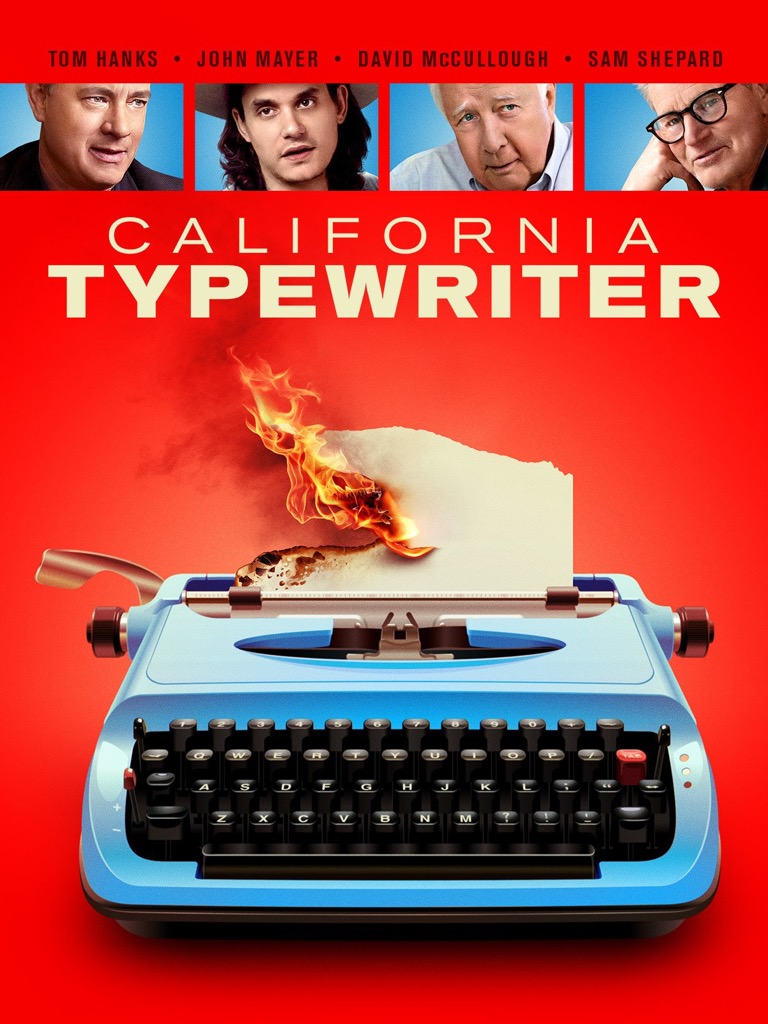
Coming up this Sunday, December 9 at 1:30 p.m. at City Cinema is a screening of California Typewriter that I’ve arranged.
I have a soft spot in my heart for typewriters.
I wrote all of my high school essays and reports using my mother’s Smith Corona electric typewriter, becoming schooled in the ways of liquid paper application and various other dark arts that have been long forgotten by most.
In 1989, somewhere in the Trent University crowd you can watch here, I was pecking away on an antique manual typewriter, selling “one minute novels” for $5.
And, of course, typewriters are spiritual cousins of the letterpress, using ink, paper and pressure to make words come to life.
So when I caught word of the film, I was immediately intrigued. And when my proposal to bring it to Charlottetown was greeted warmly by a small cabal of local typewriter aficionados, the die was cast.
If you look at the listing on the City Cinema website, you’ll notice that the film is presented The Charlottetown Festival of Paper, Ink & Pressure; this is a festival, at least right now, that exists entirely in my own mind. A festival of fancy, if you will. Somebody had to be the presenter.
Please spread the word to your typewriting friends and family. Tickets are $10 at the door; doors open at 1:00 p.m.
Here’s the film’s trailer to whet your appetite:
Oliver and I were listening to the new pressing of the Beatles’ White Album on Spotify last week:
Me: What is a “glass onion” anyway?
Oliver: It’s a glass onion.
Me: But why have we never seen glass onions; I don’t think they exist.
Oliver: Oh, I think the Beatles were stoned when they wrote that.
When you drive an oldish car like ours, a 2000 Volkswagen Jetta, the yearly requirement to have a vehicle inspection done is never something greeted with enthusiasm, as the prospect of “this is the year you’re going to need $3000 worth of repairs to keep your $500 car on the road” is always in the air.
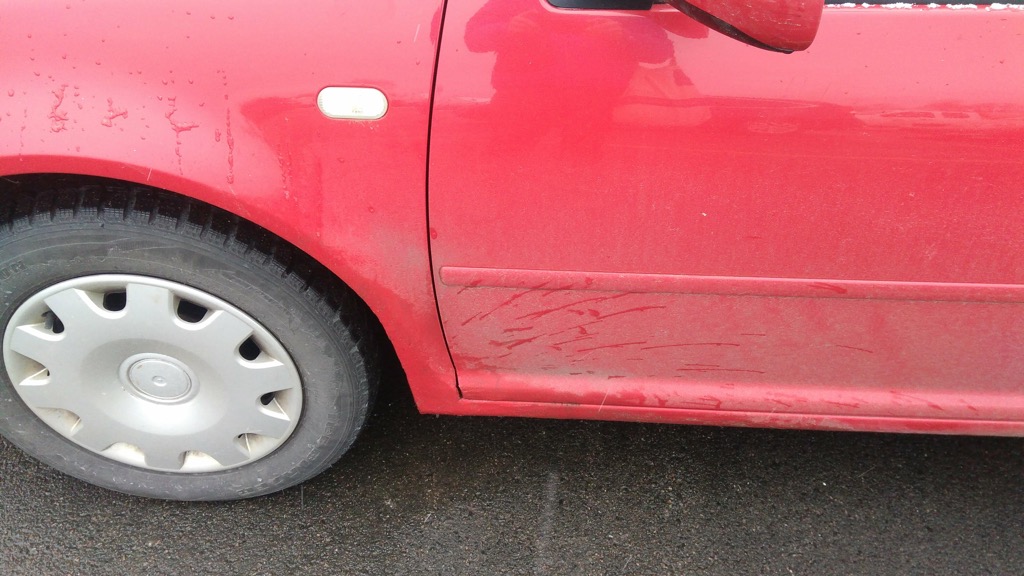
I’ve done pretty well the last couple of years, as the old Jetta has hung together pretty well. This year, though, we finally reached the “it will need body work to pass” stage, as there was a hole in the rocker panel that went clear through, which is something that won’t pass.
On the advice of Dorothy at Dave’s Service Centre, I booked an appointment with Lawrence Bingley at Bingley’s Auto Body in Stratford, and he quickly got me fixed up, doing a remarkably thorough an almost-impossible-to-see-it’s-not-original patch-up in about 2 hours.
And so today, having passed all the requirements, I got the coveted 2019 inspection sticker:
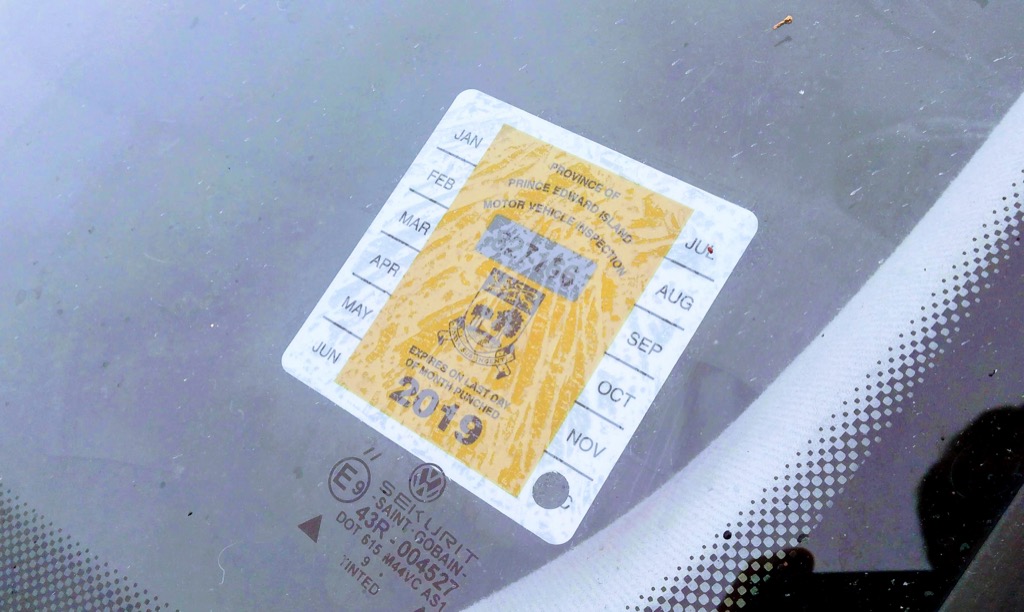
Good through to the first day of 2020 now!
Patrick Rhone’s family has an excellent plan for Christmas Day:
My wife and I have settled on the following idea; about mid morning we’ll start up the fire, light some nice smelling candles, lounge around in comfy clothes, put on some quiet music, and read books all day. But we’re going to make a “thing” out of it and invite any of our friends in town who wish to join us to stop on by with a book of their own. We’ll have some drinks and snacks around for people to enjoy as well. All we ask is that you come prepared to keep things library style and enjoy a bit of peace with us this day.
I likely don’t understand the whole picture here, but it seems odd to make driver’s licenses free as part of a climate change policy designed to get us to a carbon neutral economy,
Eight years ago today we found ourselves on Via Ca’ di Marcello, a deserted side street in Mestre, the landward side of Venice, waiting for the bus to Bulgaria.
We were midway through a late fall European odyssey that had previously taken us to Munich and Basel; after 3 days in Venice, we were moving on to Ljubljana and Croatia. And the bus was the only way to get from Venice to Ljubljana. It was remarkably inexpensive: 55 Euro for all three of us for a 4 hour ride:
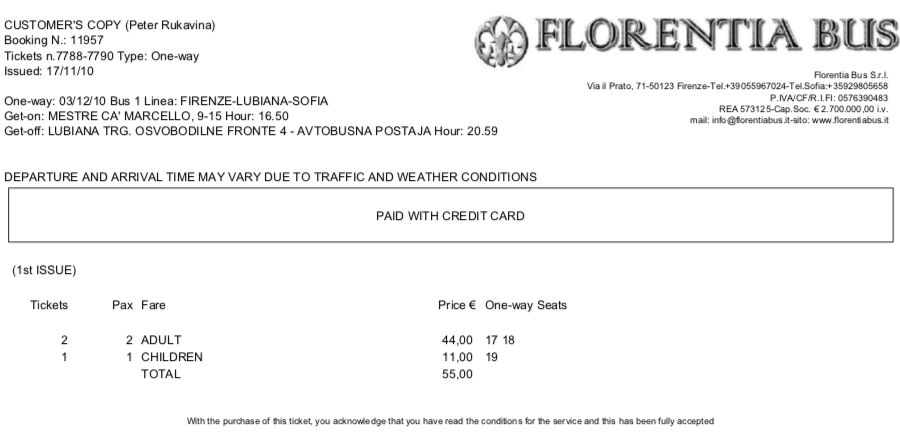
Upon arrival at the Mestre bus station in plenty of time, we were told, with vague gesticulation, that our bus did not, in fact, leave from the station, but from the aforementioned deserted side street. By some miracle we managed to find the tiny “no parking” sign on this street marked “bus interregionali ed internazionali.”
Where we waited. And waited. On a cold, dark, damp, Italian evening.
By way of memorializing the wait, and distracting our increasingly frustrated Oliver, I recorded a short video:
Eventually the bus did arrive. With little pomp or circumstance. We showed the tickets I’d booked online. All was in order. And so we boarded.
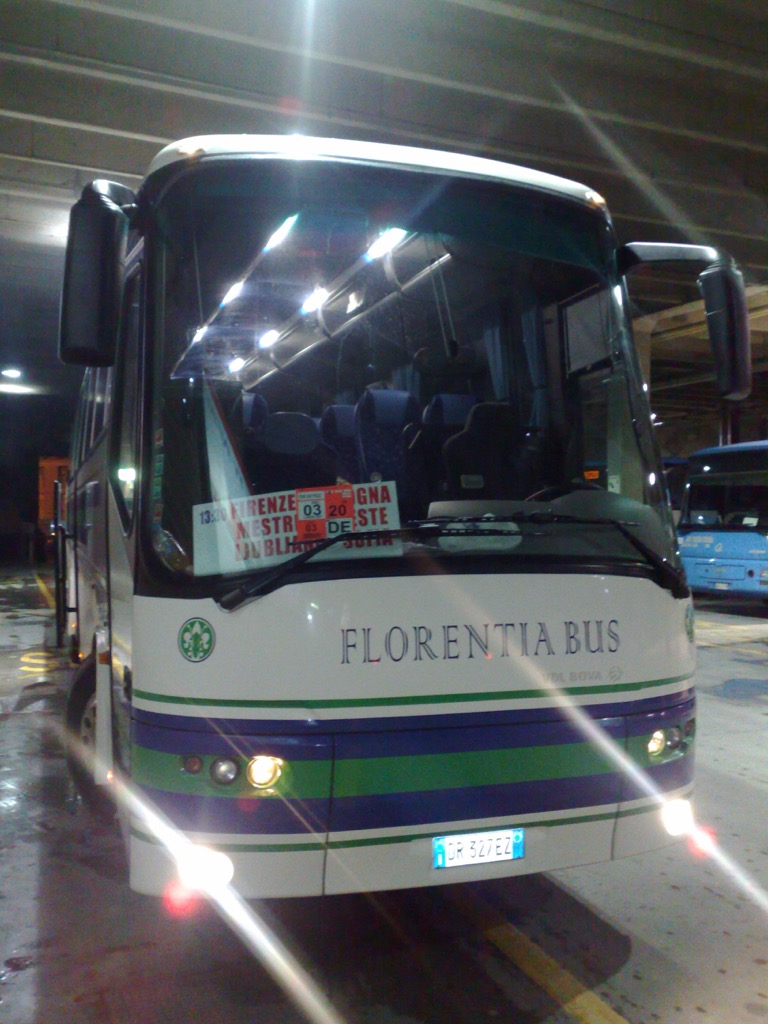
The bus turned out to be a run from Florence to Sofia that was popular with itinerant workers from Bulgaria returning home. You cannot imagine a nicer bunch of people to travel with: as the bus sped through the night from Venice to Trieste to Ljubljana we shared food and, as best we could, stories with our fellow passengers.
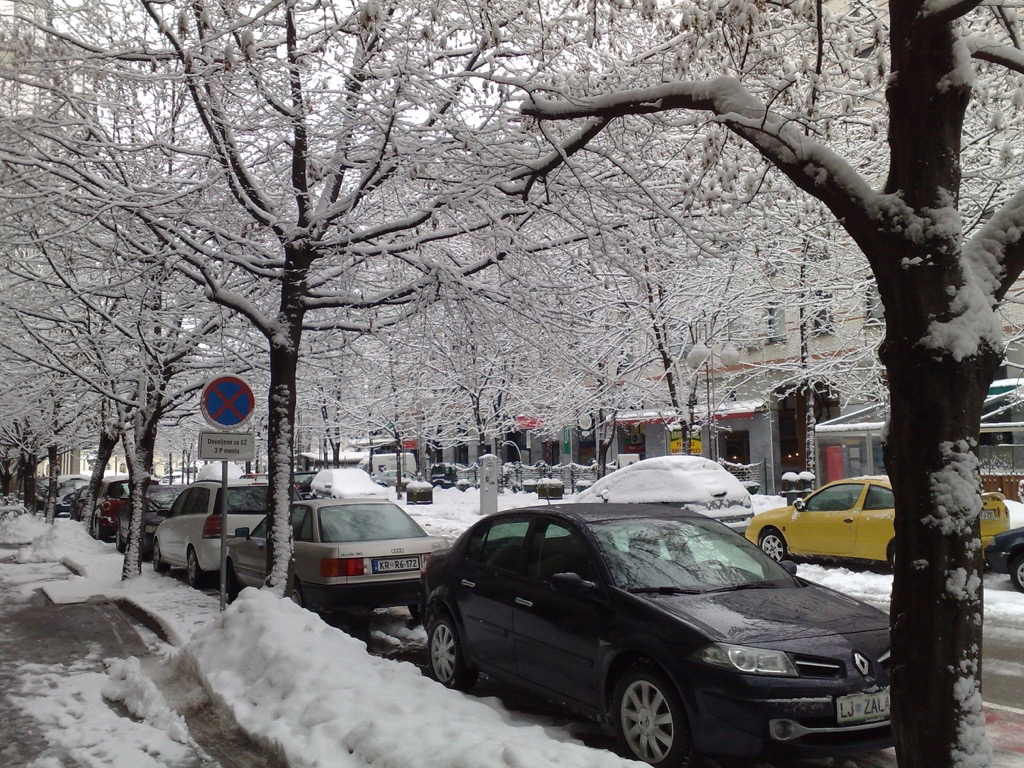
We arrived in Ljubljana before midnight and made our way to our hotel; the next morning we awoke to a blanket of snow, quite a novelty after the soggy environs of Venice:
After 4 days in Croatia, we returned our rental car to Ljubljana and found all the snow gone, but the weather still mitten-worthy:
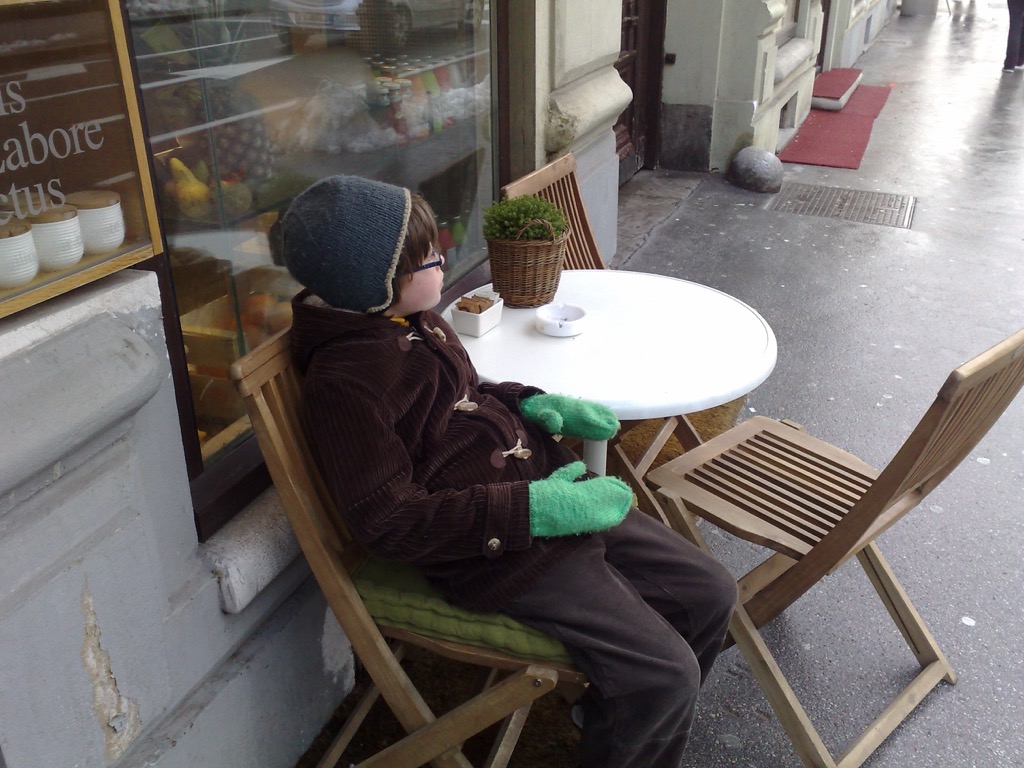
Oliver was in grade 3 that year, and had one in a series of teachers whose attitude about leaving school for periods of travel was, in essence, “he’s going to learn a lot more out there in the world than he will here in the classroom.” That was certainly true. Even if it did mean a long cold wait for the bus to Bulgaria. Or perhaps because of that.
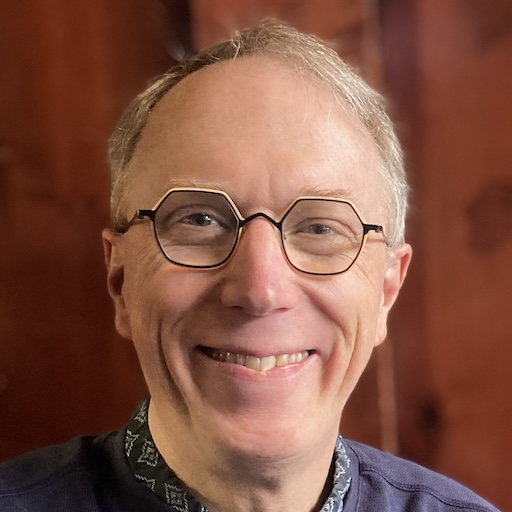 I am Peter Rukavina and this is my blog. I am a writer, letterpress printer, and a curious person.
To learn more about me, read my /now, look at my bio, listen to audio I’ve posted, read presentations and speeches I’ve written, see things I’ve favourited elsewhere, or get in touch (peter@rukavina.net is the quickest way).
I have been writing here since May 1999: you can explore the 25+ years of blog posts in the archive.
 You can subscribe to an RSS feed of posts, an RSS feed of comments, an RSS feed of favourites elsewhere, or a podcast RSS feed that just contains audio posts. You can also receive a daily digests of posts by email. I also publish an OPML blogroll.
Instagram • YouTube • Vimeo • ORCID • OpenStreetMap • Internet Archive • PEI.art • Drupal • Github.