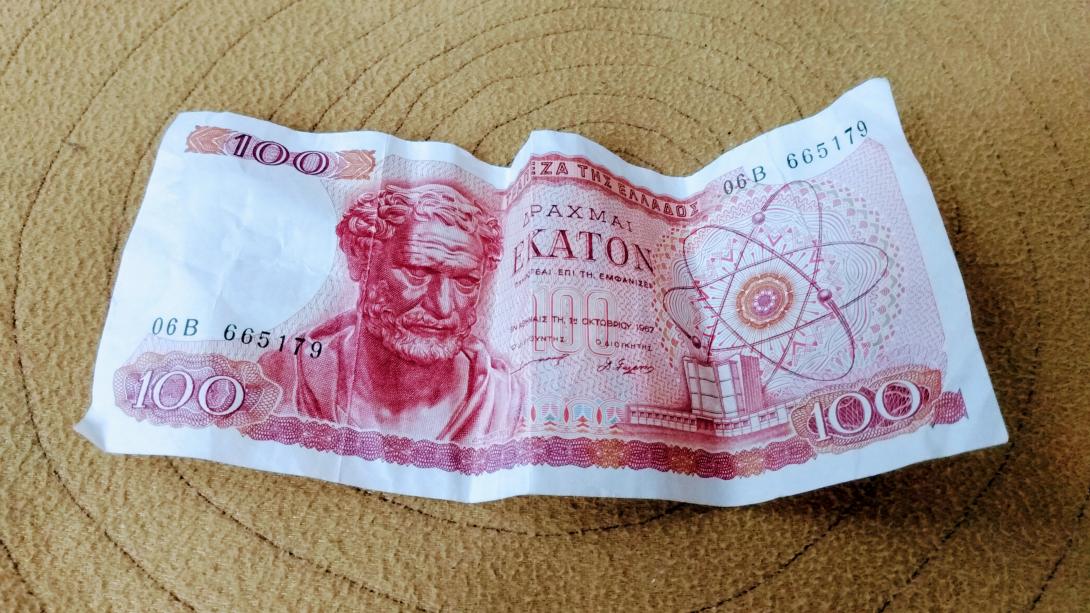
In my pants pocket this morning I found a Greek 100 drachma bill.
I have never been to Greece.
Greece has not used the drachma since 2002.
I suspect sleepwalking involving time travel.

In my pants pocket this morning I found a Greek 100 drachma bill.
I have never been to Greece.
Greece has not used the drachma since 2002.
I suspect sleepwalking involving time travel.
If you Google your local grocery store–Sobeys, in my case–one of the things that Google Maps will show you is when the store is typically busy on any given day, and how busy it is right now. Useful information to have when you’re trying to minimize contact with other shoppers.
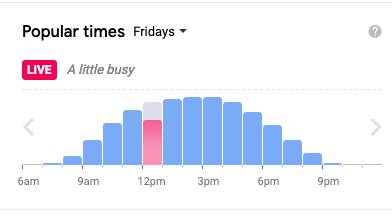
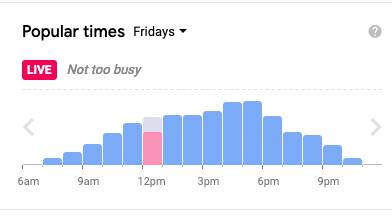
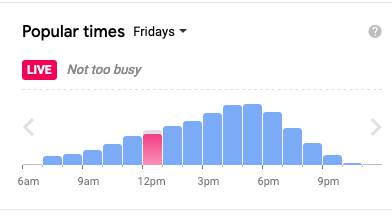
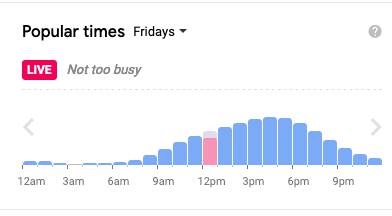
Here are snapshots of four Prince Edward Island Sobeys for a Friday; don’t use these as an actual guide, because they’re evolving and will be inaccurate in the future:
Montague
|
University Avenue
|
Stratford
|
West Royalty
|
Because this is Google, and thus closed and proprietary, there’s no way of knowing the sample size–the number of mobile devices that Google is detecting at each location to develop its approximation of busyness–and the charts are only useful in a relative not an absolute sense. Also, the data was gathered during a time when Sobeys was open longer hours; hours are now 8:00 a.m. to 8:00 p.m., and that means that visits are distributed differently now, even more so with so many people not working and so able to shop at unusual times.
Two ways that I’m using surveillance to manage the changed reality.
First, I’ve been having Google surveil me for many years via Google Location History, wherein I give the Google Maps app on my phone permission to drop digital breadcrumbs to Google as I move about the world.
For most of the last three weeks my timeline looks like this:
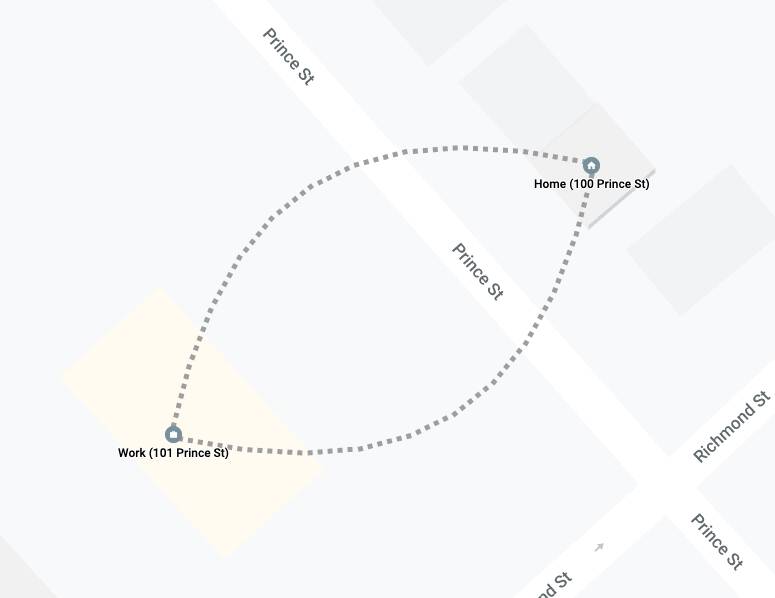
Through the timeline I can keep track of when I last went grocery shopping (Tuesday, March 24 at 10:46 – 10 days ago!), when the last time I went for a drive was (March 22), when the last time Oliver went to Stars for Life (March 16), and when the last time I went out for coffee, casually and without a care in the world (March 8).
Mostly this surveillance is of casual interest, but it also means that if, say, it was announced that someone carrying the coronavirus was somewhere I might have been, I have a way of confirming or denying that. Never has where and when I’ve visited been of more potential health value than now.
Second, I’ve turned on the motion detecting features of our Ring video doorbell.
When I installed the Ring last August, it was primarily to allow me to miss fewer courier deliveries (at the time we were getting regular deliveries of cancer meds that required a signature); it seemed like an innocuous enough piece of of technology, with the greatest civil liberties assault being to those that rang the doorbell.
Since that time Ring has evolved into becoming part of a burgeoning police state, and my discomfort with the technology has grown; But, for the time-being, police state actor or not, the Ring has proved helpful. Here’s what it looks like to set up “motion zones” in the mobile app:
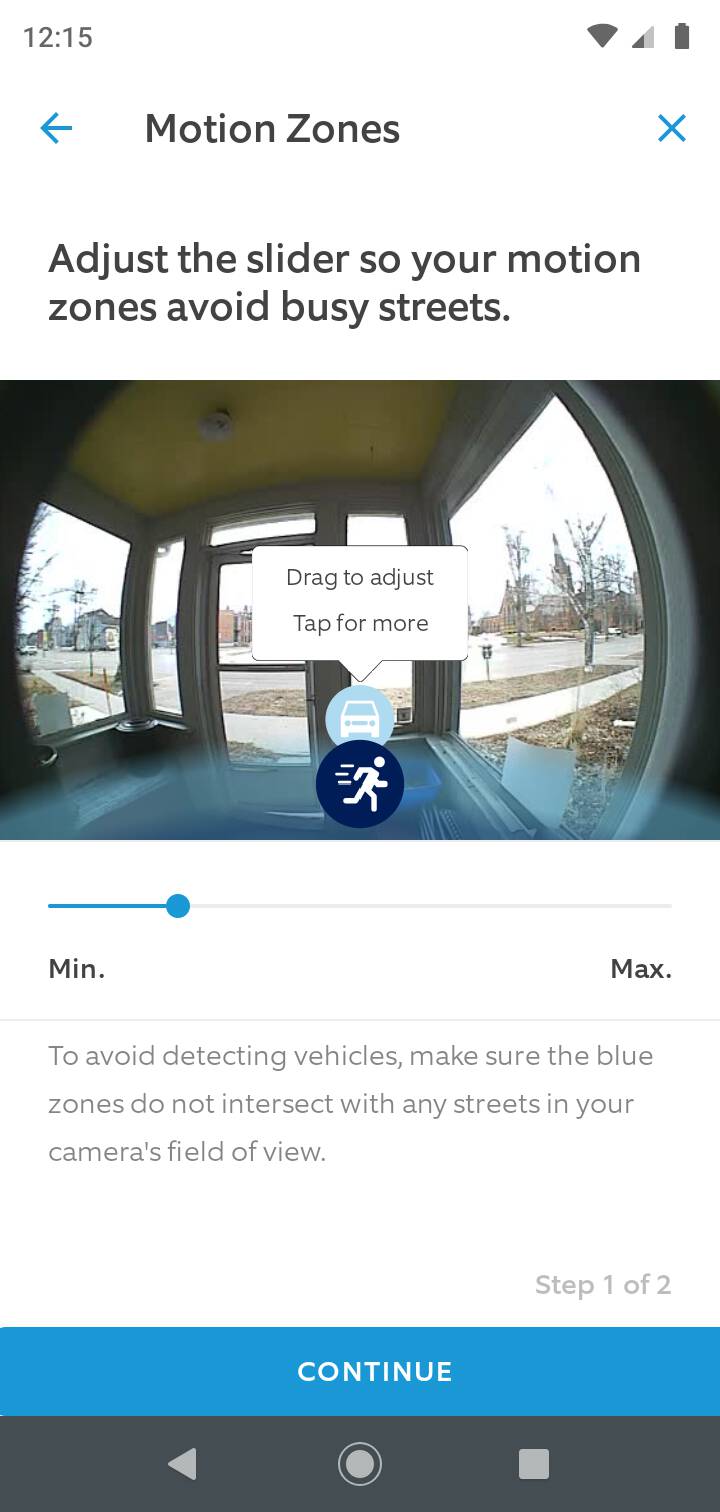
The idea is that I want to be alerted when something moves in our front vestibule, but not when someone walks by on the sidewalk. This turns out to work frightfully well, with no false-positives at all over the last two weeks.
The end result is that whenever someone enters our vestibule, I get an alert on my phone and on my computer, and I can watch an instant replay of what happened.
Here’s me leaving the house at 10:48 a.m. this morning, jaywalking across Prince Street, and walking into the St. Paul’s Parish Hall:
Being able to know what’s going on in my vestibule has proved useful mostly because I know when things get dropped off or picked up, our vestibule serving as a kind of DMZ or airlock during these infective times. So today when the Receiver Coffee delivery of bread and meals gets dropped off, I’ll get a ping on my phone and I’ll know to run over to put things in the freezer.
Both of these “personal” surveillances have dark sides (“WTF, the Internet has video of me dropping off your bread?!”, a kindly Receiver staffer might justly ask; to say nothing of the “according to anonymous cell phone data” that seems to be part of every second story in the New York Times this week), and the darkness extends, at least in part, because the data that’s being vacuumed up sits both under my control and well beyond it.
So I’m actively developing alternatives: I’ve got the parts here in my office to build an alternative doorbell that doesn’t stream video into the repository of the surveillance industrial complex, and I’m experimenting with using PhoneTrack on my phone and my Nextcloud instance to drop my geolocation breadcrumbs to myself, not to Google. I’ll report back as these projects progress.
Eli Lynn teaches us about slapping and sightlines as part of Theatre Horizon’s Horizon at Home service.
Teachers suddenly and involuntarily dropped into the abyss of “e-learning,” consider this a benchmark of clarity and theatricality: if you can’t explain at this level, you need to get better. Fortunately, there are a lot of out of work theatre and film people you can draft to help you.
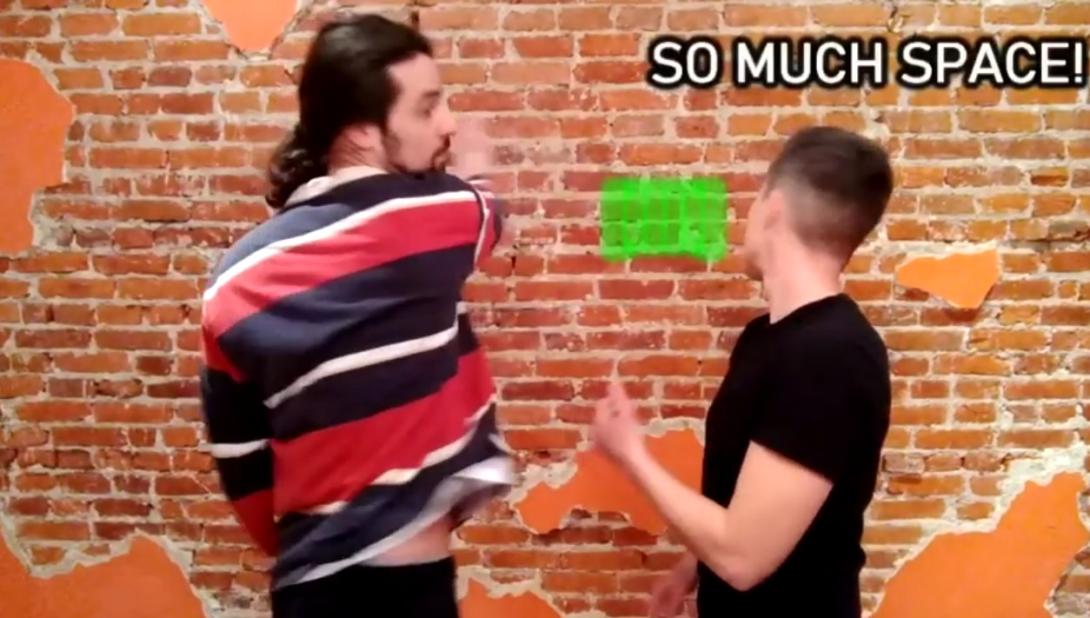
The best way to understand something is to try to explain it to someone else.
Which journalist is asking the most useful questions during the daily public health briefing from Dr. Heather Morrison?
Hands down it’s Kerri Wynne MacLeod from Ocean 100, a radio station I was heretofore unaware even had news.
While other journos focus on the statistical and the procedural, Kerri Wynne’s questions come closest to the questions that I would ask myself.
For more than a year I’ve been caught up in the day-to-day drama of a bunch of loosely-affiliated YouTube couples driving their customized camper vans through Central and South America. Given the seasons and travel patterns related to them, many of them reached Patagonia just as the pandemic hit, and they’ve all been documenting the process of getting stuck or getting home. As a collection, they’re an interesting slice through onc particular type of experience of social distancing and quarantine:
Trent & Allie are an American couple who made it all the way to Ushuaia, where the road ends at the tip of South America, and then back north to Buenos Aires before they could travel no farther. They made it back to family in Washington, DC in the nick of time, and documented their flight from Argentina over three videos: Trying to Escape the Pandemic, We Had to Abandon Our Van and Is it Too Late to Fly Home?
Kaylee and Jordan, who go by The Nomadic Movement, traveled with Trent and Allie through Mexico and Central America, but they parted company in Panama when Kaylee and Jordan decided to stay an homestead. They have chosen to remain there, and talk about being quarantined in their Forced Into Quarantine In Our School Bus.
Sara and Luca, who call their channel Leave Everything and Wander, are an Italian couple who drove all the way from Alaska to Ushuaia. They document their struggle to find a way to quarantine there in Stranded Abroad.
Christian and Aubry Matney also made it to the end of the road in South America, and they’ve chosen to ride out the pandemic in El Calafate, Argentina, which they document in Van Life in a Pandemic: Quarantine Day 1 and Van Life in a Pandemic: Trapped in South America.
Elsewhere in the world–because the YouTube algorithm does not only prod me to watch drives to Ushuaia:
Eamon & Bec, and Canadian couple who shipped their van to Europe and drove south into Morocco, opted to leave their van in there and fly home while it was still possible, which they vlogged in Abandoning Our Van in Africa.
Jason and Nikki Wynn, who call their channel Gone with the Wynns, are former #Vanlifers who moved on to sailing. They’d previously left their catamaran in Tonga for a holiday break in the U.S., and made a mad dash back to Tonga hoping to ride out the pandemic at sea. They almost made it, but they got quarantined in Fiji, which they describe in We’re Stranded.
For five glorious Tuesdays in the summer of 2011 I walked from our apartment on Graefestrasse and walked through Kreuzberg to Druckwerkstatt where I would design, set, and print something.
I would arrive in the print shop with an empty mind and a blank canvas, and emerge, 6 or 7 hours later, with a thing. It the annals of my creativity it was a summer to bookmark.
I woke up this morning to an email from a friend that was so full of light that some of it spilled over into me. And it is Tuesday. So I rousted myself up earlier than has been my pandemic habit, and got to the print shop by 9:30 a.m. With a blank canvas.
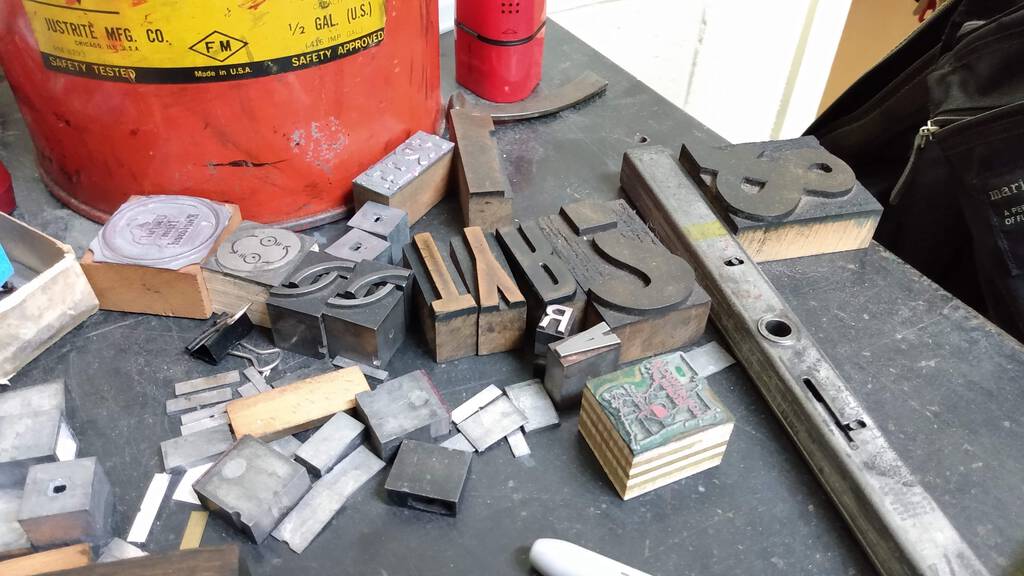
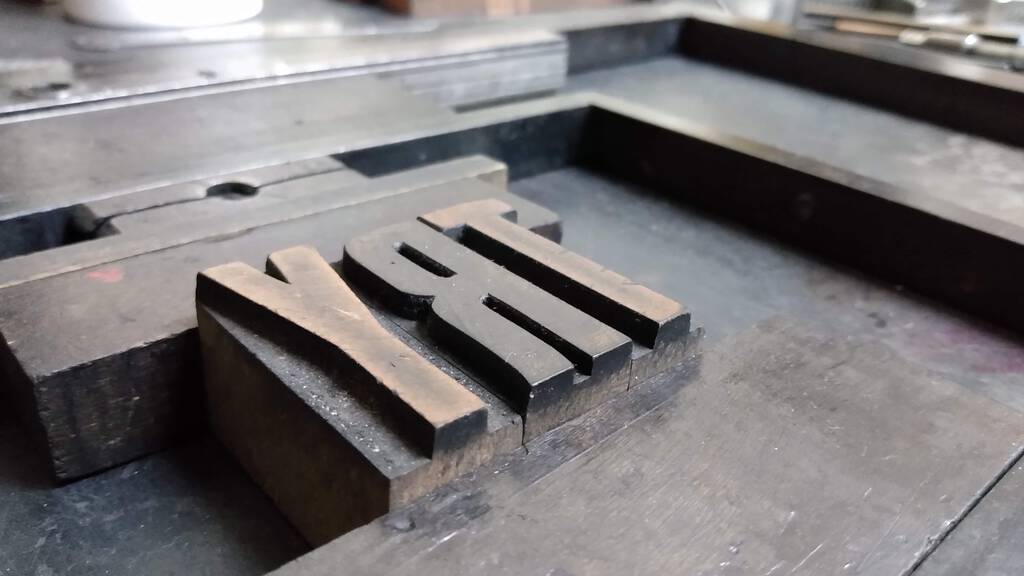
As I stood in front of the type cabinet, wondering what to do, I looked over at a collection of bits and bobs yet to be sorted and saw T, Y, and R, three wood letters that were a gift last summer from my friend Martin.
T Y R.
T R Y.
Go!
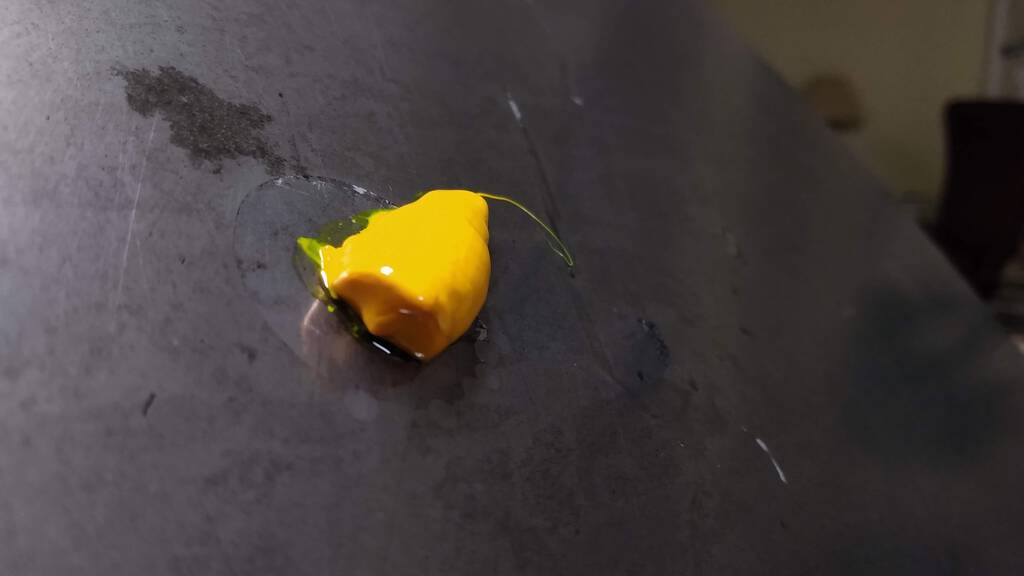
I squirted a squirt of yellow ink onto the platen, such a pleasure, as it’s an intense yellow, the kind of yellow that you could live inside if you had to:
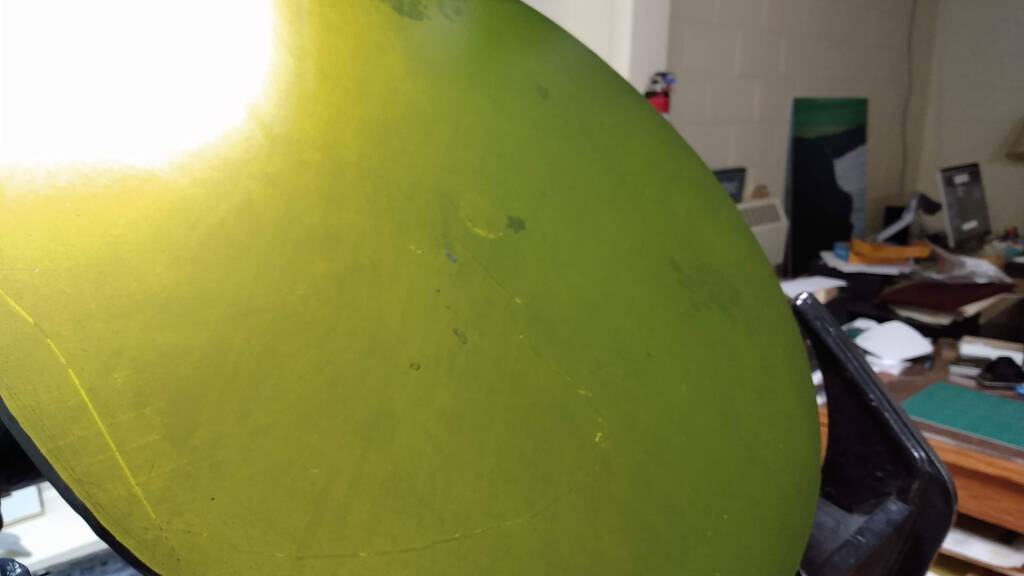
I flipped the motor on the letterpress on and let the rollers quietly do their work turning the squirt into a sheen:
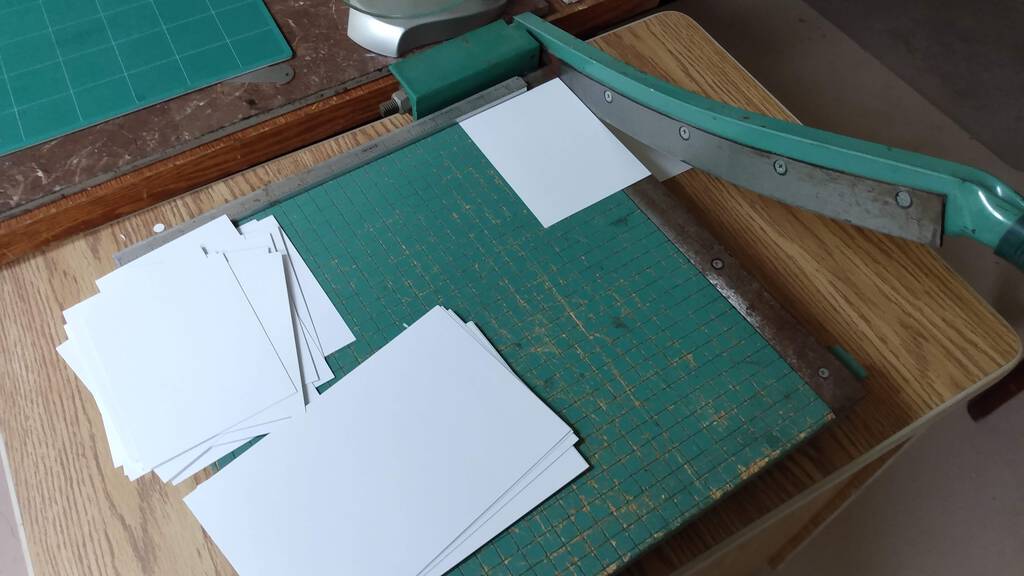
While this was happening, I took some letter-sized card stock and cut down each sheet into four to make postcard-sized cards:
And when that was done, I set the type; not hard to do with just three letters:
I mounted the chase in the press, put in a piece of scrap paper, and made my first TRY:
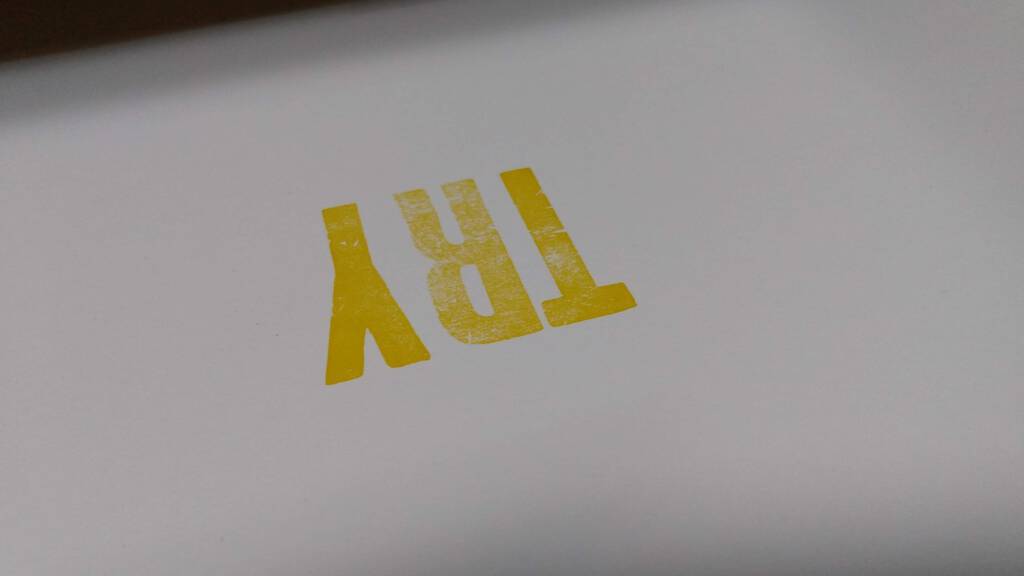
This is always the most uncomfortable time of the printing process for me: imperfection. The T and R are too close together. The T and the Y are heavier than the R. And there’s not enough ink. This purgatory makes me nervous, and I set quickly to work to get closer to heaven through the makeready.
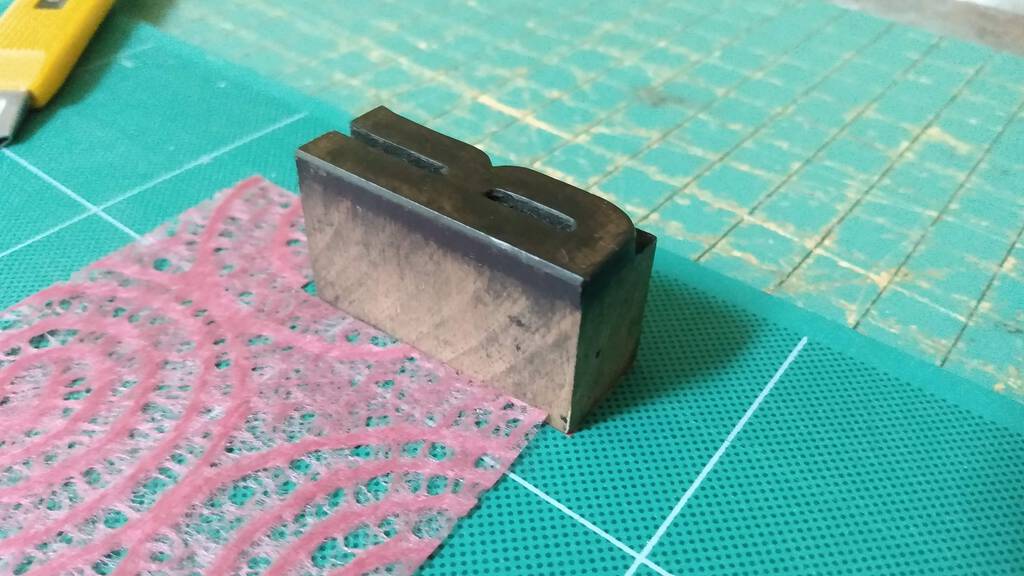
First, I buttressed the R with a rectangle of tissue paper taped underneath:
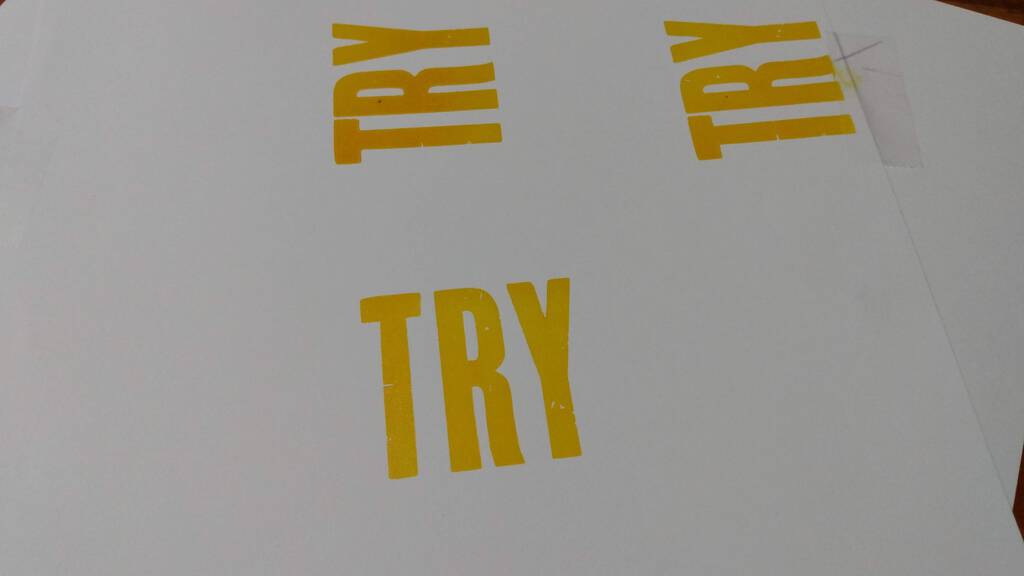
I added a shim between the T and the R to add some air, added a squidge more yellow ink, and added some additional packing to get a more satisfying print. The evolution was more satisfying:
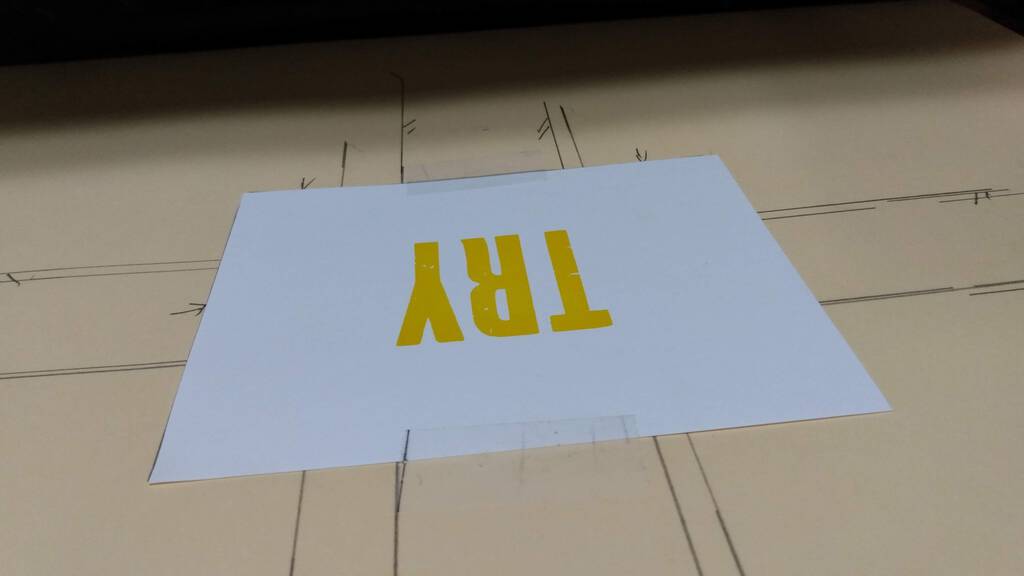
Even more so on a postcard:
It’s hard to shoot video and to print at the same time while also staying safe, but here’s a glimpse at what printing a TRY looks like:
I was ready to print in earnest!
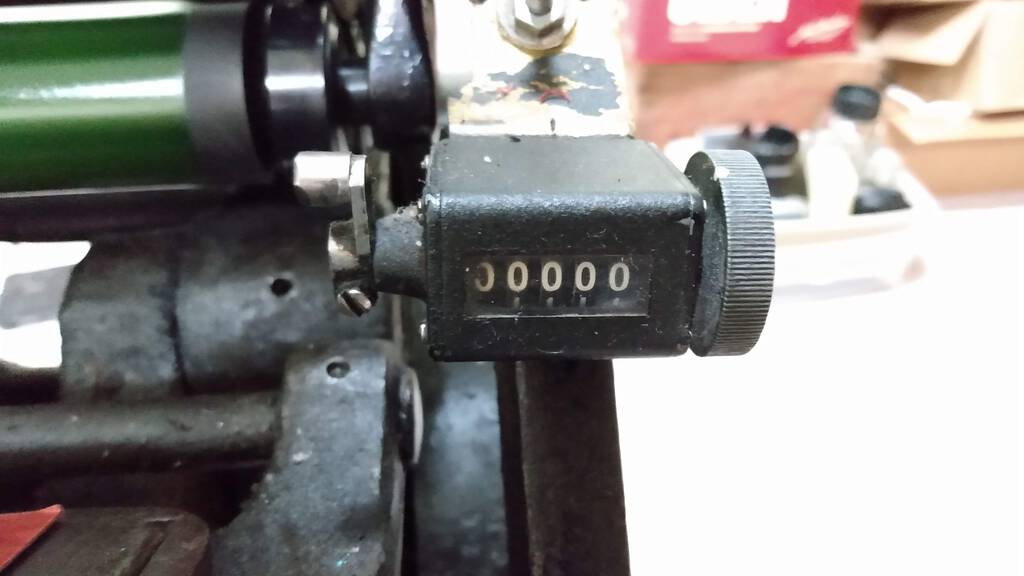
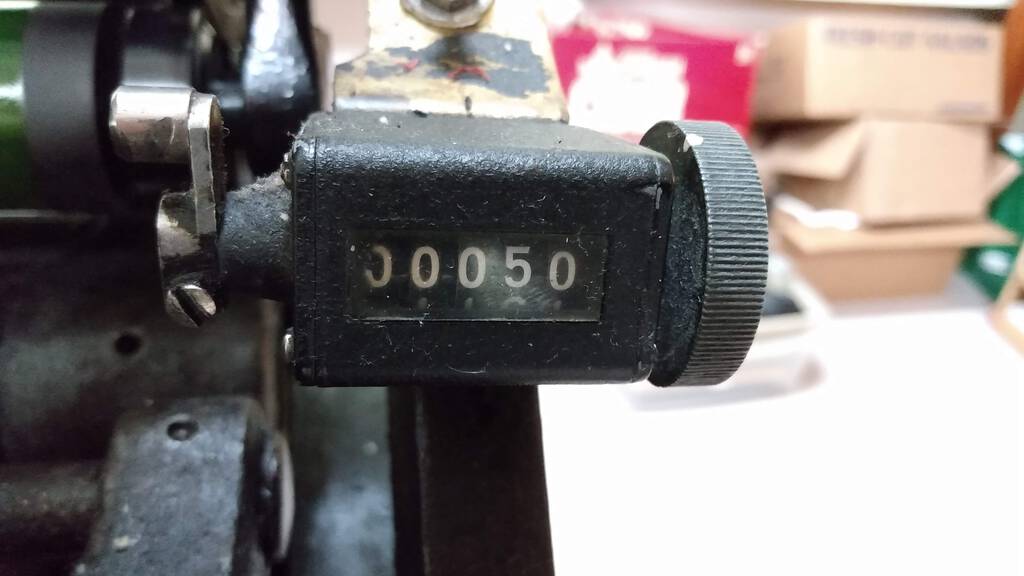
I zeroed the counter:
And I printed. When I was done I had 50 TRYs to dry:
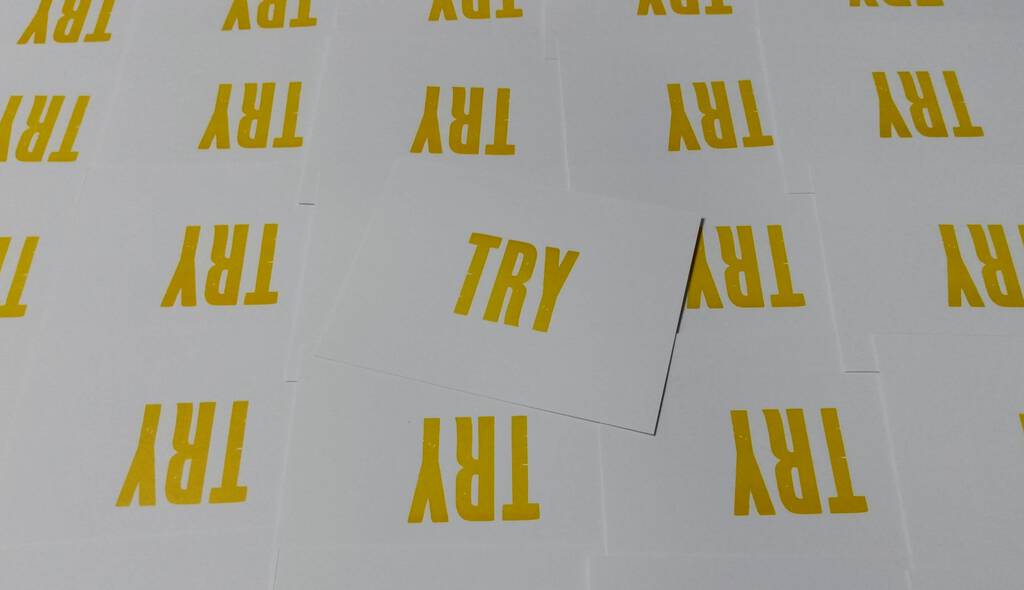
Would you like a TRY? Email me your name and postal address and I’ll put one in the mail as soon as they’re dry.
 I am Peter Rukavina and this is my blog. I am a writer, letterpress printer, and a curious person.
To learn more about me, read my /now, look at my bio, listen to audio I’ve posted, read presentations and speeches I’ve written, see things I’ve favourited elsewhere, or get in touch (peter@rukavina.net is the quickest way).
I have been writing here since May 1999: you can explore the 25+ years of blog posts in the archive.
 You can subscribe to an RSS feed of posts, an RSS feed of comments, an RSS feed of favourites elsewhere, or a podcast RSS feed that just contains audio posts. You can also receive a daily digests of posts by email. I also publish an OPML blogroll.
Instagram • YouTube • Vimeo • ORCID • OpenStreetMap • Internet Archive • PEI.art • Drupal • Github.