I was saddened to learn of the death of my longtime neighbour Dorothy Forsythe last weekend.

When we moved into 100 Prince Street, we became neighbours to Dorothy and her late husband Bob at 108 Prince Street. We’ve benefited from good and generous neighbours all-round, and Bob and Dorothy were certainly that: helpful, caring, supportive. Dorothy was a great friend to Catherine over the years on many fronts, and to me especially after Catherine’s death.

I will never forget running into Dorothy and Bob at the Charlottetown Farmers’ Market one Saturday some years ago and finding them excited by the impending visit of their nephew. I asked what their plans were: perhaps they’d go to Rainbow Valley with him, or Sandspit, or the beach? “Well,” replied Dorothy, “he’s in his 50s and he’s a lawyer…” It was easy to forget they were several generations older than me.

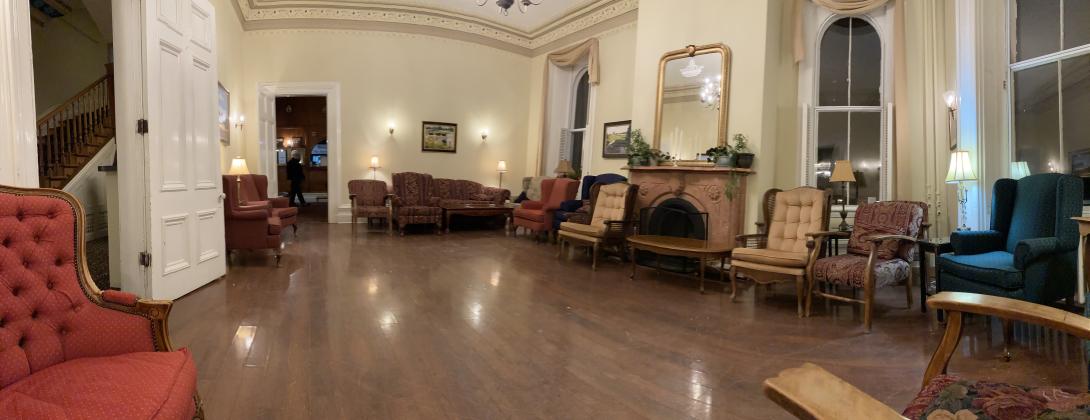
Earlier in COVID times, I started a newsletter for my neighbours in the C1A 4R4 postal code; Dorothy was an enthusiastic reader and, in the last issue, a contributor: she wrote a piece about her home at 108 Prince Street, and her lifetime association with the house:

108 Prince St., where I live, was built in 1878 as a single home by M.P. Hogan. The builder lived here for four years until it was sold to W.W. Wellner, a well known Charlottetown jeweller. 

In 1913 it was bought at auction by my grandfather, John Bell Andrew, who owned a farm and carding and grist mill, “Belmont Mills” at East Royalty. 

My grandparents never lived on Prince Street and it was rented to a large family. There were eight bedrooms, some with sinks. The depression years followed and the house needed extensive repairs and often the tenant wasn’t able to pay the rent. 

In 1914 World War One began and in 1915 my father enlisted at seventeen. He was wounded three times, the last time only three days before the armistice. As he was recovering in England after the war he got the Spanish flu and was very ill. Now we can identify with what was like then! 

In 1940 my dad, Frederick L. Andrew, reenlisted and his first posting was to organize an army Basic Training Centre at Beach Grove. It had been a summer hotel owned by the Sterns family. The hotel was used as a barracks and many more army buildings were added. After the war the hotel became a nursing home until a new home was built on the same location. 

Our home in East Royalty was sold and, at that time, my grandfather turned the house at 108 Prince St. over to my father. Dad immediately had renovations started: James Harris was the architect and Neil Blank was the contractor. 

The apartments were ready to move into in the fall of 1942. I started grade VII at the old three-story brick school in the present Prince Street School location. I had previously attended the one room school in Central Royalty. 

In January 1942 my father was transferred to Halifax to take command of № 6 District Depot where soldiers left by ships for overseas and returned home for discharge when the war ended. He was there until 1947 and during that time Mother and I were living at 108 Prince Street. 

Mother and Dad lived the rest of their lives here and my husband Bob and myself moved here from Saint John in 1984. Bob died in 2014 and I’m still here at age 90. 

I’m very grateful to have great neighbours keeping an eye out for me. 

In the fall of 2018 we helped Olivia organize an epic 18th birthday party for herself, so epic that we needed to rent the St. Paul’s Parish Hall to host it. Dorothy was there, and at the end of the night, with only a few stragglers left, it was Dorothy who grabbed a broom and swept the floor, something captured by the livestream camera: 
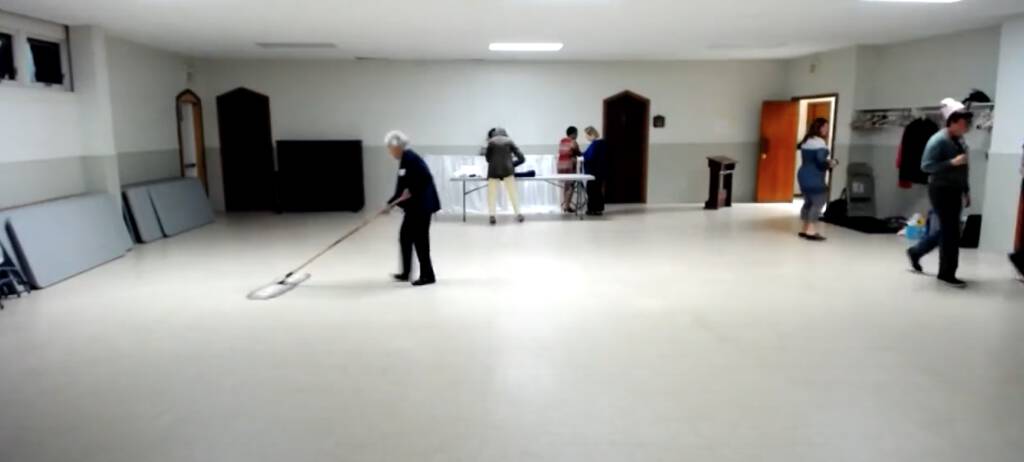
Dorothy Forsythe sweeping the floor in St. Paul's Parish Hall

The generosity of spirit in that act is how I will forever remember Dorothy: a kind-hearted, curious, engaged woman. A great neighbour. 

She will be missed.
🗓️

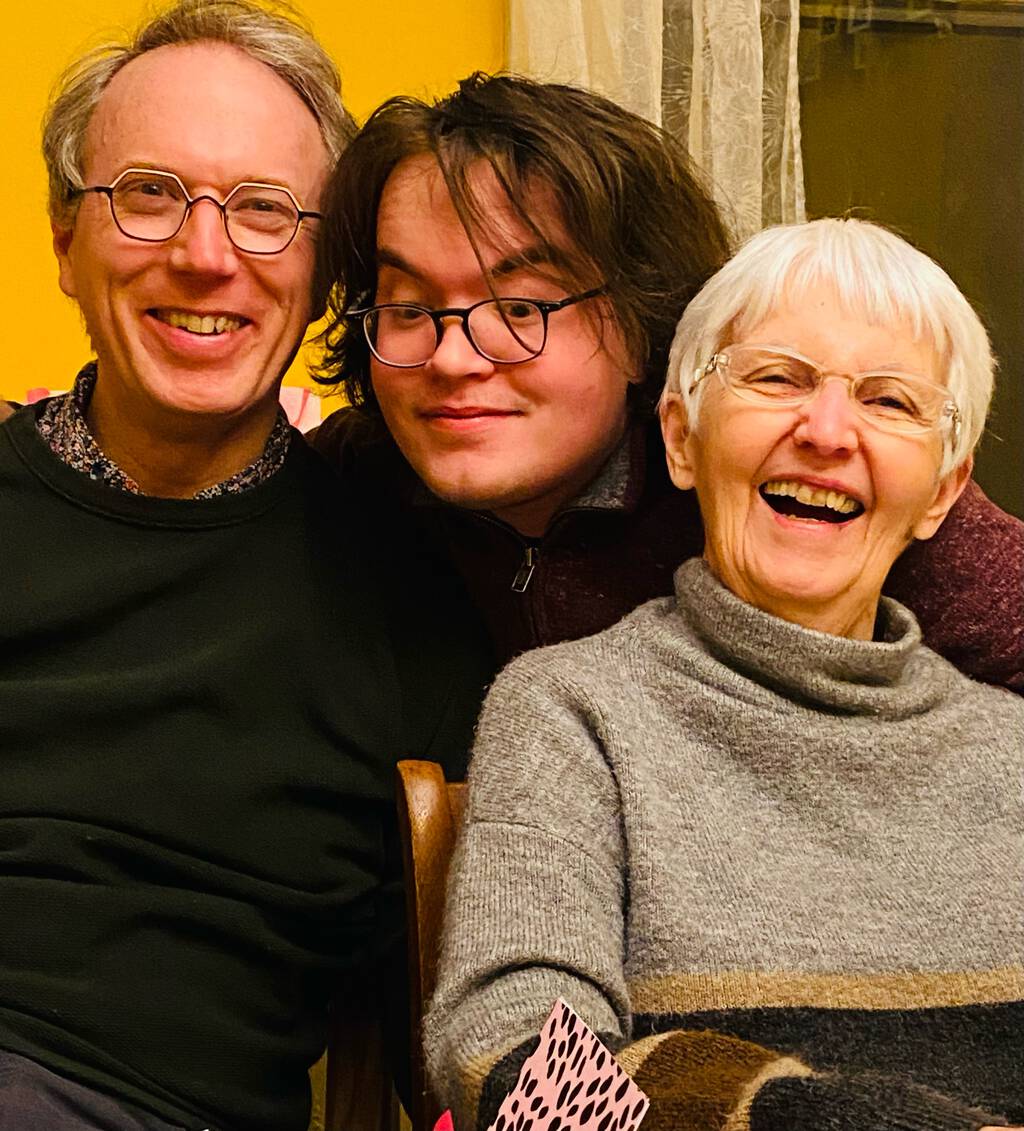
We held a birthday party for my mother last night. Looking over the photos of the night, I see that everyone is smiling.

It’s nice to see smiling; it’s been a long time since conditions, griefy, COVIDy, and otherwise, have allowed space for that, but we got here, together.

Gathering the people I love around a table to share a meal has seldom felt so wonderful.

Photo of me, Olivia and my mother, taken at her birthday party.

I have been thinking a lot about happiness, and about family and relationships, and about writing.

Regular readers will recognize that I haven’t been writing as much here of late, and that’s been due a number of things, primarily time and license.

The time thing is easy to explain: since the beginning of December I’ve been inside a new relationship, something that’s captivated me deeply, and filled my hours with togetherness, coupled and familial.

The license thing is a different but related beast: this blog isn’t a confessional, but it’s also not not a place where I write about my life, my feelings, my challenges, my projects. I made my way through Catherine’s illness, and death, and the grief that followed, in no small way, by writing here. I’ve written here about autism, and mental health, and the challenges of parenting.

But what of the new people in my life? 

This is trickier.

Privacy for all concerned.

The challenging forces of public vulnerability shining bright on a fragile, newly-hatched thing.

Fear of writing, in full view of people who loved Catherine deeply, about my feelings for someone else.

Fear of writing about forces mysterious; I’m much more comfortable writing of the concrete.

These, and other things more deeply-seated, have me skittish about writing in public about my life these days.

And yet writing is so important to me: this practice has been integral to the way I process things. And as much as I’m skittish about writing about everything new and delightful, I’m also aware that not doing so leaves a dark ages in that process; I need to have a way to helpfully kerfuffle things through my brain, and I’m learning what happens when I don’t have that.

Here’s a goofball selfie I took this morning. My tousled hair! The smile on my face! I’m wearing a T-shirt! I don’t recognize this fellow, and I’d like to learn more about him. The way to do that has to run through a jungle of words; it’s just how I work.

Me, looking like a goofball.

I’ve confronted this notion before, most recently when considering how to write about Olivia’s transition to identifying as a trans-woman. The challenges and joys this has brought with it, the things I’ve learned, the new friends and allies I’ve made, are all things I could have written about here but didn’t: this wasn’t, isn’t, my story, it’s hers. And yet, as with autism, it’s also something I’m involved with, affected by, supportive of. Surely that’s something I could be writing about, if only because there’s almost no writing about life supporting an autistic trans daughter, which can make one feel really, really alone.

And there is a similar additional reason for me to write about my romantic exploits, and that’s that there’s so little that’s helpful when one Googles “widower dating mid-50s.” And yet so much that one wants to know as a widower in ones mid-50s thinking they might date (most of what is written is of the “10 reasons you don’t want to date a widower” variety, which is unhelpful).

I know from experience writing about the travails of cancer caregiving, about grief, about parenting, that writing is purgative for me and, by times, helpful to others; I’m a man in my mid-50s who, through a lot of work, patience, creativity, determination, and luck, finds himself in the arms of a delightful woman. To know that such a tale is possible would have been a great salve to the mired-in-grief version of me, and, I presume to others. “There is hope, younger Pete,” I want to write back into time.

So, I will keep writing. I will need to figure out a new way of doing so, one that allows me to be honest, to tell my story, while at the same time figuring out a way for the other voices around the table to be present, but not appropriated.

Tricky. But worth it.

🗓️
Love  •  Family  •  Relationships  •  Mother

In June of 2016, Catherine found herself in an appointment at the PEI Cancer Treatment Centre with Dr. Cipperly pinch-hitting for her regular oncologist. It happened to be his last appointment on his last day at his job, and we found him helpful, patient and kind. I wrote about the appointment in my book:

Sleep turned out to be a topic of discussion otherwise as well: Dr. Cipperly used the appointment as a general sort of cancer check-up in addition to reviewing the CT results. Catherine’s been exhausted for a long while, even more so in recent months. Her protests about her exhaustion to our family doctor, and to Dr. Champion, have gone unheeded, as though there are bigger fish to fry.

We’d been working under the assumption (read “I’d been working under the assumption”) that this was simply a side- effect of living with cancer. It turns out, in fact, that cancer, in and of itself, unless some major energy-involved organ like the lungs is under attack, doesn’t exhaust you.

And so, being a guy with answers to questions, Dr. Cipperly rhymed off the list of things that can make you exhausted: anemia (Catherine’s okay here), thyroid issues (she’ll get tested before her next visit), blood sugar issues (another test) and sleep apnea.

Dr. Cipperly wasn’t sure that he had the power to refer someone to the sleep clinic, but as it was a slow afternoon and no nurses were guarding the forms, he grabbed one and made a referral. So, with luck, Catherine will be seen by the sleep lab and they may trace her exhaustion issues back to something that has nothing at all to do with cancer. Which would be terrific, inasmuch as it would be something treatable. Catherine would love to not be exhausted all the time.

Catherine did go on to get a sleep study, and was diagnosed with sleep apnea. We bought a CPAP machine for her, and it proved an excellent investment, as her sleep immediately improved. She used the machine until she died, carting it to Spain and back with her because she couldn’t imagine sleeping without it.

CPAP machines are expensive and aren’t covered by public health insurance; we had to dig deep. To help those that can’t afford a machine, the PEI Lung Association has a refurbishment program:

The PEI Lung Association is actively looking for pre-owned CPAP and BiPAP machines. An increasing number of Islanders are being diagnosed with sleep apnea—a condition that causes people to stop breathing when they sleep. This condition can cause a host of other health problems including heart arrhythmia, diabetes, stroke, depression and more. Therapy can be very expensive, with CPAP and BiPAP machines ranging in cost from $1,000 to $5,000 - and many Islanders cannot afford them.

Students from Dalhousie University’s School of Health Sciences work to refurbish the machines for distribution to patients who could not otherwise afford therapy.

If you or someone you know has a CPAP or BiPAP machine you no longer use, please consider donating it today! Ask us about tax receipts for newer-model machines! To donate a CPAP or BiPAP machine, or to donate another respiratory machine (e.g. pre-owned nebulizer or oxygen concentrator), please contact Julia Hartley at peilungassociation@gmail.com or by phone at (902) 892-5957 or at our toll-free number (888-566-5864).

Having seen how profound an improvement having a CPAP machine was to Catherine, I’m delighted to see this program in place; it was the destination for her machine after she died, and I’m happy it’s found a new life helping someone else.

🗓️
Using Her Marbles  •  CPAP  •  Sleep Apnea

My personal COVID risk calculus, admittedly arbitrary, determined to see me come back to Laurie Murphy’s improv class tonight. I’m excited and nervous: it’s been two months.

🗓️

Over the weekend, L. and I cleaned out the end of the upstairs hallway, carting the blanket overspill to the thrift shop and finding new organized places for everything else.

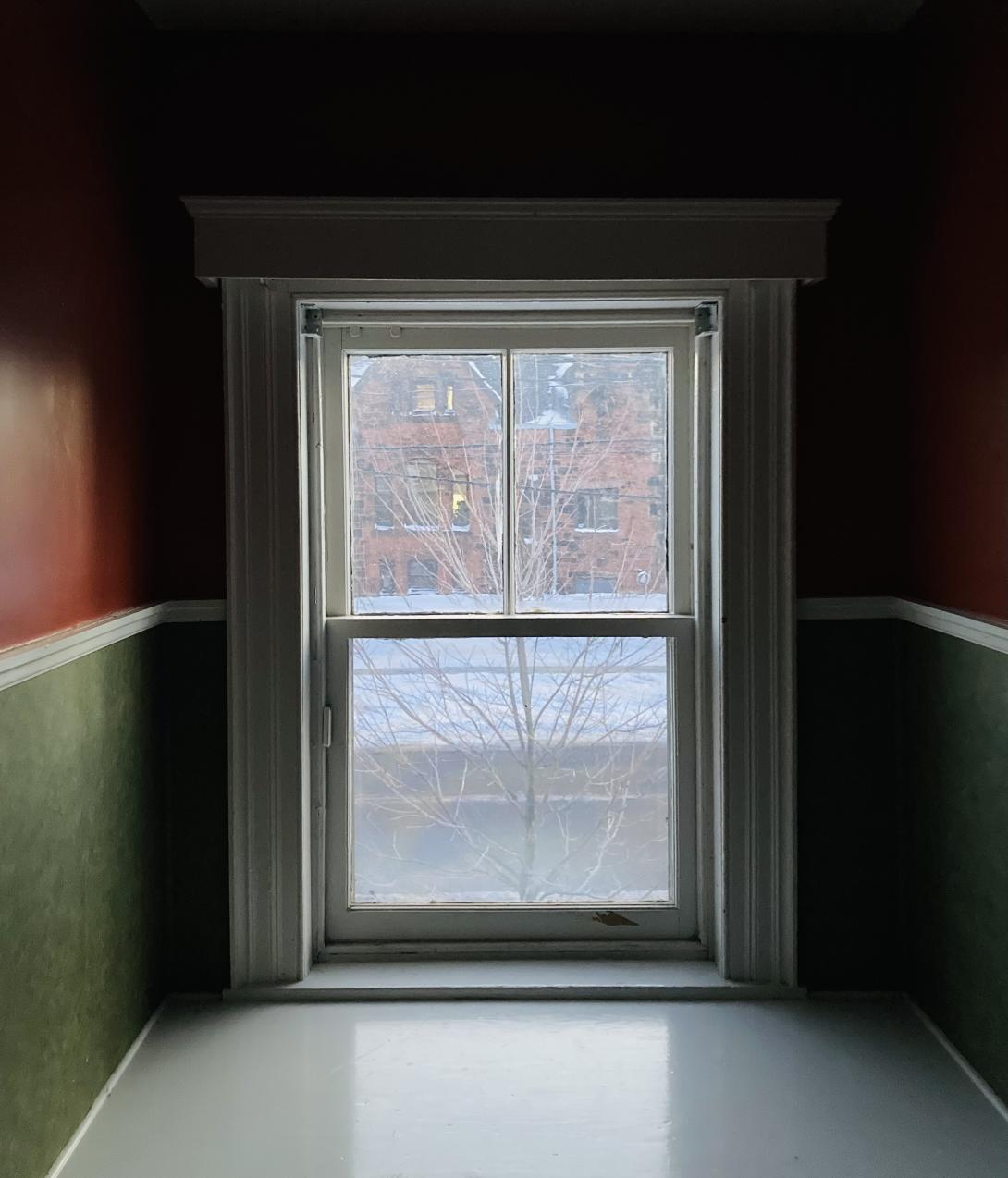
In a bold move, L. suggested removing the dark curtain that had been hung impromptu there, as a placeholder, 20 years ago. The result: a hallway of darkness has been illuminated into a hallway of light.

And, this morning, gave me a view of the six year old sugar maple in front of the house, and realization that the careful arborists at City Hall honoured our Georgian house, with its “symmetry and proportion based on the classical architecture of Greece and Rome,” by centring the tree on the house. Thank you. 

🗓️
Trees  •  Cleaning  •  Sugar Maple  •  100 Prince Street

From the “Note to Reader” in East West Street:

The city of Lviv occupies an important place in this story. Through the nineteenth century, it was generally known as Lemberg, located on the eastern outskirts of the Austro-Hungarian Empire. Soon after World War I, it became part of newly independent Poland, called Lwów, until the outbreak of World War I, when it was occupied by the Soviets, who knew it as Lyov. In July 1941, the Germans unexpectedly conquered the city and made it the capital of Distrikt Galizien in the General Government, known once more as Lemberg. After the Red Army vanquished the Nazis in the summer of 1944, it became part of Ukraine and was called Lviv, the name that is generally used today. Exceptionally, if you fly to the city from Munich, the airport screens identify the destination as Lemberg.

Lemberg, Lviv, Lyov, and Lwów are the same place. The name has changed, as has the composition and nationality of its inhabitants, but the location and the buildings have remained. This is even as the city changed hands, no fewer than eight times in the years between 1914 and 1945.

The city is again at the heart of geopolitics, reports The Economist:

When Russia’s president sends 190,000 troops to invade your country, which he refers to as “historically Russian lands”, one logical place of retreat stands out. That is Lviv, a city that was Polish from 1918 to 1939 and part of other central European states before that. It is a place of baroque buildings, art academies and fiercely anti-Russian sentiment. Its location, in the far west of the country, could make it the last place in Ukraine that Russia tries to conquer. That makes it appealing not just for those fleeing the rest of the country, but also for those eyeing up a potential seat for Ukraine’s government if Vladimir Putin’s forces manage to seize the capital, Kyiv.

Lviv is four hours drive north of my Ukrainian family’s home place in Serafyntsi (Серафинці).

Here’s what morning sounds like in Serafyntsi—and, for that matter, in much of rural Ukraine, when left to its own devices.

My heart is with my family there, and with all peace-loving Ukrainians.

🗓️

Elderflower Farm sells pear sauce at the Charlottetown Farmers’ Market. Why hasn’t pear sauce ascended to apple sauce’s equal? It’s very good.

🗓️

Last night, fresh off a good evening of silliness, I quickly checked my phone before returning home to find that my house had emailed me

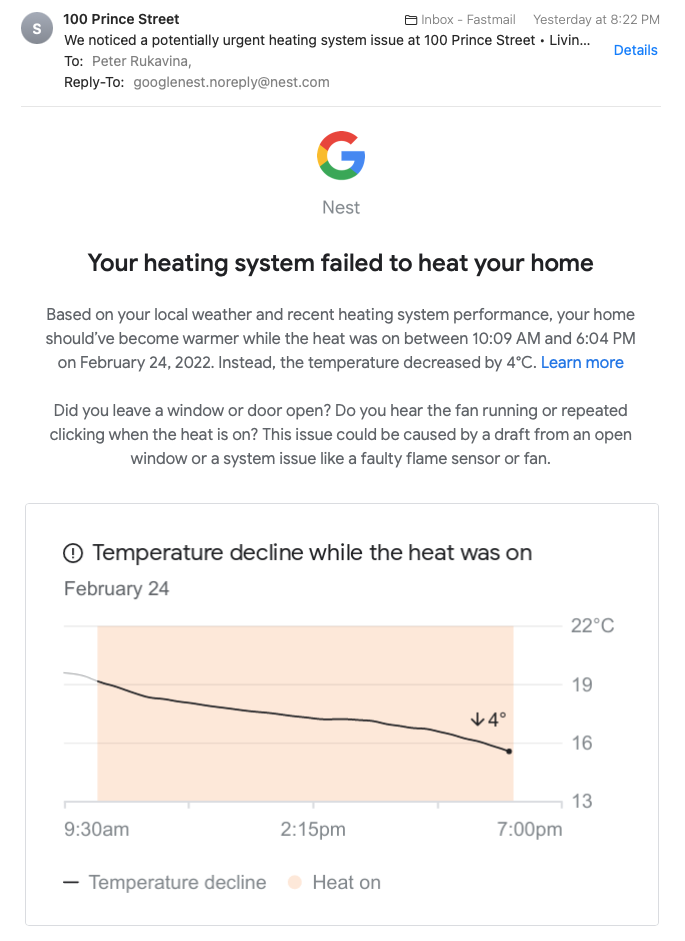
“Your heating system failed to heat your home,” said the email. Which came from Google by way of the Nest thermostat that controls one of the three zones our oil-fired boiler has:

Based on your local weather and recent heating system performance, your home should’ve become warmer while the heat was on between 10:09 AM and 6:04 PM on February 24, 2022. Instead, the temperature decreased by 4°C.

I didn’t know my thermostat was paying attention to this degree!

While I was on my way home anyway–where I found the temperature, was, indeed, a chilly 13.5ºC–I take comfort from knowing that my thermostat will by watching out for me when and if I travel farther afield.

Screen shot of an email message from my Nest thermostat.

The extent of my knowledge of my HVAC system is “when something goes wrong, try pressing the reset button on the burner.” So when I got home, I tried that. The furnace sprang to life. The water temperature gauge started to slowly creep from 100ºC to 200ºC, and eventually the radiators started to receive hot water, and the house slowly warmed up.

The house was still warm in the morning, but when I came home around lunch time it was down to 18ºC, despite the thermostat being set to 20ºC.

I called Kenmac Energy and talked to Mike. Mike said he’d despatch someone, and 10 minutes later there was a knock on the door, and two enterprising technicians went down to the basement to see what was up.

”The nozzle and the oil filter were plugged up,” was the report, once they emerged. 

Heat is back to normal. I am chastened: I should have booked a cleaning last summer, but I didn’t. I’ve got a reminder to book one come July.

🗓️
100 Prince Street  •  Nest  •  Thermostat  •  Furnace  •  Kenmac Energy

This was the scene I was greeted with in my driveway the other afternoon. I have no idea what befell horse and rider, and I fear I may have been involved somehow, without knowing it.

Let’s be careful out there.

🗓️

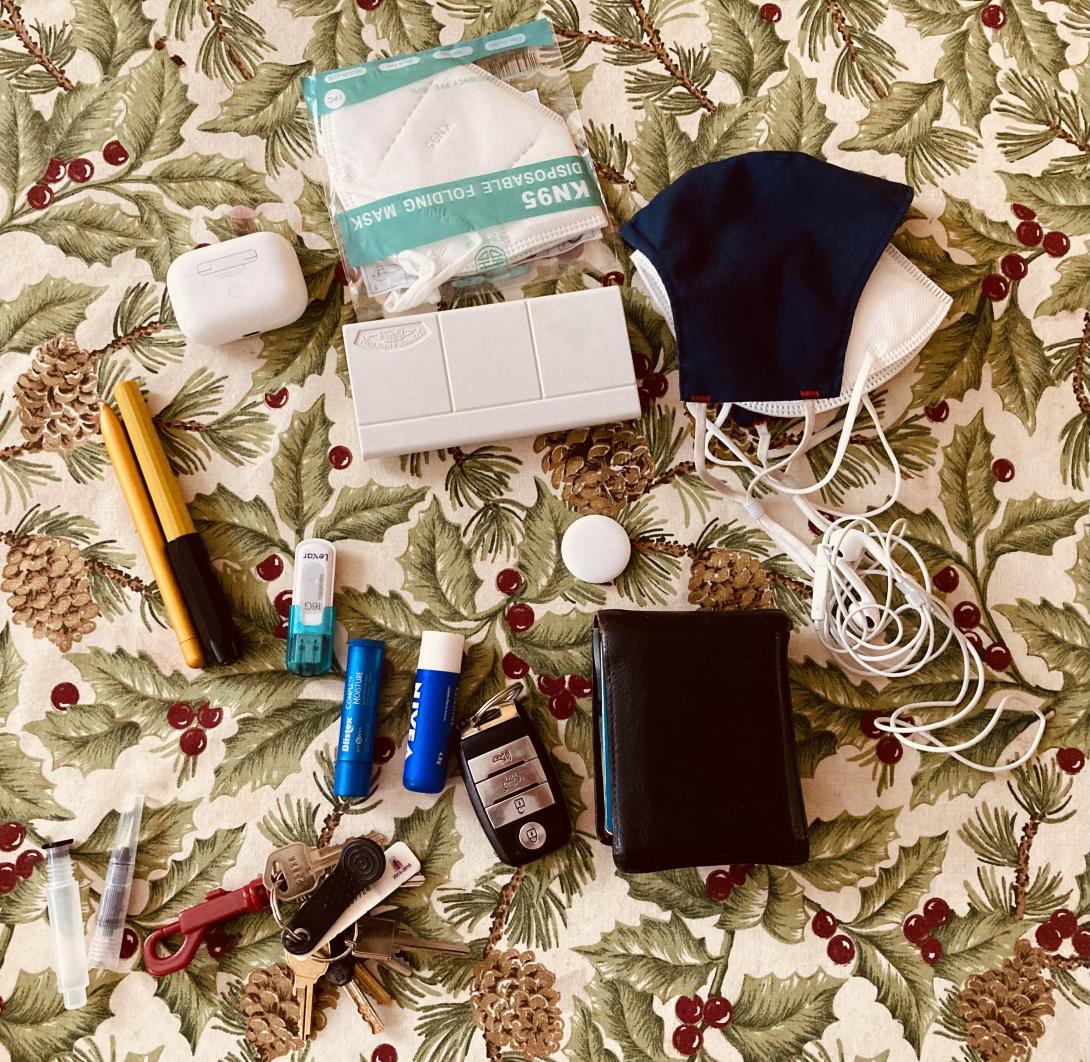
An unfortunate pen leak caused me to need to empty my Bolstr bag for a wash. Here’s everything that was in it, the 2022 edition of my “everyday carry” kit:

  • two KN95 face-masks, one active and one spare.
  • Medium Rare-brand cloth mask
  • AirPods Pro
  • watercolour set
  • water brush
  • Kaweco fountain pen
  • Baron Fig ballpoint pen
  • AirTag
  • Apple earbuds
  • wallet
  • two tubes of lip balm
  • USB stick
  • car keys
  • house and office keys
🗓️

About This Blog

Photo of Peter RukavinaI am . I am a writer, letterpress printer, and a curious person.

To learn more about me, read my /now, look at my bio, listen to audio I’ve posted, read presentations and speeches I’ve written, see things I’ve favourited elsewhere, or get in touch (peter@rukavina.net is the quickest way).

I have been writing here since May 1999: you can explore the 25+ years of blog posts in the archive.

You can subscribe to an RSS feed of posts, an RSS feed of comments, an RSS feed of favourites elsewhere, or a podcast RSS feed that just contains audio posts. You can also receive a daily digests of posts by email. I also publish an OPML blogroll.

InstagramYouTubeVimeoORCIDOpenStreetMapInternet ArchivePEI.artDrupalGithub.