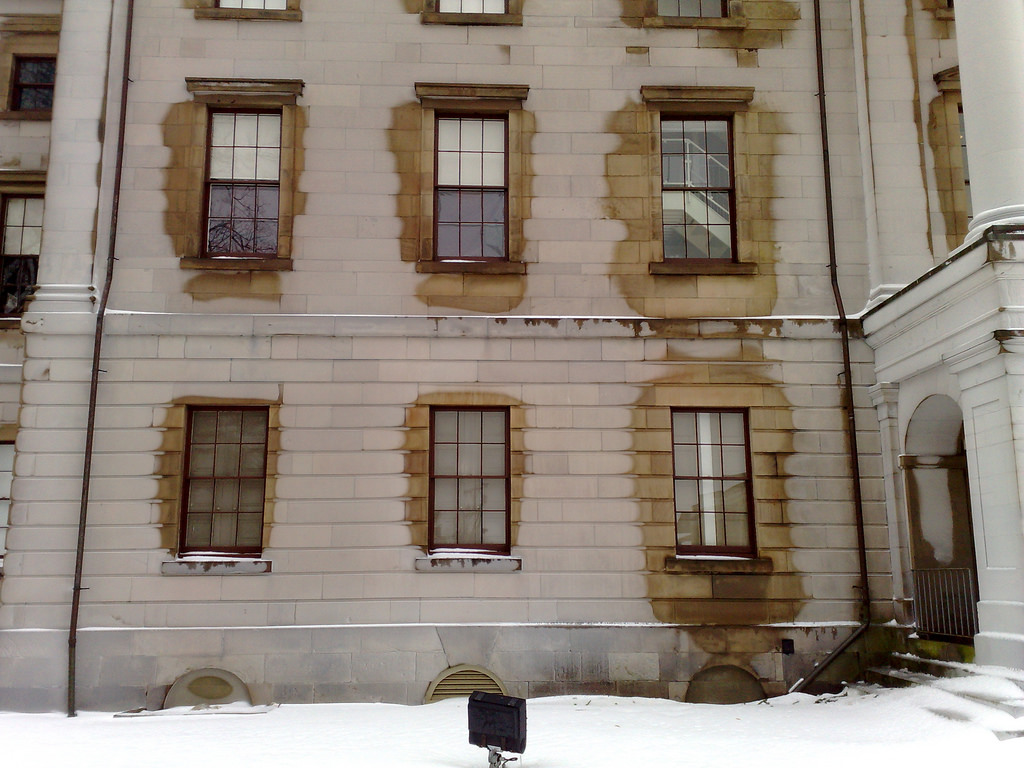

The venerable Town and Country Restaurant, run for 42 years by Louis and Faida Rashed until they retired in 2006, then briefly reconstituted in 2007 as an Asian fusion place, is scheduled for demolition. Letters went out on January 14, 2009 to property owners in the neighbourhood:
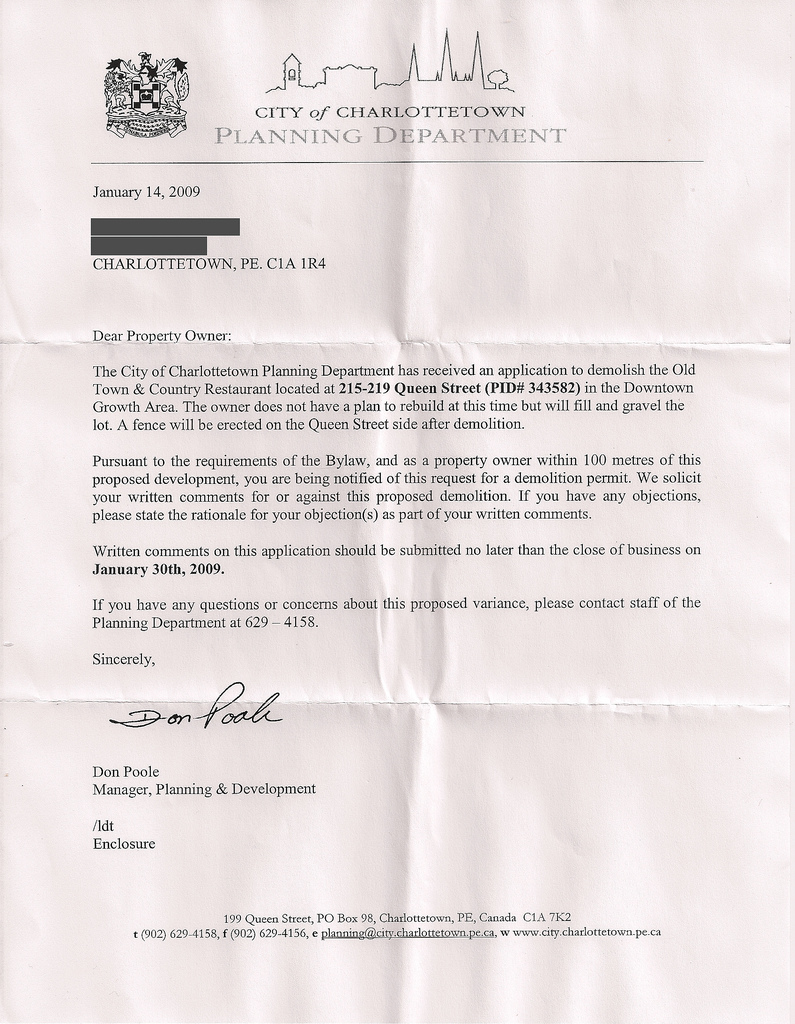
It’s sad to see a place that evokes such memories for so many meet such an ignominious end — from going concern to gravel lot in two years. She will be missed.
Now that both Catherine and I have Rogers Wireless Pay as you Go prepaid SIMs, it seemed like a good time to look at how much we’re spending each month, and whether it makes sense to move from pre-paid (flexible, maximum control, but hassle of topping up) to a monthly bill (less flexible, no top-up hassle, and may actually be cheaper). To this end, I logged on to the Rogers website and look at my last month of usage (which is all they make available). While they don’t have an export option on their report page, I was able to simply cut-and-paste the tabular text into Numbers on my Mac for further analysis; here’s what I learned:
Over the same period, Catherine’s bill was $39.50. She doesn’t use data on her mobile, and she doesn’t send text messages: in other words she uses the phone as, well, a phone. And she talks more: the average cost of her outgoing calls was $1.12.
So, in the end, our combined monthly cost for mobile service was $66. Rogers has a “family plan” where 2 lines share 300 minutes a month for $35 total, which seems like a good alternative. Stay tuned.
Update: through the magic of wireless plan pricing voodoo, the so-called $35 family plan actually comes out to $49.90 per month before taxes, as they add on a $6.95 “system access fee” per phone, plus a 50 cent per phone 911 fee. But it’s still less than $66, and we would get to talk back and forth between the two phones an unlimited amount with no per-minute fee.
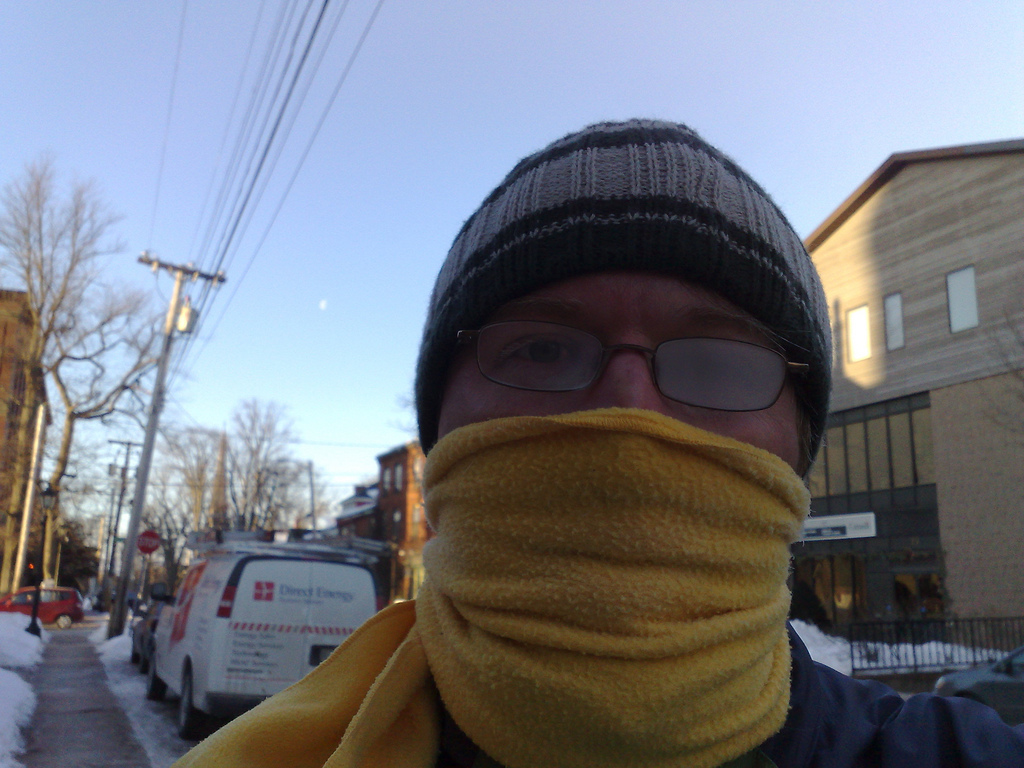
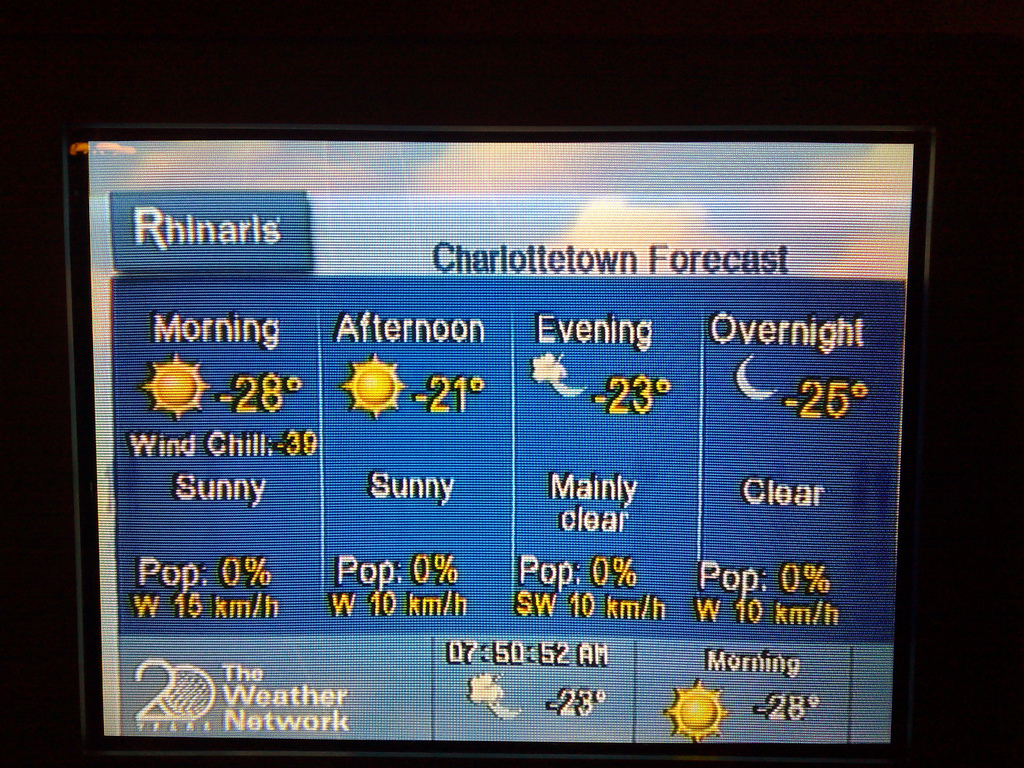
Catherine is, traditionally, in charge of keeping household appliances from freezing in our household. But during this bitterly cold snap she is away in Ontario, leaving me in charge. While normally a “trouble light” stuck inside the lower kitchen cupboard near the dishwasher will prevent freezing, I was afraid that a wind chill of -39 degrees would overpower this, and so I moved things up a notch:
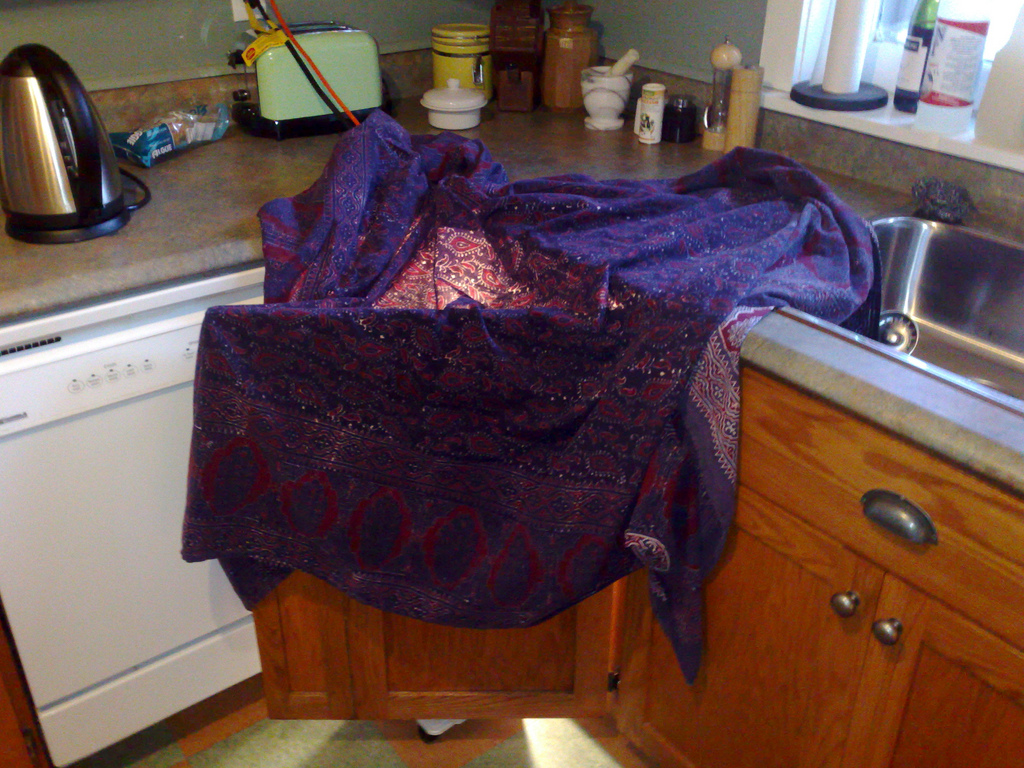
I took a sealed electric space heater, stuck it in the corner where the dishwasher is, and shrouded the entire operation to keep more of the heat in. So far so good: it’s toasty-warm inside the cavern through which the dishwasher’s pipes run.
Kitchen usability is unfortunately somewhat reduced by this new setup, but I’m willing to pay that price.
As if their legal assault on our friends the Tweels wasn’t enough, this week multinational developer Homburg has added a mysterious new feature to its Fitzroy Street Skyscraper:
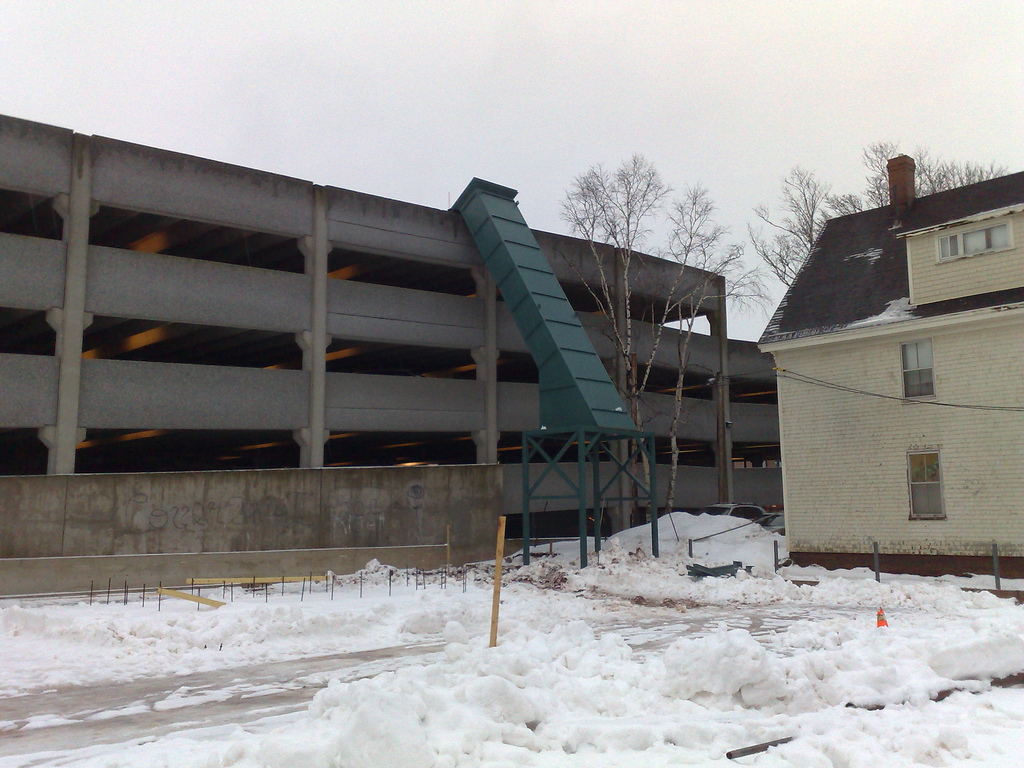
While the specific role of the new feature is unclear, the ruk.ca art department has come up with one possibility, an Employee Arrival Optimization Tunnel:
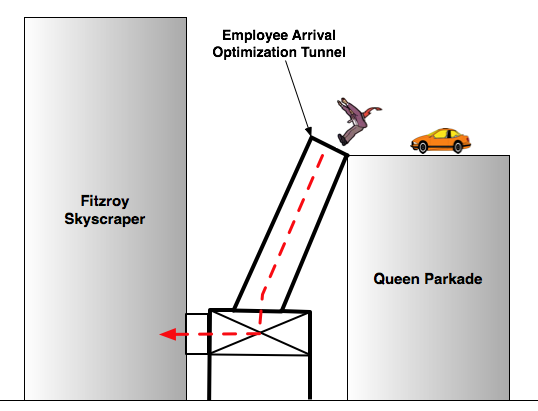
With the developer’s stated desire to squeeze every last square foot out of the property, it seems only logical to conclude that they would also seek methods to optimize the time of the employees who will one day work there.
I have been infected by both Steven and Deb in the 7 Things viral epidemic. I think this makes me the most popular blogger in the Charlottetown-Moncton corridor. I’m not sure if I should list 7 things or 14 things, or maybe 10.5 things. But here goes:
I thence tag: Shawn Murphy, Dale Sorensen, Billy Amon, Rob Lantz, Mark Leggott, Joel Ives and Dave Cormier.
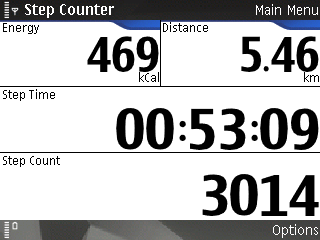
One of my favourite applications for my Nokia N95 mobile phone is Step Counter: it uses the accelerometer in the phone to detect every step I take and then displays information about when and how many steps I take each day.
When Step Counter is running on the phone, it looks like this:
Step Counter also keeps a diary of each day’s step activity, and provides several different ways for seeing this. For example, this graph shows the level of activity over the entire day:
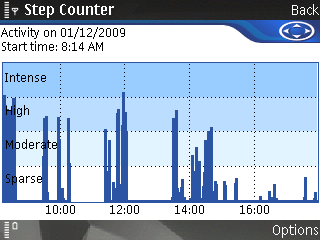
I started the day walking Oliver to school (it was cold yesterday, hence our “intense” walking), then walked to Casa Mia where I stayed motionless until 9:30 a.m. I then walked back to the office, worked a tiny bit, walked to the bus for 10:00 a.m. and then walked to my class at UPEI. Class was over at 11:20 and I walked to the cafeteria, had a walking lunch, then took the bus down to the Royal Bank stop where I got off and did some more outdoor intense-style walking down to the Credit Union, and then back to the office. I was sedentary until about 1:30 when I walked home, drove Catherine to the airport, did some errands, then picked up Oliver. We got home about 3:00 p.m. and, as you can see, I didn’t do a lot of walking around after that.
Oprah says we should be walking 10,000 steps a day, and Step Counter lets you set a daily goal, and then see your progress toward meeting it. Yesterday I did 6,717 steps, and so got about two thirds of the way there:
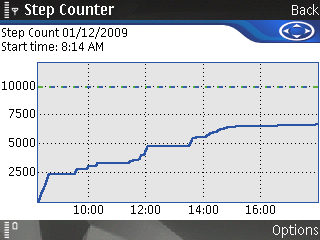
Even though I took the car to pick up Oliver, it was a fairly typical day for me. Even after just a day of tracking things, it’s obvious (and of course should have been obvious to me even without gizmotic assistance) that I’ve got some nighttime motionlessness issues, mostly television-watching related. A nice after-supper walk and I wouldn’t have much trouble getting into Oprah territory.
I woke up this morning thinking that the news-feeds would be crackling with reports about how Christian Colson said fuck on the Golden Globes broadcast last night — his film Slumdog Millionaire won Best Picture, the last award of the night, and when “Wrap Up” came onto the teleprompter he uttered one of the seven words you can’t say on television.
Given that there’s almost no coverage of this, I’m wondering if, perhaps, nobody other than Canadians watching on the anything-goes CTV, actually heard him.
Any of you Americans in the readership watching last night?
 I am Peter Rukavina and this is my blog. I am a writer, letterpress printer, and a curious person.
To learn more about me, read my /now, look at my bio, listen to audio I’ve posted, read presentations and speeches I’ve written, see things I’ve favourited elsewhere, or get in touch (peter@rukavina.net is the quickest way).
I have been writing here since May 1999: you can explore the 25+ years of blog posts in the archive.
 You can subscribe to an RSS feed of posts, an RSS feed of comments, an RSS feed of favourites elsewhere, or a podcast RSS feed that just contains audio posts. You can also receive a daily digests of posts by email. I also publish an OPML blogroll.
Instagram • YouTube • Vimeo • ORCID • OpenStreetMap • Internet Archive • PEI.art • Drupal • Github.