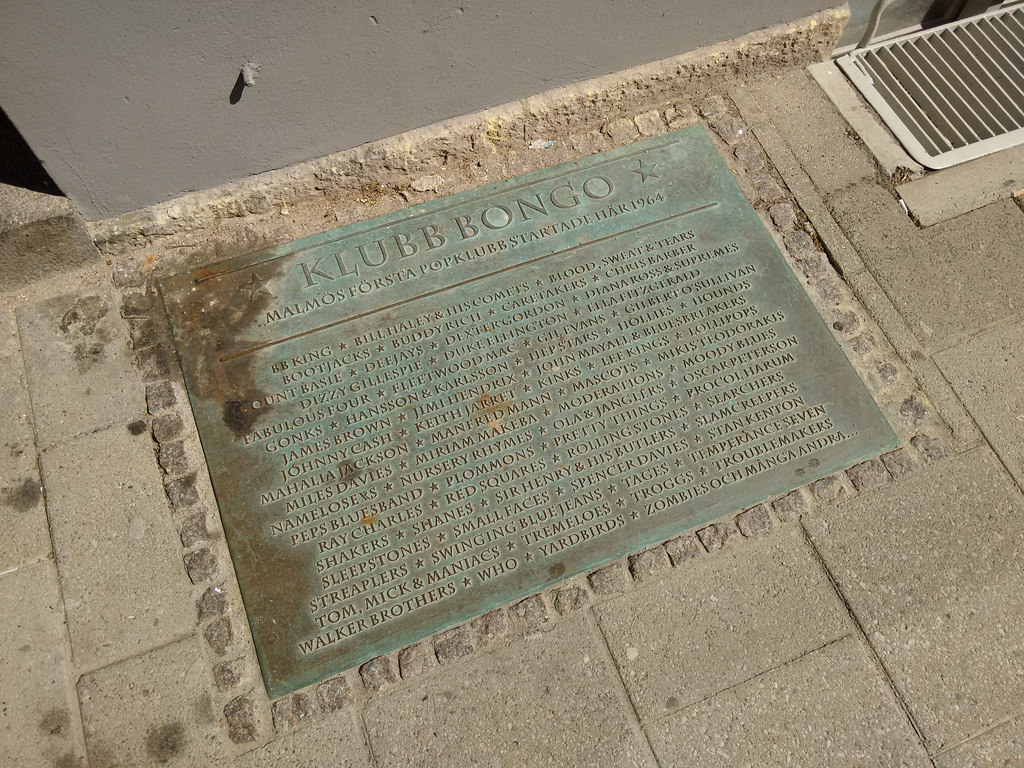
[[Luisa]] and [[Olle]] held their 10th anniversary party in this city-owned hall. In a previous incarnation the building was the original home to Klubb Bongo, a music club that hosted everyone from BB King to Ella Fitzgerald to Led Zepplin to The Who. The club is commemorated with a plaque embedded in the sidewalk out front.

Klubbongo in Malmö

🗓️
Malmö  •  Music  •  History
Audio file

I stopped for a snack at Malmö C (the central train station in the city) last night. There’s a piano in the waiting room and a group of young people were clustered around it picking out tunes, the last of which was the opening refrain from Celine Dion’s Titanic theme. Or was it?

🗓️
Malmö  •  Piano  •  Music

When we are sending messages — messages of any sort, be they SMS, morse code, messages in a bottle, waving hello across a crowded street — we need a protocol, a set of expectations for how the exchange of messages will play out.  Key to such protocols are two types of protocol messagesNAK and ACK.

NAK, or “negative acknowledgement,” is a protocol message sent when something’s gone wrong. “I can’t hear you.” “Noise on the line.” “I don’t understand.” “Please explain.” 

ACK, or “acknowledgement,” is a protocol message that signifies ”okay, got that, next…”

NAK and ACK can be used together, but, more often than not, their use anchors two fundamentally different methods for communicating.

Think of giving your credit card number over the phone. You can simply rhyme out the digits — “4111 1111 1111 1111” — and wait for the other party to interrupt or to reply, when you’re done, “could you repeat that.” A NAK, in other words. Or simply to proceed. Which allows you to assume they got the number.

Or you could spool out the credit card number digit by digit, waiting for confirmation from the other party. “4” (they say “4” or “OK”), “1” (they say “4” or “OK”), and so on. ACK ACK ACK.

These protocol messages are not only part of human communication, but also part of the very lifeblood of the Internet upon which you read this post. It comes to you, down in the engine room, via TCP/IP, a “reliable, ordered, and error-checked delivery of a stream of octets between applications running on hosts communicating over an IP network.”

Which is to say, a way of getting these words from my server to your browser in a way that works out for all concerned.

In the human realm the messaging systems we use most often, outside of face to face communication, are email and texting, and in both of these there is a fog of confusion surrounding whether we’re expected to use ACK protocol messages or NAK protocol messages.

I notice this fog most often with generations younger than mine: I will send a text message or email and never receive a reply. I’ve deduced that this isn’t because the message isn’t received, nor because it isn’t read, taken to heart, acted on. It’s simply that younger people than I have switched to only sending NAK when needed, and never sending ACK: they’ll let you know when there’s noise on the line, but otherwise it’s faith-based communication.

The contrast with my generation, which is more ACK-based, is more palpable because many of my peers over-ACK. So they not only reply to messages that cry out for an ACK, but they will often add a coda message, something like “Have a Great Day!” or “Thanks for doing this!” or “Great.” The youngers consider this, from the first ACK onward, wasteful over-communication.

As I sit almost exactly in the DMZ separating the ACKers and the NAKers, I have the most confusing position of all, as I need to decide, on a message by message basis, which way to go. And, especially in recent years, as I try to trend younger and fight off my impending agedness, I opt for NAK. Which is a mistake when there’s a clear expectation of ACK.

This all came to a head in March during a protracted, stressful flurry of ACKnessless for which I was socially called to task.

As a result, I’ve jumped over to the other side, going so far as to not only always ACK, but to prophylactically establish an expectation of impending ACK by engaging in pre-message messaging. “I’m heading to the train station now. I will text you once I’m on the platform and then, again, when the train arrives.” That sort of thing.

If you’re going to commit messaging faux pas, I ration, it’s better to err on the side of being annoyingly over-communicative than annoyingly under-communicative.

Please acknowledge that you’ve read and understood this post.

🗓️
Protocols  •  ACK  •  NAK

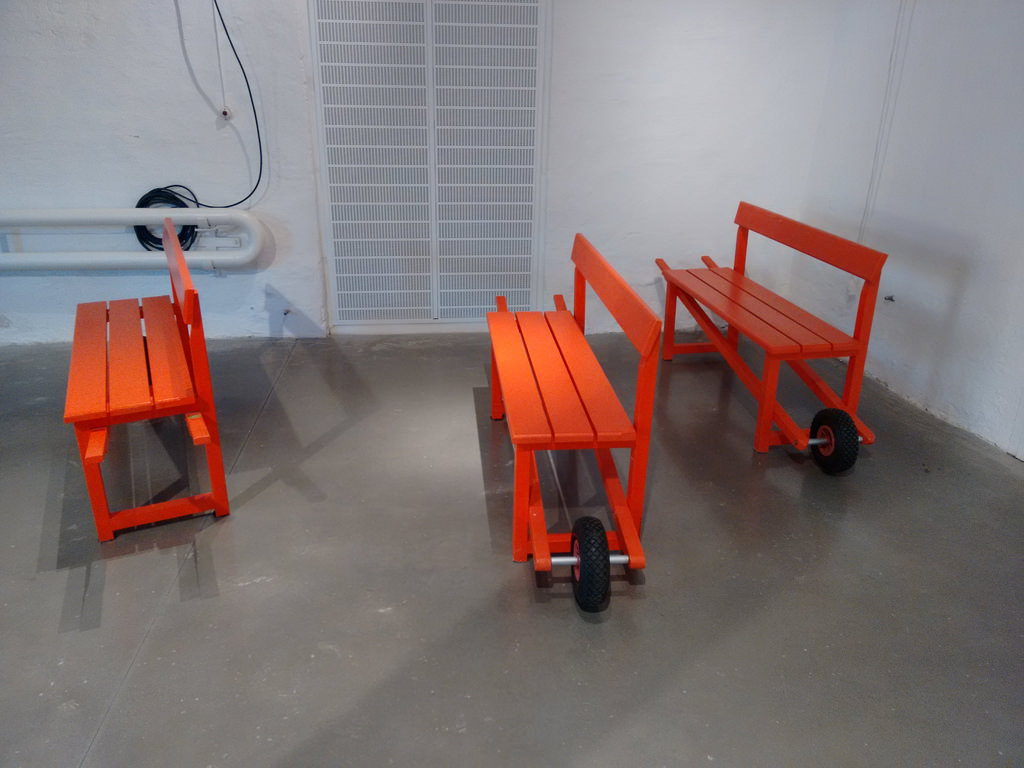
In the lobby of the Form/Design Center in Malmö, benches that are easy to move.

IMG_20160506_135913

🗓️
Design  •  Malmö

🗓️

Hot on the heels of Jane Siberry’s new album, Brian Eno has a new album too, The Ship (Eno produced tracks on Siberry’s 1993 album When I Was a Boy). I walked around downtown Malmö this afternoon in a disconnected ethereal haze listening to it.

Of the album, Eno writes on his website, in part:

One of the starting points was my fascination with the First World War, that extraordinary trans-cultural madness that arose out of a clash of hubris between empires. It followed immediately after the sinking of the Titanic, which to me is its analogue. The Titanic was the Unsinkable Ship, the apex of human technical power, set to be Man’s greatest triumph over nature. The First World War was the war of materiel, ‘over by Christmas’, set to be the triumph of Will and Steel over humanity. The catastrophic failure of each set the stage for a century of dramatic experiments with the relationships between humans and the worlds they make for themselves.

From the third track, Fickle Sun (ii) The Hour is Thin:

Well lad, you’ve taken my heart away.
I shall miss the grin of the cold, black sea.

Before ever there was writing, they were taking up stones
To hurl at last stroke,
But nobody looked back.

There were soldiers,
There was a cradle.

The universe is required.
Please notify the sun.

It is a bracing, brooding, symphonic album best listened to in a contemplative state. Recommended.

🗓️
Brian Eno  •  Music
Audio file

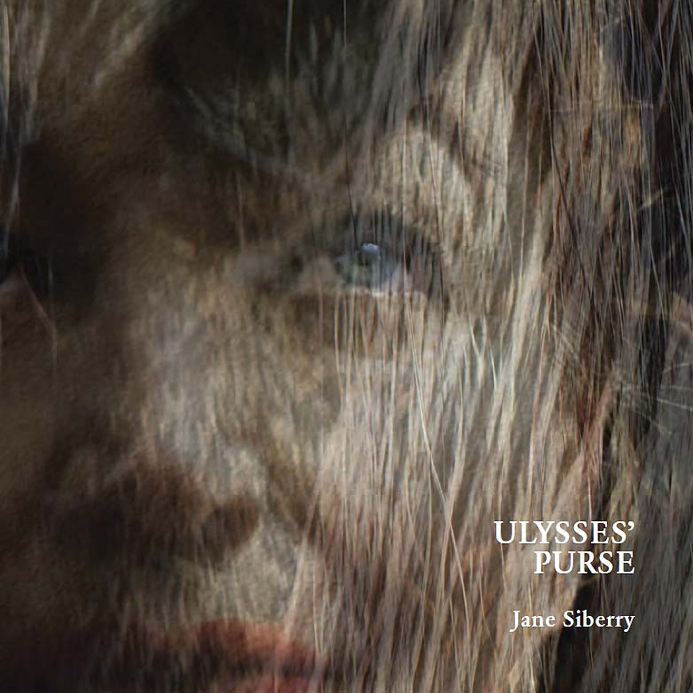
I have been an unremitting fan of  Jane Siberry since the very beginning. She released a new album, Ulysses’ Purse, earlier this year, a release that, despite my unremitting fandom, I did not discover until earlier this week.

My favourite track is Five & Dime; it is hard not to love a song with this line:

But lead her to a ledger of a hopeless nightmarish accounting mess
and she can bring the columns back to life with her numerical tenderness

As is usual and right with Jane Siberry, you can both buy the album and download its various components freely, as your needs and abilities dictate. You can also simply send her money via Paypal, which is the easiest way to complete a transaction: no shopping carts or registrations required.

Whatever way you choose to confront the album, I recommend you do so: it’s complicated and lovely and rich and melodic and confusing with a dizzying arrange of talented collaborators, including David Ramsden, Rebecca Jenkins, Mary Margaret O’Hara, and kd lang.

Album Cover

🗓️

At the end of an afternoon of wandering around Malmö discussing, among other things, the IndieWeb and its various glories, it seemed vital to place a marker here for the occasion.

I began the day with neither coffee nor food in the house; fortunately I am staying in the same neighbourhood as I did during my 2013 visit, and I recalled that the excellent Café № 6 was nearby. There was some doubt, what with Swedes gathered in solemn recognition of the Ascension1, that it might be closed. But it was not. And so by mid-morning I was enjoying a hearty cortado and croissant and feeling that, suddenly, all was right with the world.

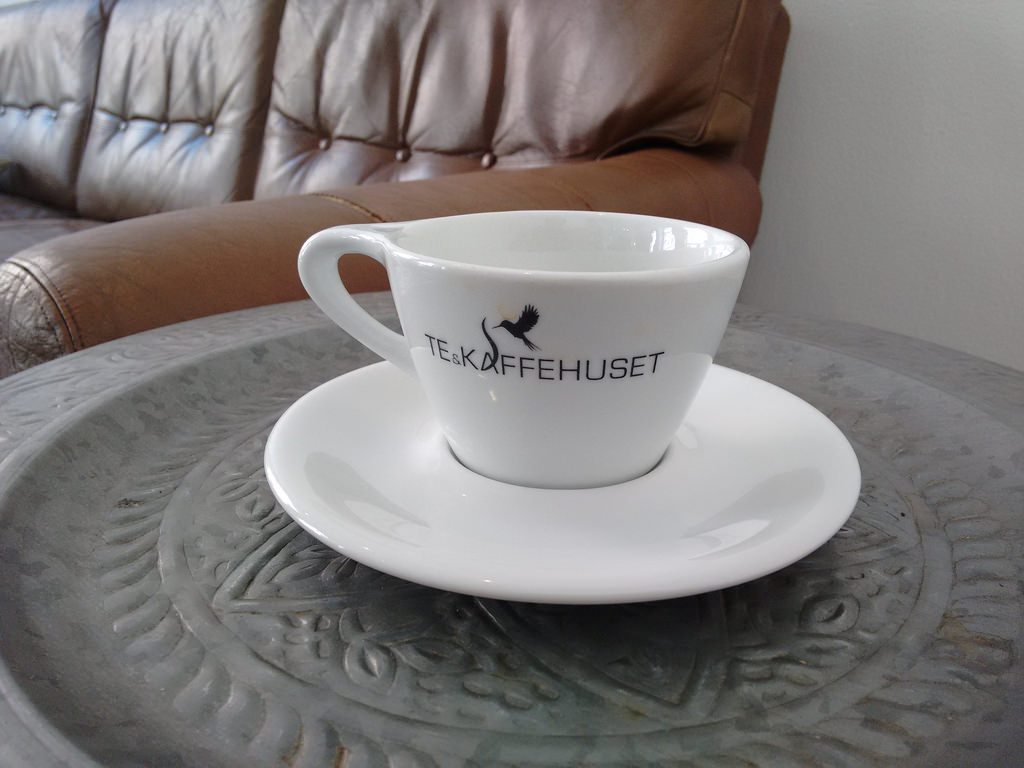
Once sated, I joined Olle and Luisa on a walk about town (it’s 17ºC and sunny here today), followed by a stop for lunch near the train station. Luisa decamped for home midafternoon and we were joined by special guest star Jonas at Te & Kaffehuset where more excellent coffee was had. We then walked about in the late afternoon sunshine through Slottsparken where the aforementioned IndieWeb was central to our discussion.

As I type it is after a brief respite of potato salad and roll before I rejoin my party for an early evening cocktail.

Te & Kaffehuset

1. This is not, technically speak, true. It is Ascension Day, and it is a holiday, but apparently there is little solemnity left.

🗓️
Coffee  •  Malmö

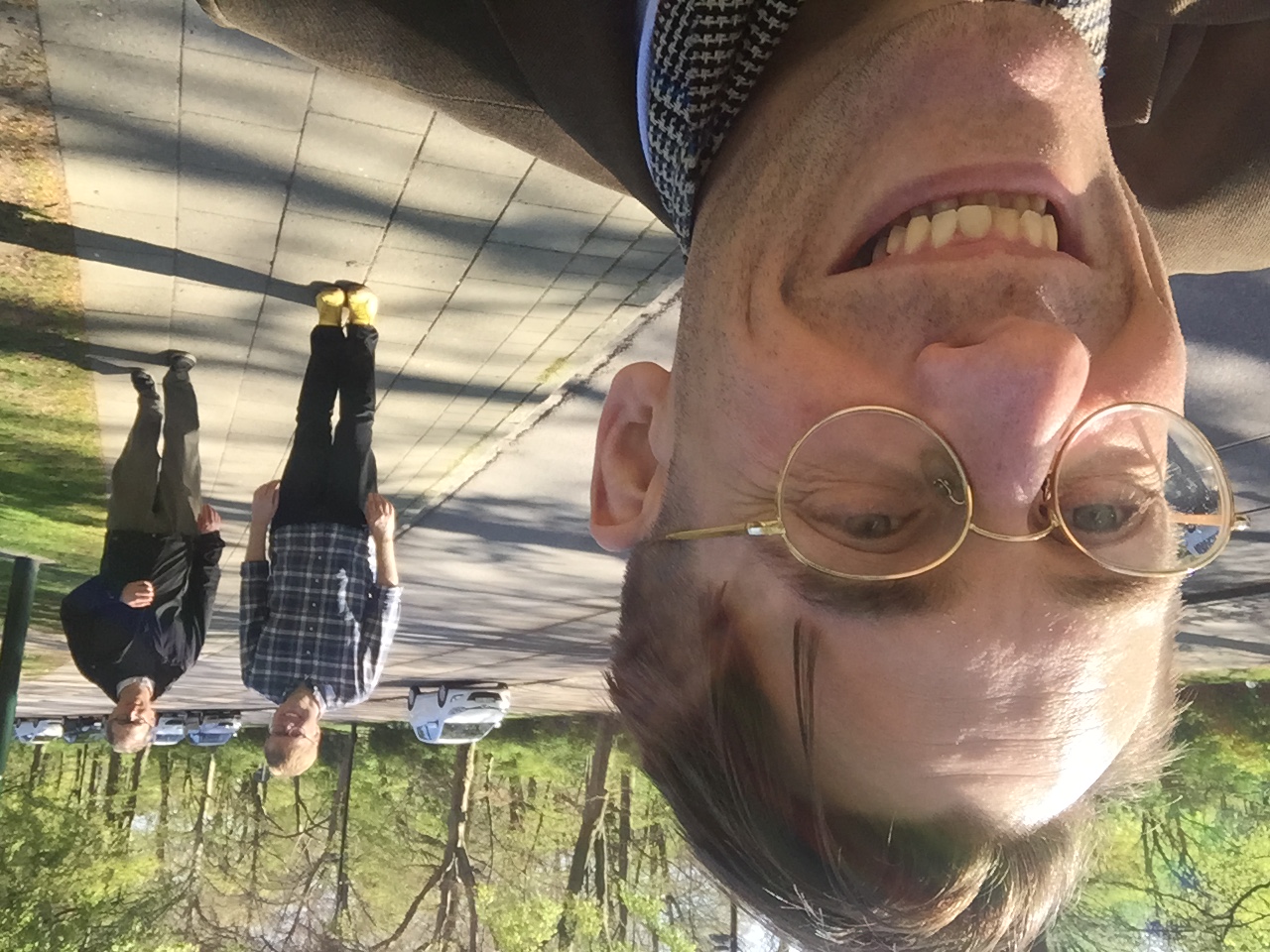
Postscript: This photo, taken by Olle (who’s in the foreground) got posted here during a demonstration for Olle and Jonas of the system I’ve set up to allow me to email photos to the blog. Alas, because it was taken on an iPhone, the issues raised here manifested themselves, and the photo is upside down. I’ll leave it so-oriented as a reminder to update the code to make allowances for iOS-sourced photos.

🗓️
Malmö  •  Photos  •  Olle Jonsson  •  Jonas Bengtsson

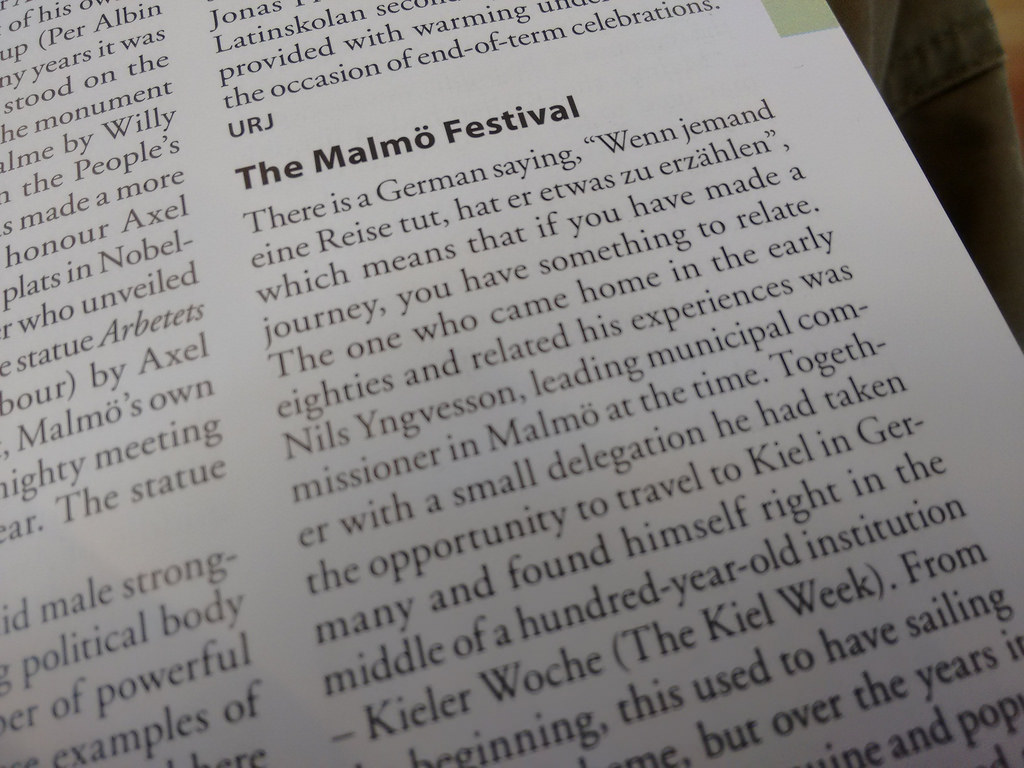
I came across this phrase in a city guide to Malmö yesterday in a description of the genesis of The Malmö Festival:

Wenn jemand eine Reise...

Which (proving its point), led me to this Matthias Claudius poem from 1786, which starts:

Wenn jemand eine Reise tut,
So kann er was verzählen;
Drum nahm ich meinen Stock und Hut,
Und tät das Reisen wählen.

The poem, as it happens, was set to music by Beethoven in 1805:

My wise brother Steve told me once that he thought I travel as widely and as often as I do primarily to accumulate good stories; I think this is what he meant.

🗓️
German  •  Travel  •  Malmö

About This Blog

Photo of Peter RukavinaI am . I am a writer, letterpress printer, and a curious person.

To learn more about me, read my /now, look at my bio, listen to audio I’ve posted, read presentations and speeches I’ve written, see things I’ve favourited elsewhere, or get in touch (peter@rukavina.net is the quickest way).

I have been writing here since May 1999: you can explore the 25+ years of blog posts in the archive.

You can subscribe to an RSS feed of posts, an RSS feed of comments, an RSS feed of favourites elsewhere, or a podcast RSS feed that just contains audio posts. You can also receive a daily digests of posts by email. I also publish an OPML blogroll.

InstagramYouTubeVimeoORCIDOpenStreetMapInternet ArchivePEI.artDrupalGithub.