My first couple of mobile phones were ones that I bought directly from Island Tel Mobility, the only local wireless carrier at the time on Prince Edward Island. I had to buy a phone from them because their CDMA network didn’t support phones with SIM cards; only their phones worked on their network.

When Rogers moved into the PEI market, with its GSM network, an entirely new world of phone choice opened up because Rogers allowed you to purchase a SIM card from them and stick it in whatever device you wanted and, as long as the device supported Rogers’ GSM frequencies, you were good to go.

Since that time, I’ve only ever used unlocked phones I’ve purchased outright from places other than carriers, and I’ve never had any problems both using these locally (first with Rogers, then with Virgin and, most recently, with Eastlink) and while traveling (by obtaining a local SIM in whatever country I’m in for temporary use; like this time in Berlin, for example).

I’ve always believed strongly that I should have the freedom to bring whatever hardware I want to a wireless carrier, and I’ve always avoided the “free” locked phones, with their long-term contracts, that carriers have long used as a way of locking in customers.

A year ago, here in Canada, the CRTC, which regulates the wireless industry, supported this philosophy by requiring phones to only be sold unlocked, and by banning unlocking fees.

This week I’ve learned that my current carrier, Eastlink Wireless, has taken a step backwards, and will now only support phones that it sells itself (a limited list that includes iPhones, and several Samsung and LG models of Android phone). They no longer support general-purpose “bring you own phone,” something I’ve had confirmed by email, chat and a telephone conversation (I simply couldn’t believe it was true).

It remains unclear to me whether I’m required to use one of the phones from this list, or whether they simply won’t support other phones; here’s what a salesperson emailed me when I asked:

We have launched our new Voice over LTE network across PEI and the phones that can connect to our new network must be compatible. We have a full suite of Volte phones available but do not bring over non Volte devices at this time. They will not connect to our 4g LTE Volte network and therefore will not give you optimum coverage.

The conceit here appears to be that, to optimize its spectrum, Eastlink is emphasizing its Voice Over LTE service (Volte), and has decided only to support Volte-capable phones, and, additionally, they’ve only decided to support the subset of Volte-capable phones that they sell themselves.

I can bring one of these phones to Eastlink, unlocked, and they’ll support it, so it’s not a complete prohibition against “bring your own phone,” but it remains a significant departure from past-practice, and a blow to customer hardware freedom.

I’m looking for someplace else to take my business.
🗓️
Mobile Phones  •  Cell Phones  •  Eastlink

Oliver and I had the chance to learn about my nephew’s plans for community college this fall, where he’ll enter the Community Integration Through Co-Operative Education program at Georgian College in Orillia, Ontario. The program is described like this:

This program is designed for students with diverse learning challenges who require academic accommodations and modifications. Students enhance their academic and vocational knowledge and skills in both core and integrated courses and practice this learning on field placements. Learning Facilitators modify integrated courses to students’ specific strengths and abilities, and provide accommodations, tutor and support sessions to ensure the work is challenging and achievable. Students prepare for success in entry-level work, and build independence and self-advocacy skills for adult life.

He’s very excited about attending, and Oliver got excited about the possibility of a similar program here on Prince Edward Island.

Unfortunately, no such program exists and, indeed, Holland College does not offer modified programming at all.

Reading Holland College’s Students with Disabilities page, I can understand why this is the case:

Holland College is committed to providing a fair and consistent admission process for all students, including students with disabilities, in accordance with their distinct needs and in a manner consistent with academic principles.

The college will attempt to accommodate your disability. An accommodation is reasonable providing it would not pose undue hardship to the college community, giving due consideration to budgeting requirements, outside sources of funding and support, and health and safety requirements, and would not in any manner reduce the standards, academic or otherwise, of the college.

If you have any kind of disability and wish to seek accommodation from Holland College:

  • when you fill out your application, explain your training and academic needs
  • provide relevant documentation of your disability to the Student Academic Supports department

You may be required to undergo an assessment to assist in the processing of your application.

Rather than embracing accessibility, Holland College, in essence, says “it’s okay if you have a disability, just don’t expect us to substantially change the way we do things.”

As a public institution, the college needs to do better than this.

🗓️

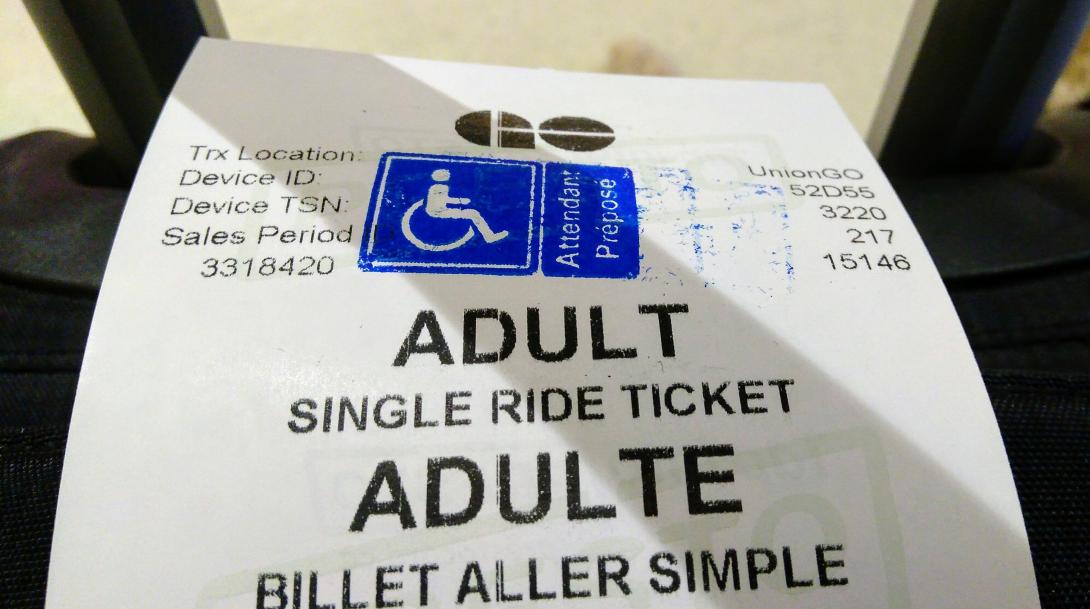
If you’re someone who requires a support person when you travel, that person can travel with you on Air Canada, WestJet and VIA Rail at no cost; our family has benefited from this several times, and I’ve always appreciated the moral underpinning of this policy, which is known as “one passenger, one fare.”

We didn’t learn until this trip that the same policy extends to the UP Pearson Express and GO Train as well.

For the UP Pearson Express, which runs from Pearson Airport to Union Station, you simply by one ticket, and declare the support person to the ticket inspector on the train. Details here.

For the GO Train, you buy one ticket and have it stamped with a blue “Attendant” stamp on purchase, and the ticket is used for both people. Details here.

The TTC—public transit in Toronto—has a similar policy, but it requires the support person to have a special “Support Person Assistance Card.”

I wish that someone had told us about all of this at raising-a-child-with-autism school.

🗓️

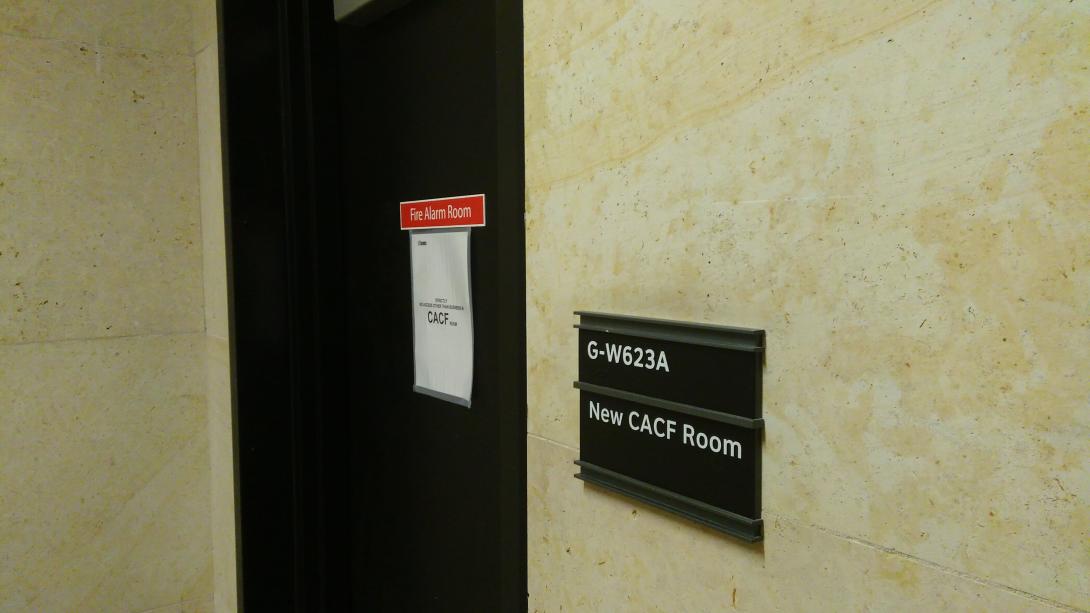
If you take the elevator from the main concourse at Toronto Union Station down to the GO Train concourse, you pass a room marked “New CACF Room.”

Croatian American Charitable Foundation? Common Application Configuration Framework? Camara Argentina de Contratistas Forrajeros?

No.

It’s the Central Alarm and Control Facilities room.

From the 2006 Ontario Building Code:

3.2.6.7. Central Alarm and Control Facility

(1) A central alarm and control facility shall be provided on the storey containing the entrance for fire fighter access referred to in Articles 3.2.5.4. and 3.2.5.5. in a location that,

(a) is readily accessible to fire fighters entering the building, and

(b) takes into account the effect of background noise likely to occur under fire emergency conditions, so that the facility can properly perform its required function under such conditions.

Now I really want to see what’s behind the CACF Room door.

🗓️
CACF  •  Toronto  •  Union Station

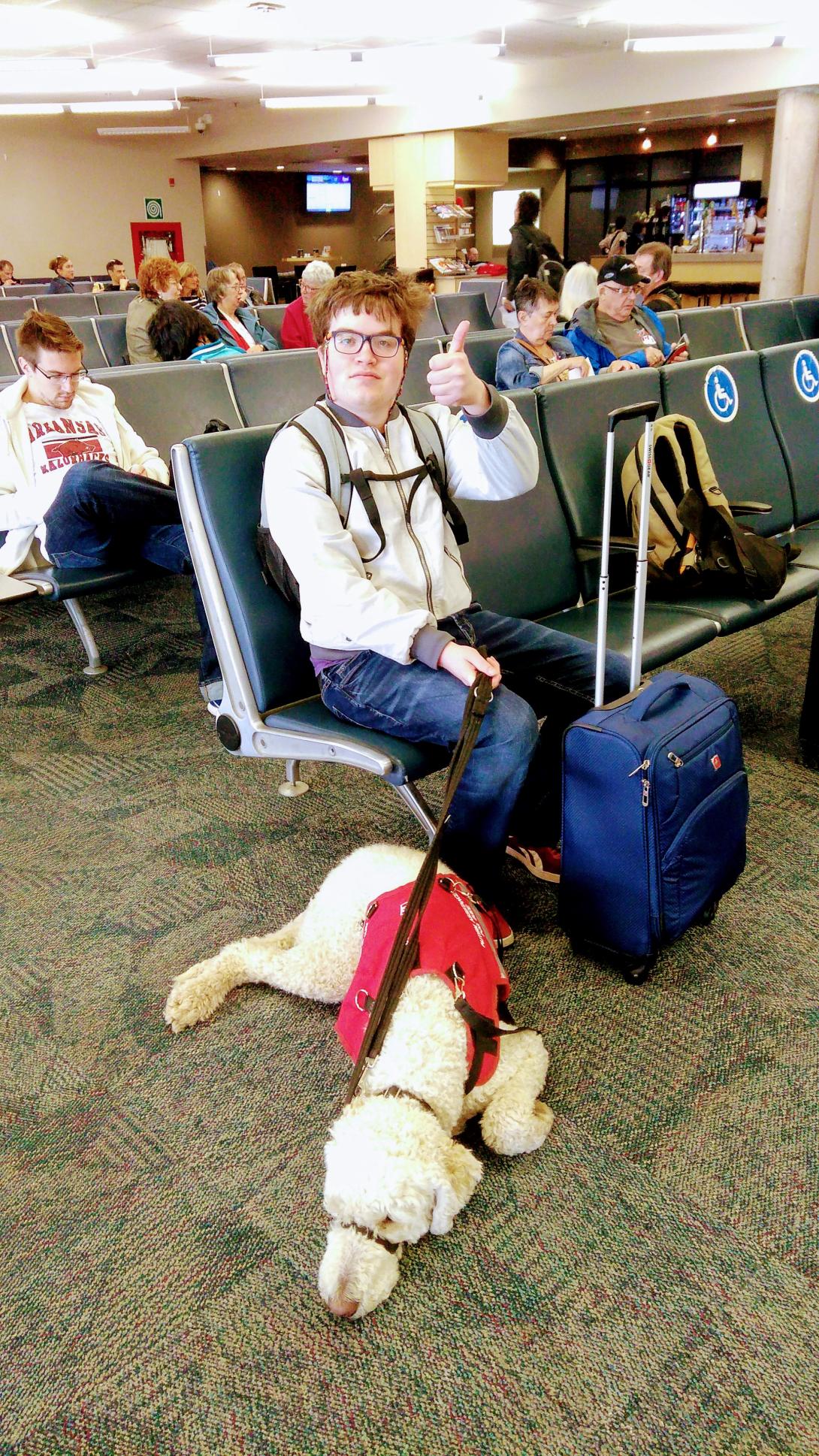
I am so enormously proud of Oliver for breezing through airport security this morning like it was the most natural thing in the world.

This was a Herculean effort for him, and the culmination of 18 months of working on his anxiety (see here).

The world is his oyster!

🗓️
Airport  •  Anxiety  •  Oliver  •  Autism Aviators

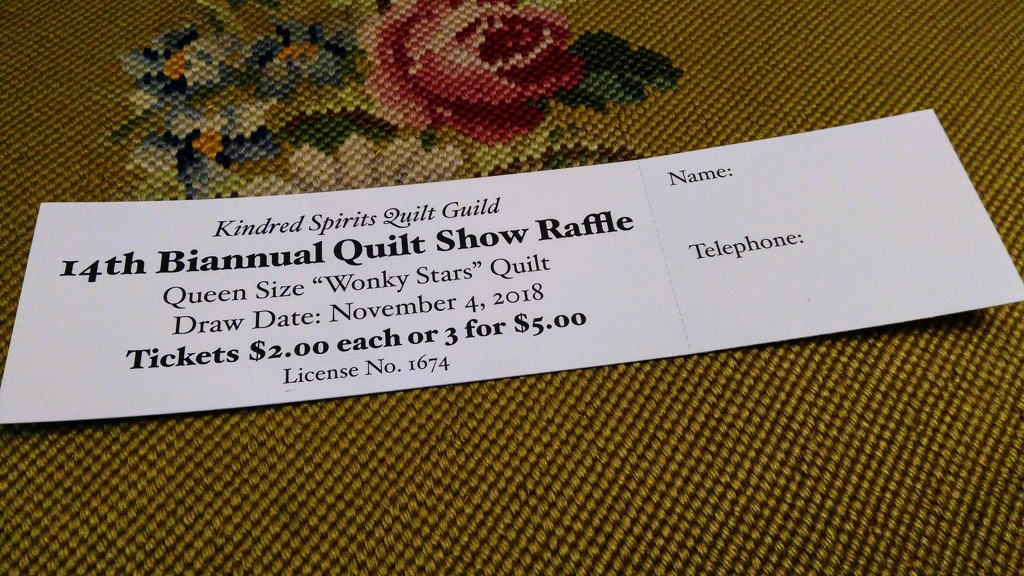
When I agreed to make up the tickets for this year’s Kindred Spirits Quilt Guild raffle, I bit off a little more than my time would allow to print on the letterpress (they need 1,500 tickets, perforated; not beyond my capacity, but a big job). So I reverted to my previous career as a graphic designer and produced a PDF for someone else to print, in this case Kwik Kopy, which did a nice job. Buy your tickets starting next week from Kindred Spirits members!

Photo of Kindred Spirits Quilt Draw ticket

🗓️
Printing  •  Design  •  Kindred Spirits

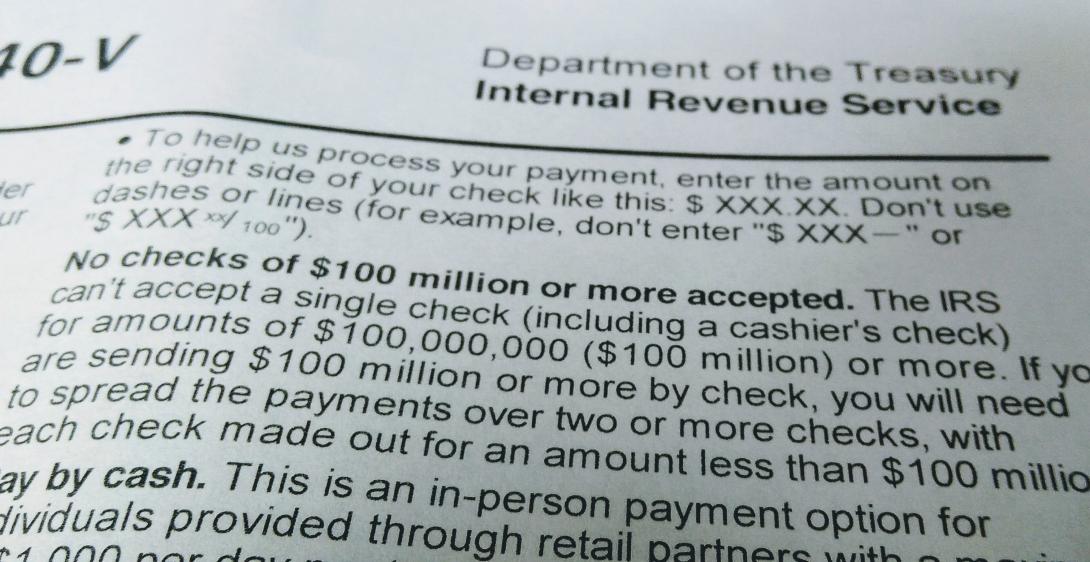
I wonder how often this presents a practical impediment.

🗓️
IRS  •  1040

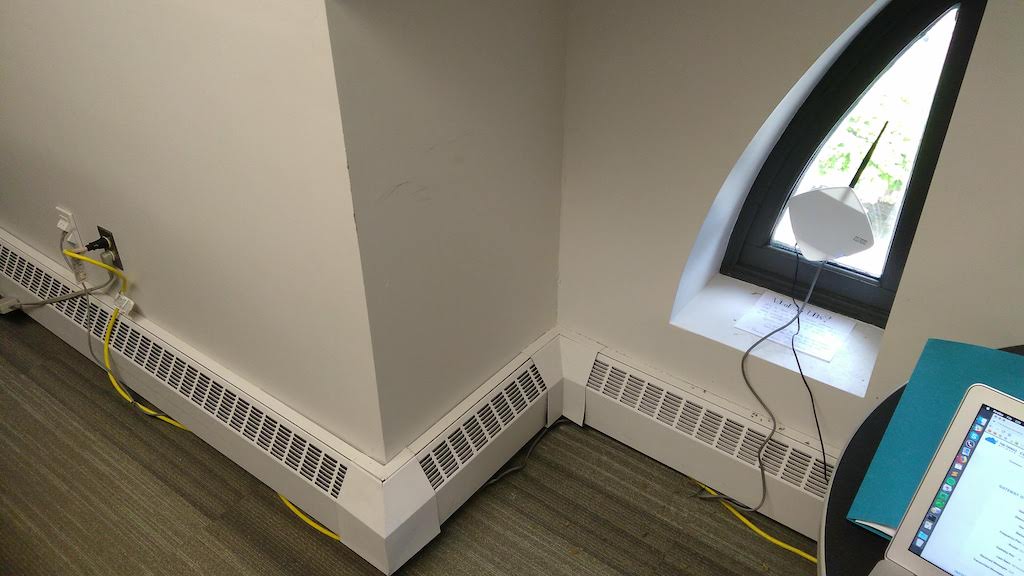
I’ve spent the week experimenting with The Things Gateway and The Things Uno, with hopes that we might deploy them as the basis of a low-cost sensor network in Charlottetown. I’ve written about this on The Things Network website.

Things Gateway at City Hall

🗓️

My friend Catherine Hennessey has called me twice in the past week, claiming to have heard me talking about rabbits on CBC Radio.

It turns out that, in celebration of its 400th episode, CBC’s Spark took a look back at the weird and wonderful it’s covered over the last 11 years. And I qualified, by way of the piece I recorded with host Nora Young about my Nabaztag rabbit back in 2007.

Nora’s such a great interviewer: she’s naturally curious and she made it easy to talk to her on the radio about a weird little magic French digital rabbit.

Mystery solved.

🗓️

There are a lot of reasons to take on a job: love, money, fame, power.

Today’s job, however, I took on almost entirely because it afforded me the opportunity to see inside the bell tower of Charlottetown City Hall.

When I say “job,” in this case, I mean “another wild unpaid pursuit,” and, in this case, that means setting the city up with a LoRaWAN network to allow citizens to contribute all manner of sensor data via a central, managed gateway.

I’m experimenting with gear from The Things Network, an ambitious Dutch effort to build simple low-cost LoRaWAN hardware and supporting server infrastructure: the idea is that you stick one or two gateways high up somewhere in central locations in a city, and each is able to drink in data from thousands of sensors located within range.

The bell tower at City Hall is not the tallest place in Charlottetown, but it is somewhat high, and does have the benefit of being publicly-owned with sustainability-minded people at the helm. So it’s a prime candidate.

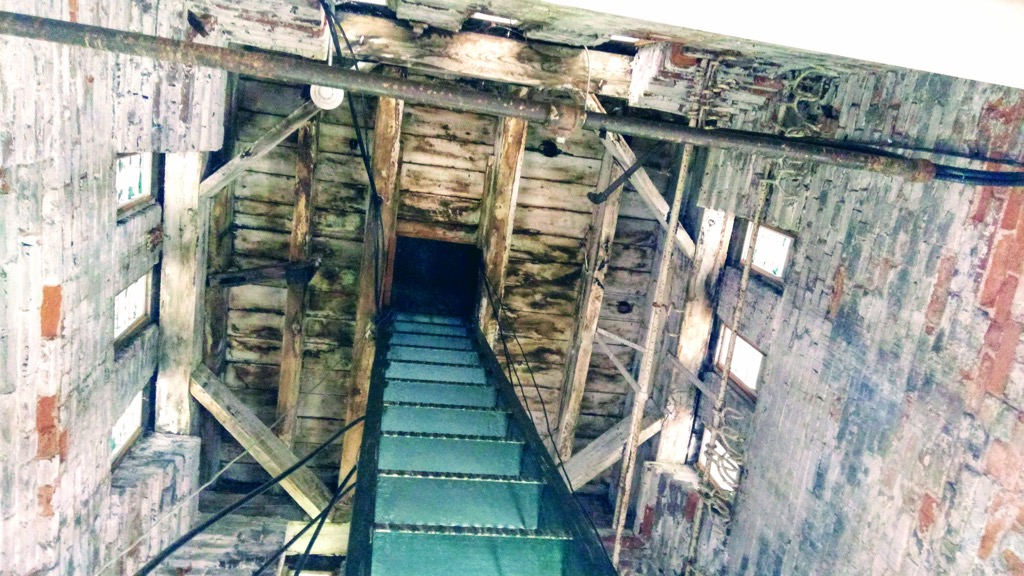
A view up the City Hall Bell Tower in Charlottetown.

The original plan was to do a test of the LoRaWAN gateway’s range from the very top of the bell tower, but once that idea saw the cold light of day, notions like “have you had fall-protection training?” came into play, and we down-scaled to do the testing from the top floor of City Hall instead, at least for now. But given that the bell tower door was right beside us, I was offered a look up. And seeing the ladder that leads upward, and then, worse, looking down, I realized that this was all for the best. If City Hall turns out to be a good location, then we’ll get a trained climber-of-high-things to mount the gateway high up.

As it happens, the test never got to happen: it turns out that The Things Gateway needs to have outbound access on a variety of ports to send its messages up to the MQTT server on the other end, and those ports are currently firewalled on City Hall’s guest wifi. So a request for firewall updates has been submitted, and we will bide our time.

But I did get to see the bell tower, and that was neato.

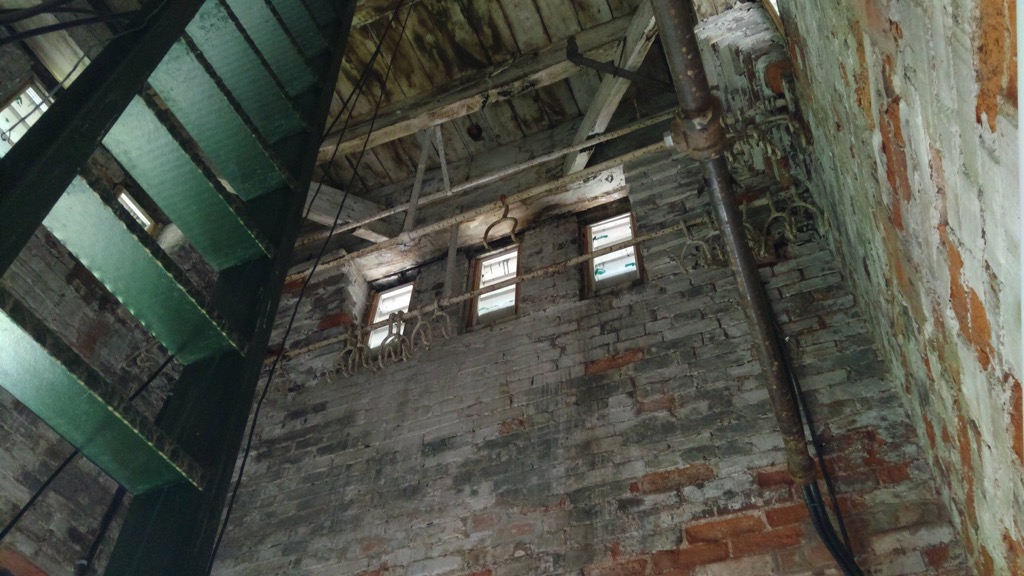
Among the highlights, was spotting what I have to assume are the hooks around which firehoses of yore were hung to dry (my initial assumption was that this is where City Hall would hang its beef to age, but that seemed implausible):

City Hall Bell Tower fire hose hangers

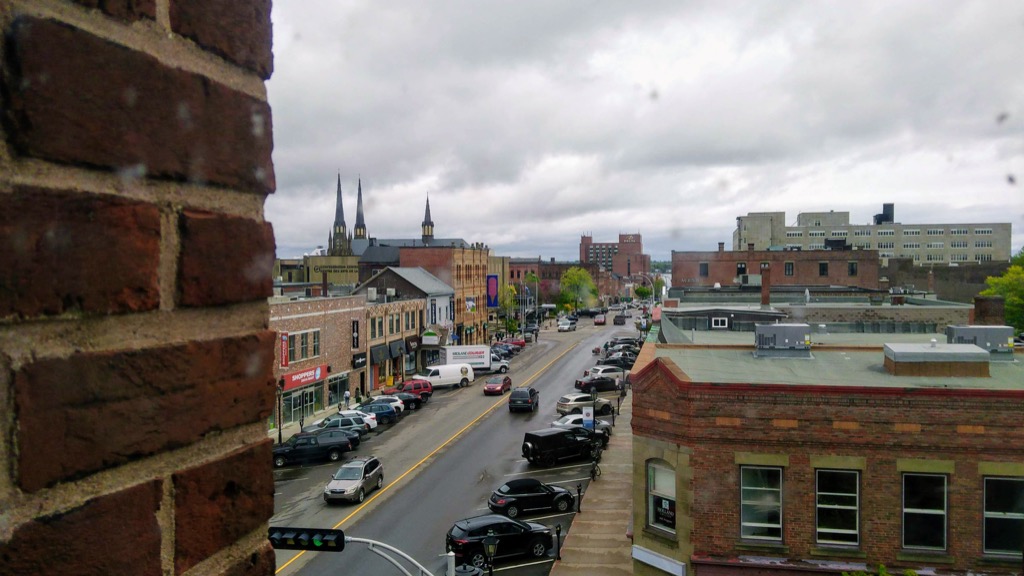
There’s also a very nice view down Queen Street from the windows at the bottom of the tower:

A view down Queen Street from City Hall.

Stay tuned for the next chapter in this exciting saga.

🗓️
Charlottetown  •  City Hall  •  LoRaWAN

About This Blog

Photo of Peter RukavinaI am . I am a writer, letterpress printer, and a curious person.

To learn more about me, read my /now, look at my bio, listen to audio I’ve posted, read presentations and speeches I’ve written, see things I’ve favourited elsewhere, or get in touch (peter@rukavina.net is the quickest way).

I have been writing here since May 1999: you can explore the 25+ years of blog posts in the archive.

You can subscribe to an RSS feed of posts, an RSS feed of comments, an RSS feed of favourites elsewhere, or a podcast RSS feed that just contains audio posts. You can also receive a daily digests of posts by email. I also publish an OPML blogroll.

Instagram • YouTube • Vimeo • ORCID • OpenStreetMap • Internet Archive • PEI.art • Drupal • Github.