Four years ago today it was the “Father and Son Picnic” at Government House, hosted by then-Lieutenant Governor Hon. Barbara Hagerman. Oliver dressed for the part:
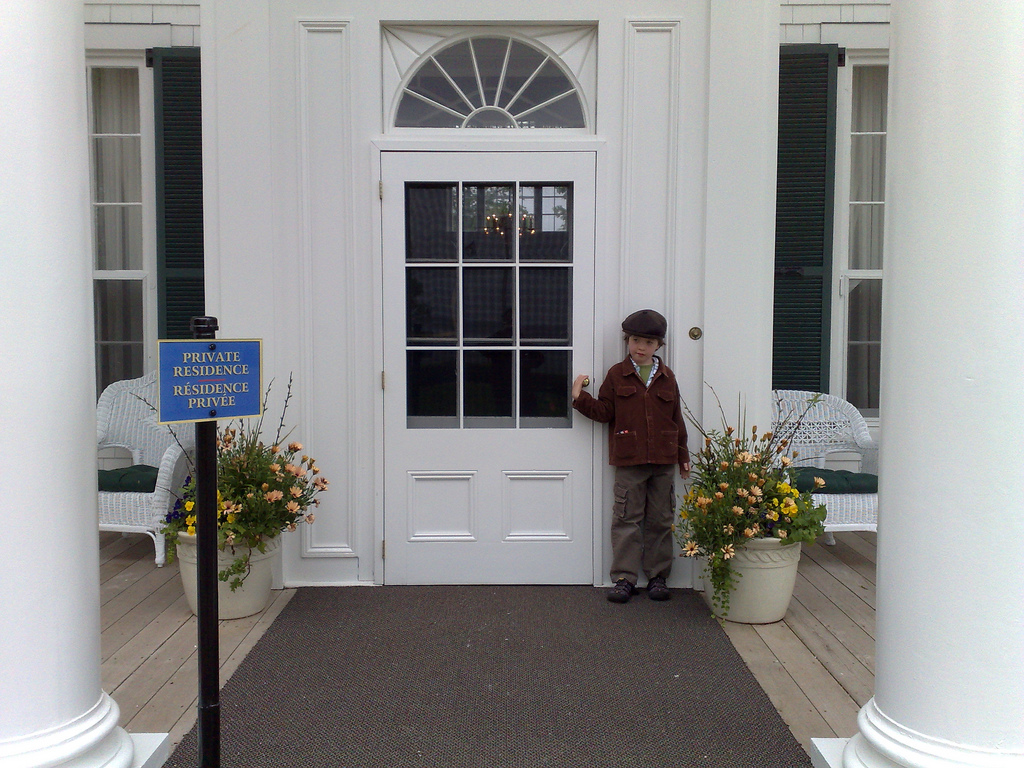

Four years ago today it was the “Father and Son Picnic” at Government House, hosted by then-Lieutenant Governor Hon. Barbara Hagerman. Oliver dressed for the part:
For a few hours this morning this space hosted a post where I held APM’s feet to the fire for stating that it was going to “preserve” the Kays Building under the guise of effectively demolishing it.
Apparently while that was the plan as recently as two weeks ago, the plans have changed, and I’m now told that the application that will go to Heritage Board for review tomorrow afternoon is of an actual preservation of the building, inside and out.
If this plays out as it’s been described to me, this is tremendous news.
We must remain vigilant, of course, as the old propose one thing and do another has been pulled by developers in this neighbourhood before.
But I have confidence — or at least hope — that the City of Charlottetown will exact sufficient assurances and guarantees from APM that we’ll end up with a valuable heritage resource maintained.
Kudos to Councillor Rob Lantz for alerting me to the error of my indignation, to the City of Charlottetown and CADC to guiding APM to this course and, as much as it pains me to say so, to APM for acting out of character and doing the right thing.
Microsoft has released a version of Photosynth, it’s panorama-taking mobile app, for Windows Phone, and so I’ve been experimenting with it as an alternative to Nokia’s Creative Studio on my Nokia Lumia 800.
Creative Studio is limited to stitching together four adjacent photos, so it cannot do a full 360 degree panorama, but it’s also a lot simpler to use. Photosynth, perhaps because my Lumia doesn’t have a gyroscope (I’m just guessing), gets confused sometimes with where the camera is pointing and insists that I “back up” to the last photo I took, which is often hard to do. So while it’s possible to get a more interesting pano out of Photosynth, it’s more tricky to do so.
While you can see the result of my first experiment inside a Photosynth browser, the app also drops the stitched photo into the filesystem for export, and I kinda like the way it looks flat too:
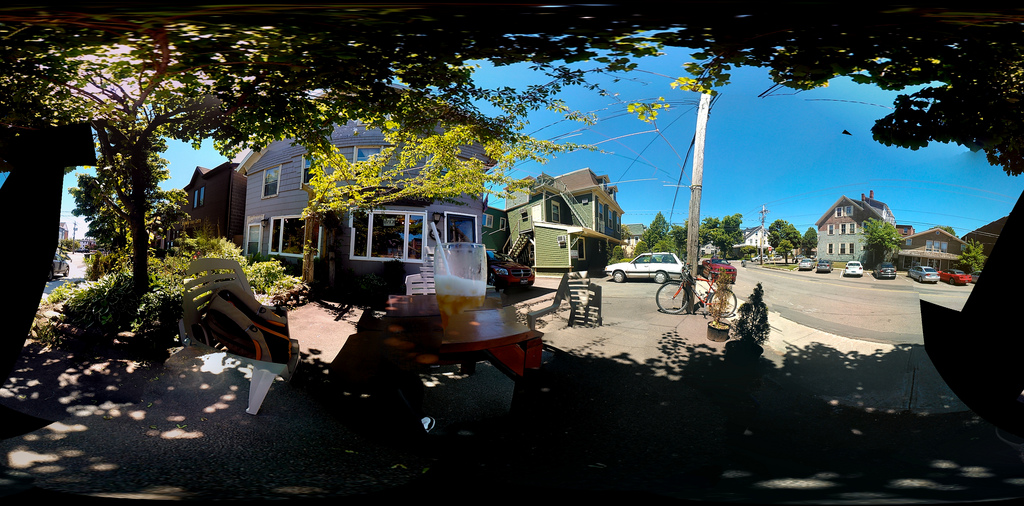
I like the way photos like this look both normal and unusual: there’s no way the eye could take all of that scene in unaided, but somehow it doesn’t seem all that fantastical.
Our Spring Fling at Prince Street School on Friday night was a grand success, especially if measured in fun-per-square-meter. Laura K. Bird ably stepped into the void left by Kelly Allen’s kids’ graduation to Birchwood last year and proved an excellent organizer. Hotdogs were eaten, faces were painted, suckers were pulled, cakes were won and everyone enjoyed the magic show.
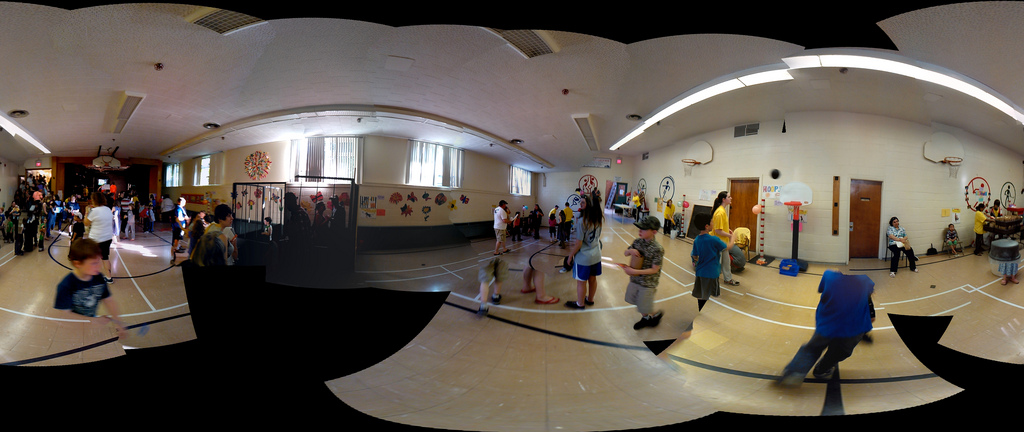
The final tally isn’t in yet, but early counting suggests we raised over $2,000, which will go to various home and school-supported projects at Prince Street. Thanks to all who volunteered, and all who attended.
I walk down Richmond Street past the Coles Building at least once a day, and for as long as I can remember the clock on the top of the building has been stuck at 7:00.
It started to bother me enough that I decided to see if I could push to have it fixed (this kind of thing seems to happen to me every decade or so, sometimes with catastrophic results).
So I wrote a letter to the Office of the Clerk of the Legislative Assembly. Which advised me to write to the Minister of Transportation and Infrastructure Renewal. Who replied to me quickly that parts were on order.
This morning, en route to the office, I looked up at the clock — a reflex now — and was surprised to see that it no longer read 7:00:
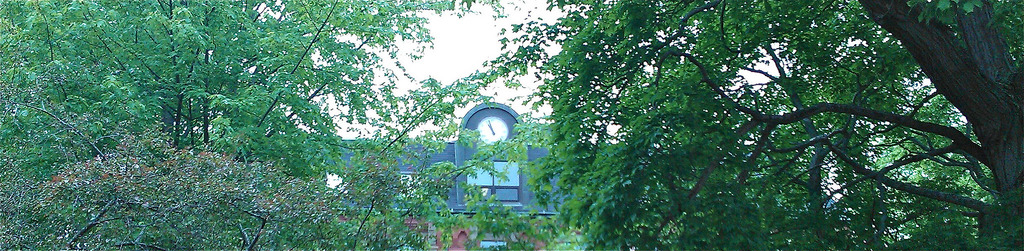
So I snapped a photo. And, as you can see from the timestamp of the photo, the time on the clock matches the time of the photo:
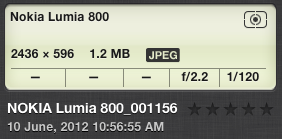
A small victory for fans of public time pieces everywhere, and once again an accurate indicator to me, on the way home, as to whether I’m late for supper or not. Thanks to Hon. Robert Vessey and his staff for making this happen.
We’re having our annual Spring Fling at Prince Street School tomorrow, June 8, from 5:30 p.m. to 7:30 p.m. It’s a great, inexpensive family night out and also the major fundraising event of the year for our Home and School.
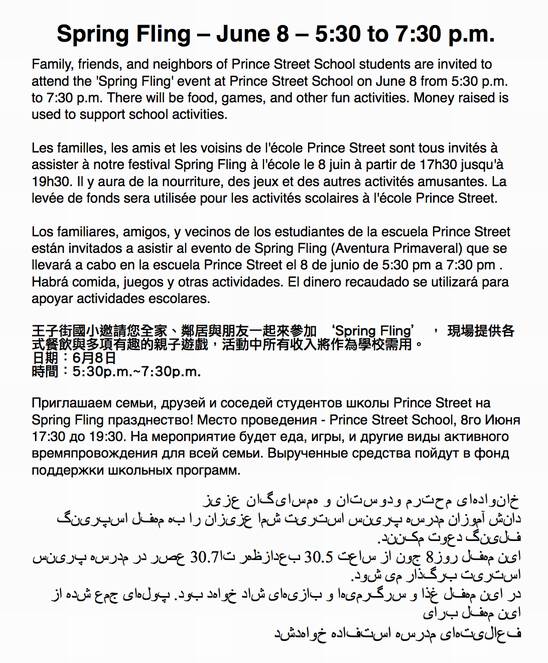
You can grab this multilingual flyer as a printable PDF if you’ve got a place to post it today or tomorrow!
I am fascinated by the notion of “telepresence” and so fascinated by this Danish project to virtually link together three playgrounds in different cities in the country. The video below, subtitled (in translation) “Three Danish cities have robotics playgrounds where children can send messages to the light and places in other cities” is from Denmark’s TV 2 broadcaster and is in Danish. But you don’t need to understand Danish to get the project.
I found out about the project from the excellent Malmö-based Medea, which has more details about the project.
Catherine jetted off to New York City this morning for a fun-filled week with our old friend (and erstwhile Islander) Cindy. They’re staying on the Upper East Side at a place that advertises itself as being “a unique setting for reflection, study, fellowship, and prayer.” I’m not sure they plan on doing much of any of that, but who knows what might happen.
In the meantime, this, young Oliver and I are left to fend for ourselves. We did not-so-bad this morning, although when the 8:10 a.m. leave-home-for-school time arrived I realized that I hadn’t completed the final few lunch-preparation steps mandated by Catherine (cut up the fruit, decant the hummus). Next week I won’t have the benefit of the “okay, so I’ve made most of Oliver’s lunch” program backing me up and will have to take things to another level.
If you happen to be in New York City for the next week, and have some sort of radical lesbian poetry knitting festival that you think Catherine needs to attend, please send word.
Oliver and I have a busy program of activities planned, from the downtown schools family fun day and the banquet of the Canadian Home and School Federation tomorrow through to an ambituous home renovation project (or, at the very least, a plan to clear out the front bedroom that’s been accumulating bits and bobs since last summer when it was our dumping ground for all things not required by our summertime renter during our time in Berlin).
So if, over the next week, you see me looking slightly more dedraggled than usual, or witness Oliver with his trousers on backwards or pita bread in his hair, you’ll now have some context.
 I am Peter Rukavina and this is my blog. I am a writer, letterpress printer, and a curious person.
To learn more about me, read my /now, look at my bio, listen to audio I’ve posted, read presentations and speeches I’ve written, see things I’ve favourited elsewhere, or get in touch (peter@rukavina.net is the quickest way).
I have been writing here since May 1999: you can explore the 25+ years of blog posts in the archive.
 You can subscribe to an RSS feed of posts, an RSS feed of comments, an RSS feed of favourites elsewhere, or a podcast RSS feed that just contains audio posts. You can also receive a daily digests of posts by email. I also publish an OPML blogroll.
Instagram • YouTube • Vimeo • ORCID • OpenStreetMap • Internet Archive • PEI.art • Drupal • Github.