Being a longtime member of the congregation of Stewart Brand, I have been following the Long Now Foundation and its tentacles in recent years; one of these is The Interval at Long Now, the coffee shop cum bar cum thinkers lounge cum library in San Francisco (where I’m pretty certain I could set up a cot and never leave).

Long Now has a speaker series called The Conversations at The Interval that has included as interesting a collection of great minds as you’ll find anywhere; back in 2015, or 02015 as the Long Nowistas style their years, Neal Stephenson spoke about his then-recently-released book Seveneves (which, oddly but somehow appropriately, you can read here in its entirety). I’d known of Stephenson for a long time, but had never read anything he’d written. His talk was so compelling, however, that I put Seveneves on reserve at the public library.

In an uncharacteristic marathon of reading–more analog pages than I’ve read in years–I finished the last page this morning, over breakfast at Receiver Coffee.

I loved it.

Maybe you will too?

Here’s how it starts:

The Moon blew up without warning and for no apparent reason. It was waxing, only one day short of full. The time was 05:03:12 UTC. Later it would be designated A+0.0.0, or simply Zero.

An amateur astronomer in Utah was the first person on Earth to realize that something unusual was happening. Moments earlier, he had noticed a blur flourishing in the vicinity of the Reiner Gamma formation, near the moon’s equator. He assumed it was a dust cloud thrown up by a meteor strike. He pulled out his phone and blogged the event, moving his stiff thumbs (for he was high on a mountain and the air was as cold as it was clear) as fast as he could to secure the claim to himself. Other astronomers would soon be pointing their telescopes at the same dust cloud—might be doing it already! But—supposing he could move his thumbs fast enough—he would be the first to point it out. The fame would be his; if the meteorite left behind a visible crater, perhaps it would even bear his name.

His name was forgotten. By the time he had gotten his phone out of his pocket, his crater no longer existed. Nor did the moon.

When he pocketed his phone and put his eye back to the eyepiece of his telescope, he let out a curse, since all he saw was a tawny blur. He must have knocked the telescope out of focus. He began to twiddle the focus knob. This didn’t help.

Finally he pulled back from the telescope and looked with his naked eyes at the place where the moon was supposed to be. In that moment he ceased to be a scientist, with privileged information, and became no different from millions of other people around the Americas, gaping in awe and astonishment at the most extraordinary thing that humans had ever seen in the sky.

In movies, when a planet blows up, it turns into a fireball and ceases to exist. This is not what happened to the moon. The Agent (as people came to call the mysterious force that did it) released a very large amount of energy, to be sure, but not nearly enough to turn all the moon’s substance into fire.
🗓️
Seveneves  •  Neal Stephenson  •  Books  •  The Interval  •  Long Now Foundation  •  Stewart Brand

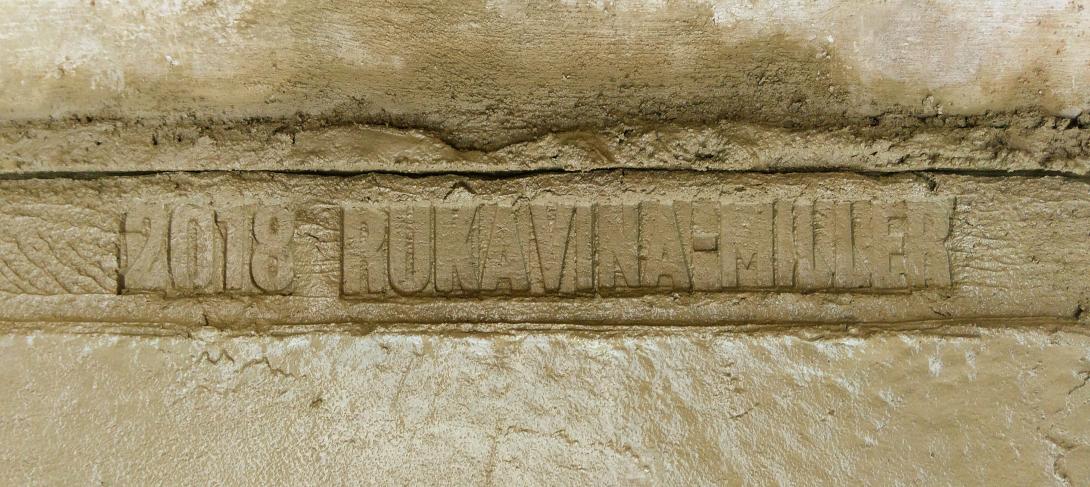
… but our names are forever joined in our new concrete driveway.

🗓️

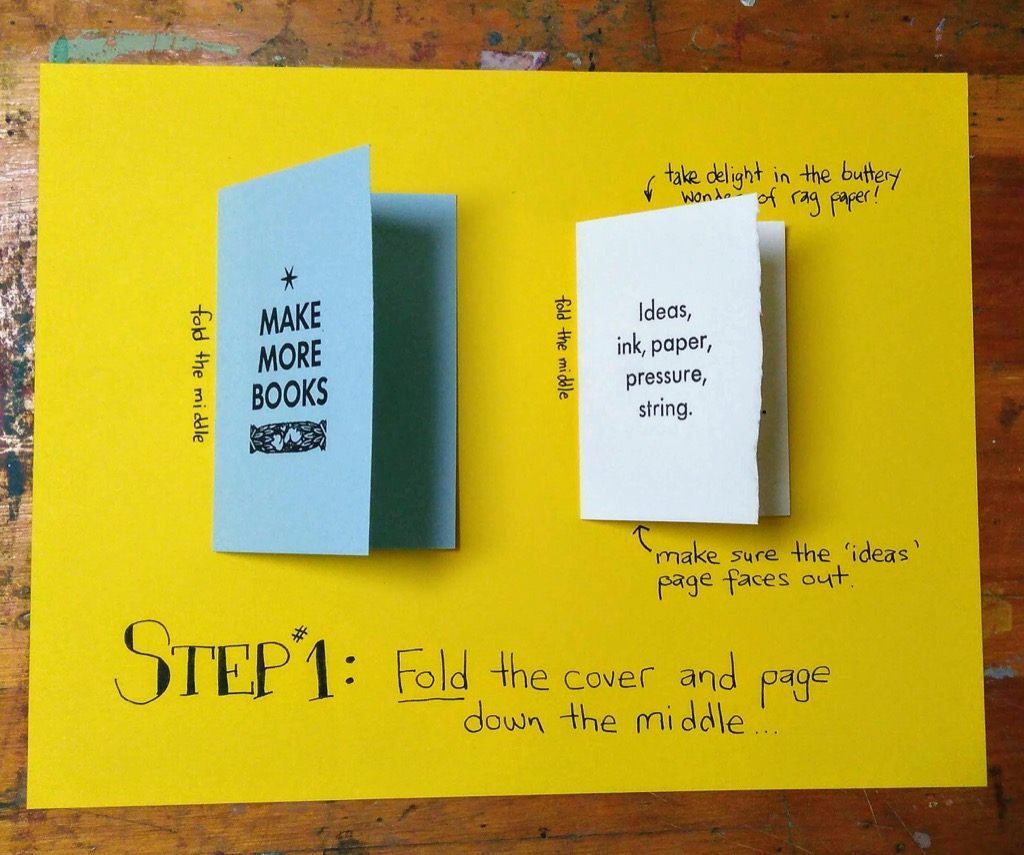
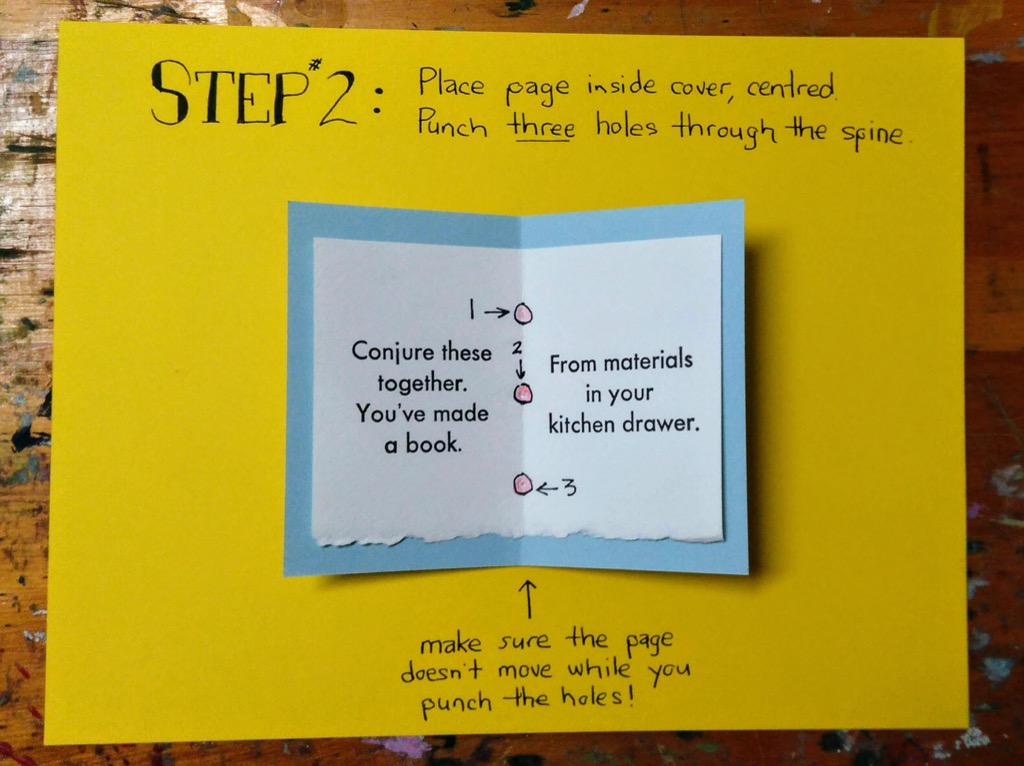
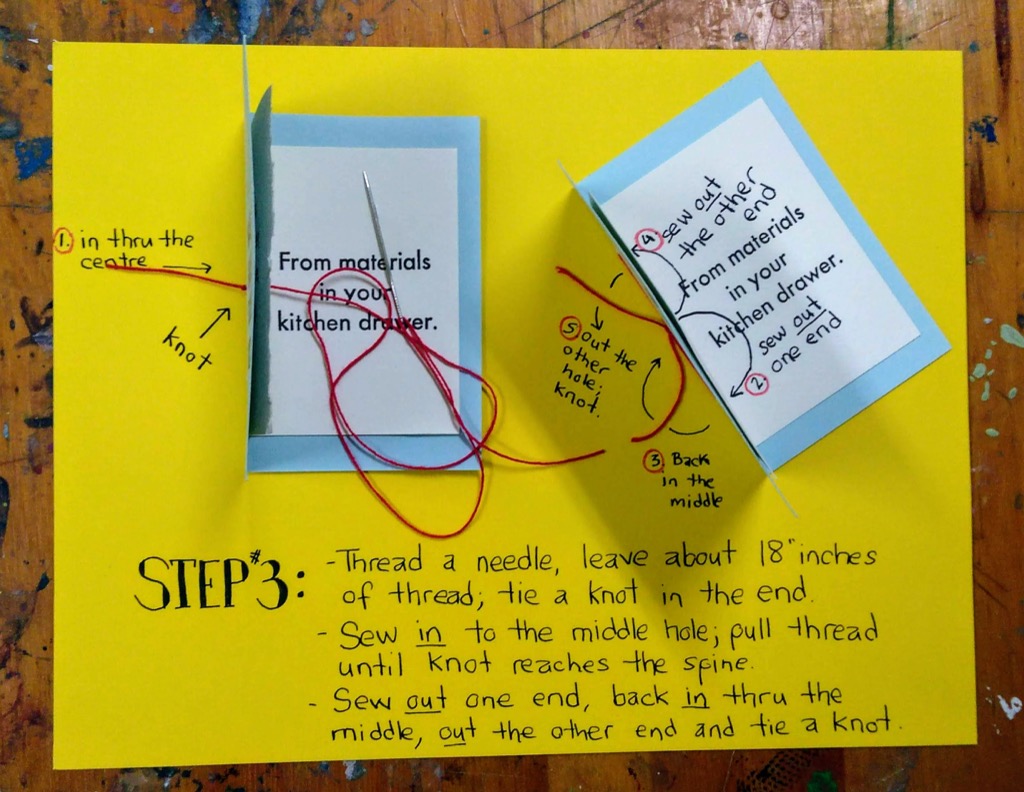
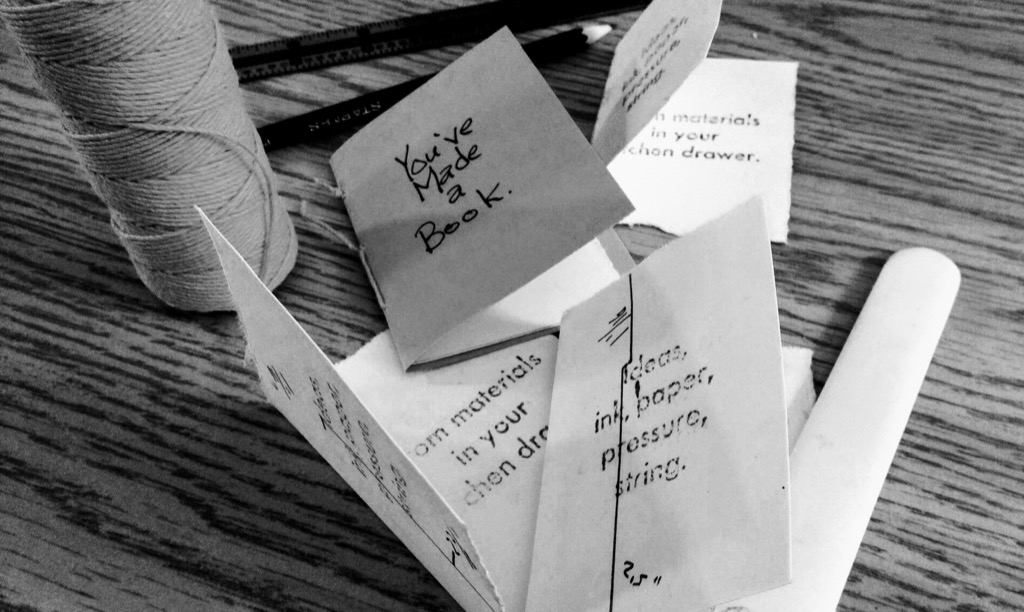
My artist trading card is actually an artist trading book. That traders assemble themselves. Which requires them to have instructions. My friend Jennifer loaned me a book about bookbinding a few weeks ago that had helpful, lovely hand-drawn illustrations, which were so much better than photos. I couldn’t reach that level of helpfulness, but I decided that step-by-step instructions would be more useful than just words. And so, witness steps one, two, and three.

Step One: Fold

Step Two: Punch

Step Three: Sew

🗓️

An Artist Trading Cards spin-off project.

🗓️

A reminder that the Artist Trading Cards evening is tomorrow night, August 2, 2018 at 7:00 p.m. at the Confederation Centre of the Arts.

Although the “trader” deadline has long since passed (there are 33 of us in total, as of this morning’s count), the event is open to the public (of all ages), and there will be music from Todd MacLean, snacks, and a cash bar.

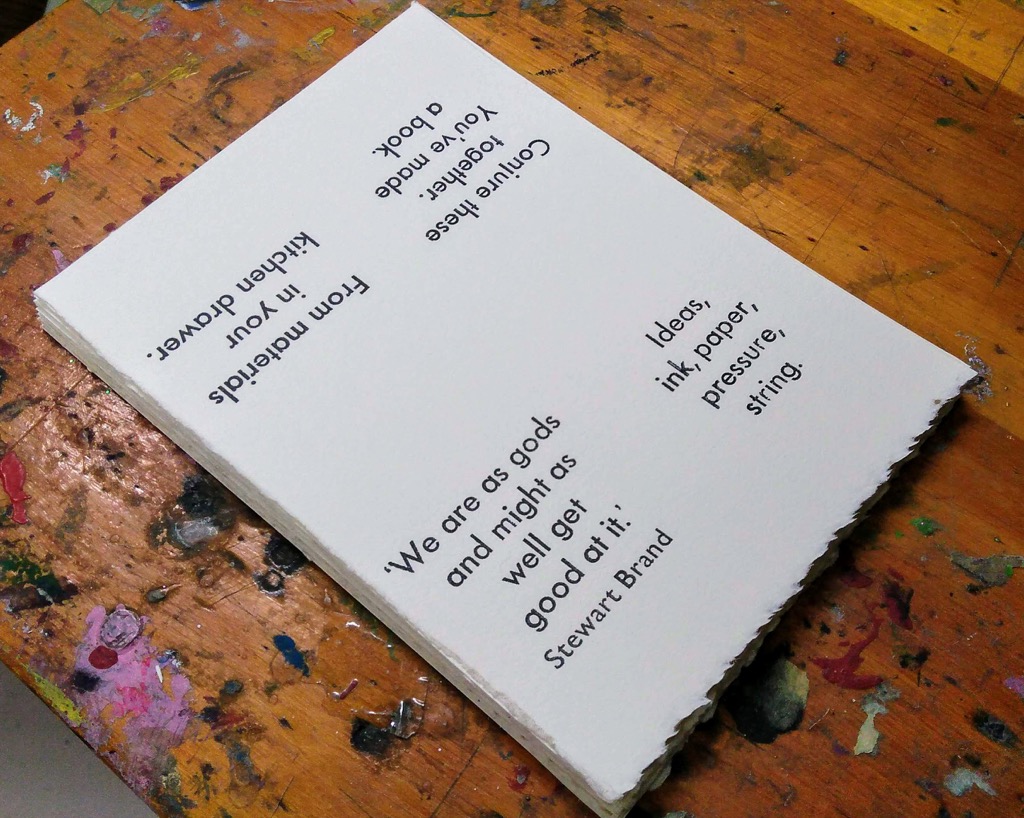
I wasn’t content to make a simple “card” this year, so I made a single-signature book plus cover, printed on my letterpress; it is an “interactive card,” where traders will assemble the book themselves, either during the trading round or, more likely given the lightning-fast timing thereof, during the mingling time afterwards.

Thus the assembling of the book allows the themes of the book to spring to life; and in doing so also provides cover for traders not skilled in the mingling arts to have a distracting activity in which to engage while everyone else is networking, canoodling, kibbitzing, etc.

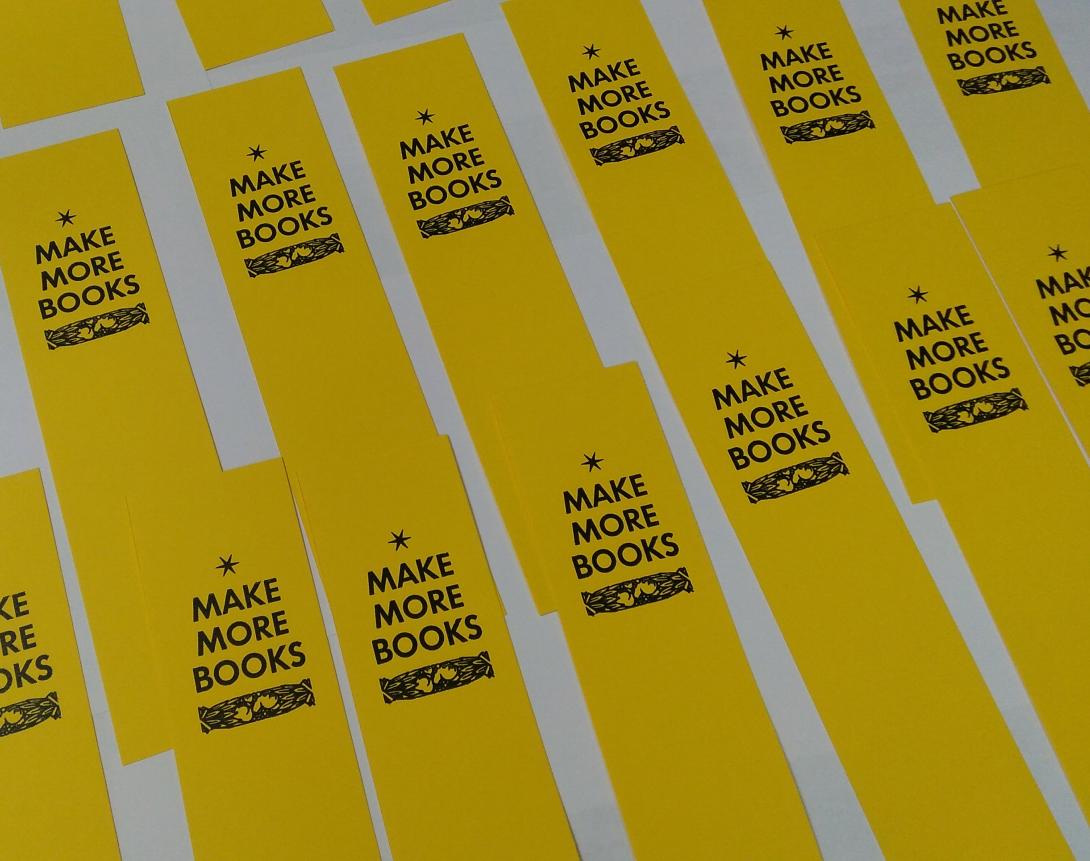
Printed signatures for Artist Trading Cards book

🗓️

Ten years ago I was an active and enthusiastic Nokia fan: I’d purchased a Nokia N95 in April (at the time, the cat’s pajamas of a mobile device), Plazes, which I was doing some contract work for, had just been purchased by Nokia, and Nokia was doing interesting things with maps and other web services. If you were interested in mobile devices and the web, Nokia was it.

Starting on July 10, I switched from posting photos on Flickr to, instead, posting them on Share on Ovi, both to support the home team, and to allow me to experiment with writing code that integrated with Ovi services.

Six months later, in November 2008, I moved back to Flickr.

Nokia subsequently shut down its Ovi services after its acquisition by Microsoft, and as a result of this, the photos I embedded in 52 blog posts here are missing.

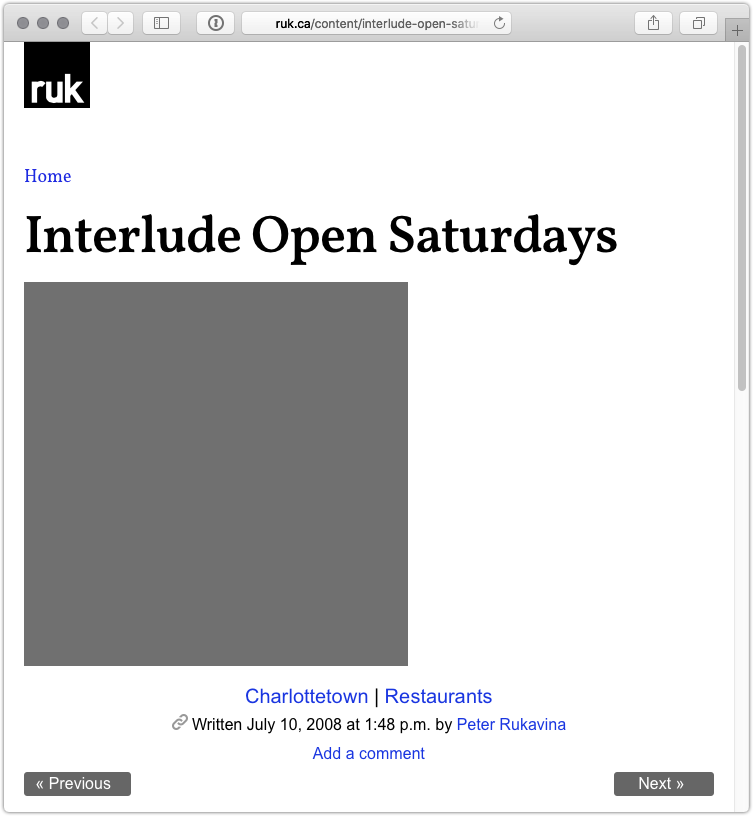
Starting on July 10, 2008 with Interlude Open on Saturdays and ending on September 28, 2008 with Sneaky Ghost Cats, Nudity, etc., there are grey holes where the images should be, like this:

Screen shot of blog post with a grey box where the image should be

My reason for moving to Share on Ovi prompted me to think about the resiliency of my photo storage routine; as I wrote on July 11, 2008 in the post Decentralized Social Photo Management?:

Recently, though, I got skittish: when faced with the notion that, if Microsoft were to acquire Yahoo!, my photos would be part of an evil empire, I started to think about alternatives. My experimenting with Share on Ovi, Nokia’s social photo alternative to Flickr, only reinforced my misgivings (I like Ovi, especially the one-click upload from my phone, but it suffers from the same “walled garden” qualities that Flickr does).

Which got me thinking: is it necessary to store and manage the actual bits of my photos in the same place as my photos exist as social objects? While it’s obviously in corporate best interests to have the two wedded — there’s nothing like photo-lock-in to build “customer loyality” — it’s not necessarily in my best interests, no matter how enlightened the outsourcer or rich their community.

Ironically, given what I wrote then, Flickr’s still here, and Share on Ovi is long gone.

It’s been a while since I embedded photos where from third-party services. This is partly because of privacy concerns–Flickr started including a bit of tracking JavaScript with its embed code a few years ago–but mostly to address the resiliency issues I’d been thinking about for more than a decade.

Unfortunately it looks like there’s no easy way back from the dark ages that resulted from Share on Ovi’s demise: the site wasn’t archived by the Internet Archive. I likely have the photos themselves stored locally, though, and by going through each of the 52 blog posts in question and figuring out which photo should go where, I should be able to recreate the posts.

In the meantime, though, it’s all a helpful cautionary tale about the dangers of relying on “free” services to provide essential roles of a personal publishing regime.

🗓️

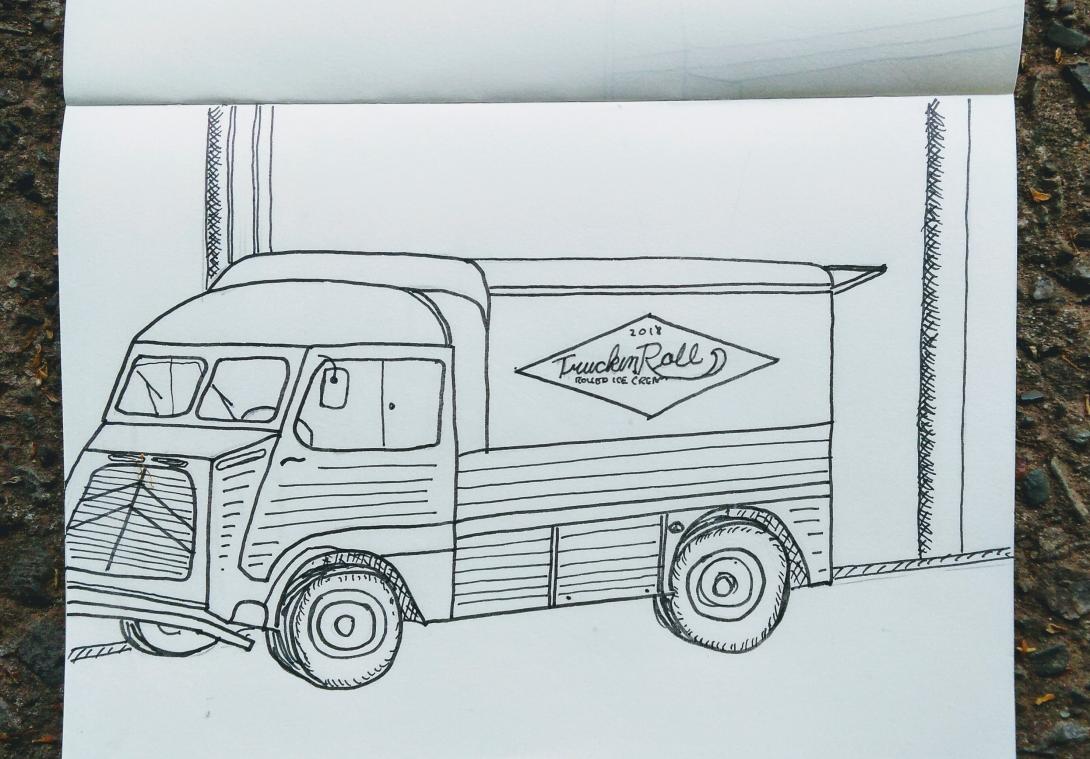
Our neighbourhood has been graced by a new high-end ice cream truck called Truckin’ Roll. It’s parked on Church Street, on the edge of the (suddenly-burgeoning hipster hangout) Charlottetown Boulder Park. Ice cream, prepared before your very eyes, costs $8.25.

The ice cream truck is housed in a 1950s postal truck that’s a remarkable piece of vehicular architecture, irresistible for someone with a sketchbook. I managed to drive it off the side of the page, despite my best intentions.

🗓️
Sketch  •  Ice Cream  •  Truckin' Roll  •  Charlottetown

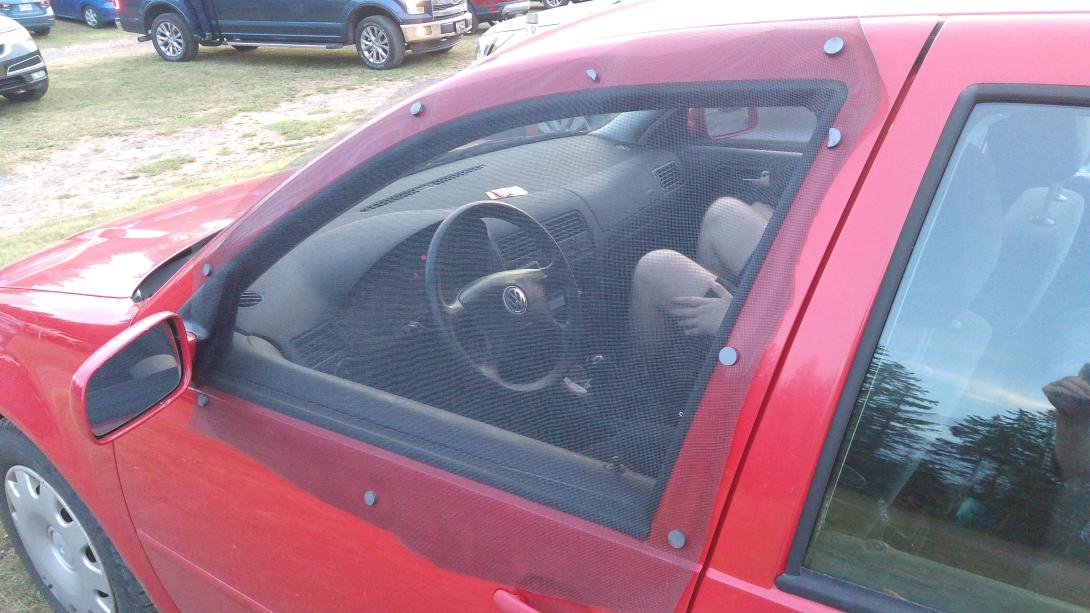
Window screen plus magnets plus Jetta.

The magnets are in aisle 10 at Canadian Tire in Charlottetown, where the nuts and bolts are displayed; personally I would have put them with the Velcro or the glue, but I can see their logic just as well.

Postscript: it worked like a charm. Not only were we cool (and cooler as the night wore on), but we didn’t have to run the fan from time to time to defog the windshield. It felt weird being at the drive-in with the windows “open,” as we’ve always had to keep them closed to keep the bugs out. The cart next to us was a VW Beetle convertible that kept its top down throughout the film, and dealt with the bugs via bug spray; this mean we also had to be quiet(er).

🗓️
Jetta  •  Brackley Drive-in  •  Magnetism

I’m prototyping in the shop this afternoon, figuring out imposition, how to maximize the number of sheets of 5 inch by 7 inch paper I can cut out of a larger sheet, and how to sew a binding.

Artist Trading Cards preview number 2

🗓️

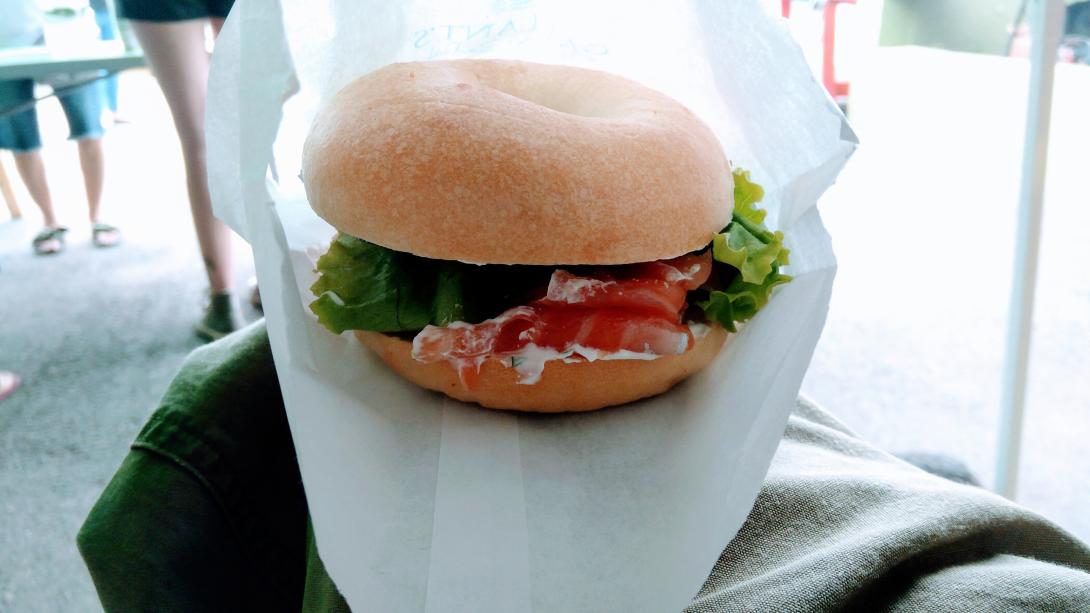
We arrived at the Charlottetown Farmers’ Market this morning to find Ross Munro’s bagel counter cleaned out and ready for a new vendor.

We had a brief moment of panic. And then saw the sign next door at Gallant’s offering salmon bagels: they’ve jumped in to fill the void.

Gallant’s offers a different take on the standard: they add cucumbers and lettuce, and, at least for now, they’re using citrus-cured salmon rather than smoked. They’re also using local bagels, crafted by Angel, which is a welcome first.

And so, as the Dormaar era gave way to the Munro era, so does the Munro era give way to the Gallant era.

We will miss our weekly visit with Ross’ kids, who gamely kept the booth going after Ross headed west for work. They were always friendly and helpful. The market won’t be the same without them.

🗓️

About This Blog

Photo of Peter RukavinaI am . I am a writer, letterpress printer, and a curious person.

To learn more about me, read my /now, look at my bio, listen to audio I’ve posted, read presentations and speeches I’ve written, see things I’ve favourited elsewhere, or get in touch (peter@rukavina.net is the quickest way).

I have been writing here since May 1999: you can explore the 25+ years of blog posts in the archive.

You can subscribe to an RSS feed of posts, an RSS feed of comments, an RSS feed of favourites elsewhere, or a podcast RSS feed that just contains audio posts. You can also receive a daily digests of posts by email. I also publish an OPML blogroll.

InstagramYouTubeVimeoORCIDOpenStreetMapInternet ArchivePEI.artDrupalGithub.