For someone like me, who’s as close to being a non-drinker as one can be (to the point where, when I answer the “lifestyle” questions from pollsters, they don’t believe my answers: “what do you mean you’ve had one drink in the last 6 months?!”), I’ve spent an inordinate amount of time railing against Prince Edward Island’s regressive liquor regulations over the years. Witness:

The Rural Levee Loop Awards 2018

The levee at the Miscouche Legion looked like a rollicking good time, with a live band and teaming revelers in attendance; alas we were turned away at the door, as it was a “19+” event, due to liquor regulations.

Xenocracies Everywhere Really Soon

Because of Prince Edward Island’s antediluvian liquor laws, Oliver was only allowed to be present until 9:00 p.m., and so there was some last minute stress surrounding whether he’d be able to go on stage before turning into a Prohibition pumpkin, but, again the Fringe team rose to the challenge and made sure he was on in the first hour.

“What If Stores Charged Admission?”

I’ve never been to Small Print because the conditions of its liquor license don’t allow Oliver, being under 19, to be there after 8:00 p.m., and if I was going to go somewhere and play board games with someone, it would be with Oliver, after 8:00 p.m.

Wherein my child’s morals are not corrupted…

Alas the visions of butter chicken and chips dancing in our heads were dashed when we were told that Churchill Arms’ liquor license wouldn’t allow minors on the premises after 8:00 p.m. They were very nice and apologetic about it, and of course it’s a matter outside of their control so we bid them no ill will.

Rebuffed by Backwards Laws

When we showed up at the Silver Fox last night at quarter to eight, however, the man at the door took one look at Oliver and shook his head: the concert, it seems, was a “licensed event.” Meaning no kids. We could go in without Oliver, or, maybe, get our tickets refunded and all go home empty-Gallanted.

In the last 17 years that we’ve been parents, we’ve experienced all manner of heartbreak and rejection over not being able to attend events, or go to restaurants, because Oliver, who’s almost always with us, is a minor.

When Oliver was forced to leave the launch party for Island Fringe last week before 9:00 p.m., because, organizers were told, “after 9pm, Studio 1 becomes a 19+ venue,” I decided to try to get to the bottom of this: how could it be, in 2018, that we continue to have restrictions based on temperance notions that were set aside generations ago.

It turns out that we don’t have such restrictions, at least not as of this spring, when government introduced changes to liquor regulations under the Liquor Control Act that greatly liberalized age restrictions, and take the province from being sadly regressive to being uncommonly progressive in one fell swoop.

What this means, in practice, is that the days of “sorry, we don’t allow minors after 8:00 p.m.” are gone.

As I understand it, there are limited exceptions but, compared to the old regime, they are rare and apply only in special circumstances: as such, if you are told by a restaurant, venue, event or other licensee that your under 19 children cannot be admitted, they are more than likely relying on old information.

In my experience the word has been slow to get out to some licensees and event organizers on the ramifications of these changes for their particular business; it’s also possible that some businesses are using their liquor license as a conceit for age discrimination that has nothing to do with their liquor license.

In both regards its up to we in the consuming public to spread the word.

Minister of Finance Hon. Heath MacDonald and his officials at the PEI Liquor Control Commission deserve credit for taking on the challenge of thoroughly modernizing our liquor legislation for the first time since Prohibition
🗓️
Liquor  •  Prince Edward Island  •  History
Audio file

Matt Rainnie produced this spot for CBC Prince Edward Island’s Island Morning that aired on Friday, August 10, 2018 after the 8:00 a.m. news. He interviewed me about the Charlottetown Boulder Park, and interviewed the proprietors of the new food trucks about their role in the park’s revivification.

🗓️

Many years ago I sent a sample of my DNA to 23andMe for testing and, as a result, every now and then I get emails alerting me that some new genetic trait, or some long-lost 7th cousin, has been identified as a result.

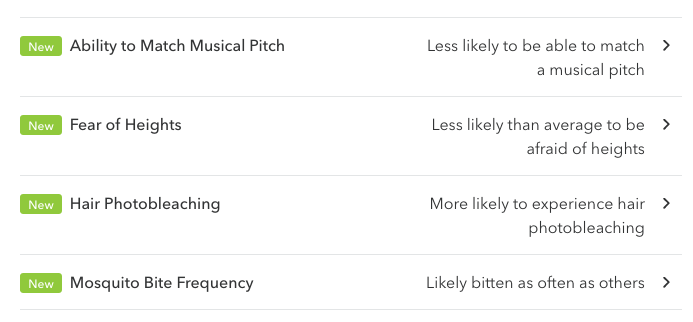
Here are the traits that were highlighted in today’s email:

Screen shot of 23andme Traits

So I’m a tone-deaf bleached-blond who can escape to high places to avoid the mosquitoes that will bite me at a typical rate.

In earlier communications I learned that I’m less likely to develop a bald spot, less likely to have dimples, and likely prefer salty to sweet.

🗓️
23andMe  •  Genetics

Last summer, on a warm Sunday afternoon, I was sitting on a bench on Queen Street eating my lunch of Indian food when two older men came along and asked if I minded if they shared the bench. Of course I agreed, and we ended up chatting about the neighbourhood while I ate.

I related to them the story that had been told to me, years ago, by the proprietor of Carter’s, the stationery shop that was located where Terre Rouge is now.

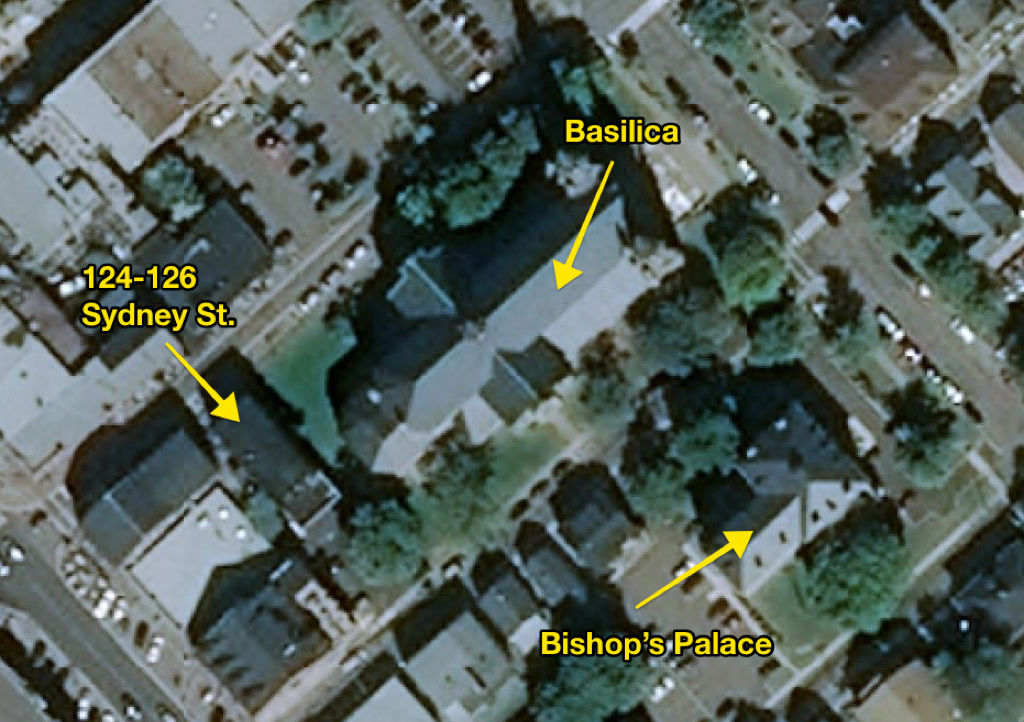
During the time the Sisters of the Precious Blood, a cloistered order of nuns, lived at 124-126 Sydney Street (currently The Gahan House), there was concern that the sisters could be seen sunning themselves by workers on Carter’s top floor; the Diocese asked Carter’s if they would consider bricking the upper windows to prevent this, and when Carter’s agreed, they won the stationery business of the Diocese in thanks.

My bench-mates had heard this story as well, and they added their own angle: both of them had lived in the house formerly occupied by the nuns when, in the 1960s, it was operated as a boarding house, and they had both been involved in a renovation process on the building at the time. It was during this work that they came to learn of a tunnel that connected the house to either St. Dunstan’s Basilica, next door, or perhaps to the Bishop’s Palace, or perhaps to both. They were dead certain of existence of this tunnel.

In the year since I’ve asked many people, including the current owners of the building, about whether they’d heard of such a thing, and I’ve yet to meet someone else who has, but the certainty of the tale has had me convinced I’ve simply yet to find the right person.

This morning I sent a note to the Catholic Diocese to seek their input, and they responded in true 21st century fashion by posting a query on their blog: The Basilica’s Fixed Link?

Can you help?

Locator Map showing 124-126 Gahan, the Basilica, and the Bishop's Palace

🗓️
Tunnel  •  Charlottetown  •  Gahan House
Audio file

You may recall my report that Archdeacon John Clarke, who leads the parish here at St. Paul’s Anglican Church, took a sabbatical this summer to learn to play the guitar.

Well, his sabbatical is over, and he’s reflected on the experience on his blog, where he writes, in part:

It has been a challenge, to say the least, but one that I have thoroughly enjoyed. Not being particularly good at something has never stopped me from trying. And have no fear, the guitar will not make it into every sermon.

There were times when trying to accomplish some guitar related skill felt more like work than play, this time has been, overall, a great joy for me. The guitar will be a part of my daily life as long as my fingers will allow it. My hope is that I will continue to improve, add skills and play well with others. I am thankful for all the support I’ve had and am deeply touched by the interest so many people have shown. I hope too, that one day people will enjoy listening to me as much as I enjoy playing.

I am so happy to be housed inside a parish led by such a thoughtful person, and someone so willing write about his adventures in public; his suggestion that “not being particularly good at something has never stopped me from trying” are words to live by.

(The attached song is from the Ceedees 1979 album Hit The Ditch, long out of print).

🗓️

Now that my office is directly across the street from my house I’m well-positioned to intercept delivery people that need signatures: I can be at home in less than 30 seconds.

But how to know they are there?

While the idea of a “video doorbell” heretofore had seemed absurd, this seemed like an almost-ideal use-case for such a gizmo, and so I picked up Wirecutter’s top-rated budget pick, the Ring Video Doorbell, at Best Buy last night and installed it this morning in place of our ancestral analog doorbell.

Ring Doorbell

The installation went remarkably smoothly, especially as Ring includes all the tools you need right in the package. Hardware setup took about 15 minutes; hooking the Ring up to our wifi and getting the app set up took about another 15 minutes.

Ring has apps for iOS, Android and the Mac, so when our doorbell rings, it pops up on all of the family computers and phones. Here’s what our beta test looked like when Oliver rang the bell:

The video isn’t exactly evidence-quality, but it’s sufficient to determine who’s there (and, to answer a question Oliver’s support worker had: we can see the person at the door, but they can’t see us; we can talk to each other two-way, however).

I’ve got three courier deliveries expected in the next week, one of which is Oliver’s passport, which we need to be able to go to Europe at the end of the month, so this is just in time.

One of our reasons for going to Europe is to go to Elmine and Ton’s Smart Stuff That Matters unconference where, I’m sure, devices like this will come up (Oliver already has a Keynote presentation on the topic of “are we living in George Orwell’s 1984” ready to go).

🗓️
Ring  •  Doorbell  •  Smart Stuff That Matters  •  Oliver

Niti Bhan on Berlin as a sustainable city:

Berlin is to an environmentally conscious, renewable energy, sustainable ecologically friendly lifestyle what Tokyo’s Harajuku Girls used to be to fast fashion. The pioneer, the path breaker, the evidence of quality of life balanced with conservation. I envy Berliners their city. It is a world city and its still affordable.

This brought to mind David Owen’s 2004 article in The New Yorker, Green Manhattan, where he wrote:

Most Americans, including most New Yorkers, think of New York City as an ecological nightmare, a wasteland of concrete and garbage and diesel fumes and traffic jams, but in comparison with the rest of America it’s a model of environmental responsibility. By the most significant measures, New York is the greenest community in the United States, and one of the greenest cities in the world. The most devastating damage humans have done to the environment has arisen from the heedless burning of fossil fuels, a category in which New Yorkers are practically prehistoric. The average Manhattanite consumes gasoline at a rate that the country as a whole hasn’t matched since the mid-nineteen-twenties, when the most widely owned car in the United States was the Ford Model T. Eighty-two per cent of Manhattan residents travel to work by public transit, by bicycle, or on foot. That’s ten times the rate for Americans in general, and eight times the rate for residents of Los Angeles County. New York City is more populous than all but eleven states; if it were granted statehood, it would rank fifty-first in per-capita energy use.

“Anyplace that has such tall buildings and heavy traffic is obviously an environmental disaster—except that it isn’t,” John Holtzclaw, a transportation consultant for the Sierra Club and the Natural Resources Defense Council, told me. “If New Yorkers lived at the typical American sprawl density of three households per residential acre, they would require many times as much land. They’d be driving cars, and they’d have huge lawns and be using pesticides and fertilizers on them, and then they’d be overwatering their lawns, so that runoff would go into streams.” The key to New York’s relative environmental benignity is its extreme compactness. Manhattan’s population density is more than eight hundred times that of the nation as a whole. Placing one and a half million people on a twenty-three-square-mile island sharply reduces their opportunities to be wasteful, and forces the majority to live in some of the most inherently energy-efficient residential structures in the world: apartment buildings. It also frees huge tracts of land for the rest of America to sprawl into.

Our own experience bears this out: when we lived in the country in the mid-1990s, having gone “back to the land” in as tepid and suburban a way as humanly possible, we drove our car almost every day, and were back and forth to Charlottetown or Cornwall frequently. The only place we could reasonably walk or cycle was Clow’s General Store, and even that was a stretch. We lived in a largely non-insulated house that took huge amounts of oil to heat.

Since moving to the city in 2000 our car stays parked most days and we walk or cycle frequently; my commute, across the street to my office, takes 35 seconds. Our home–only slightly more insulated than our country home, admittedly–is sheltered on two sides by larger homes, and thus is less exposed to the elements. Our lawn is small, and easily mowed with an electric mower. We’d be even lighter on the land, of course, if we moved into an apartment and didn’t occupy what, in global terms, is a huge amount of space; but compare to suburban lots, ours is relatively tiny.

🗓️

I was reading a blog post about a pigeon named Athena on my friend Dave’s blog this morning and thought “wow, that Dave’s a weirdo.”

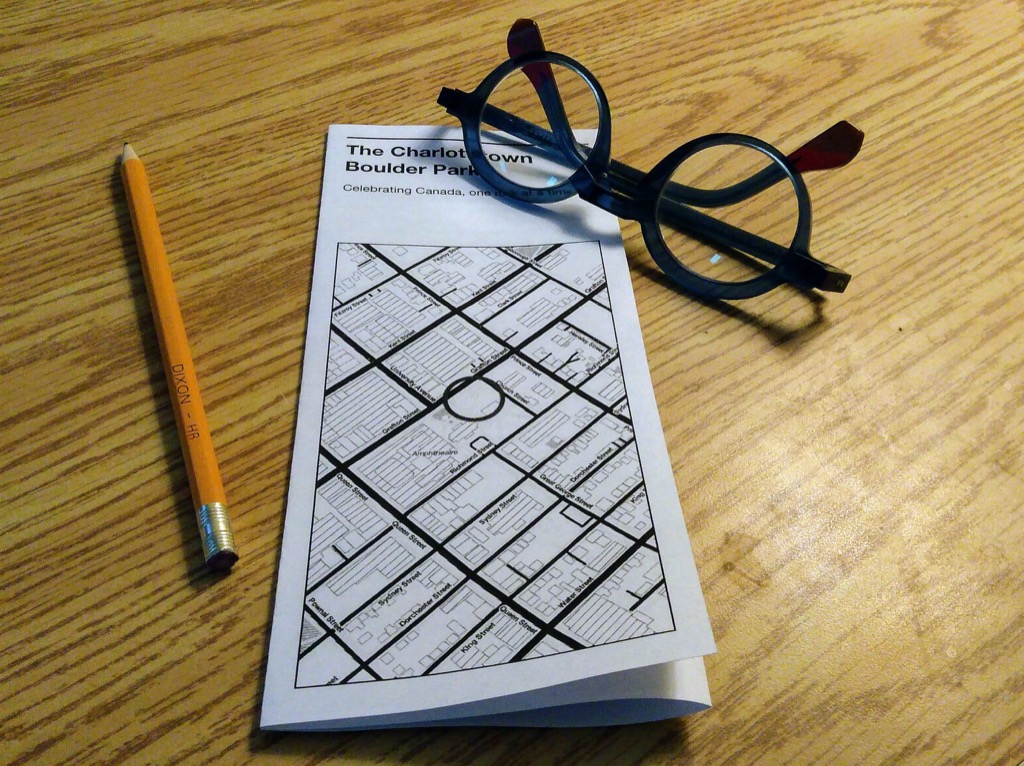
Then I returned to put the finishing touches on a brochure I’ve created about the local boulder park (here’s a free copy, should you like one).

We are all weird in our own ways.

The brochure extends from my summertime project to elevate the Charlottetown Boulder Park, and it happens to have come just at the right time, as the park is enjoying arenaissance, partly due the closure of Province House, partly due the presence of two food trucks on its edges, and partly due the shade offered by its towering trees in this summer’s oppressive heat. Never in recent memory have their been more people availing themselves of the boulder-enhanced greenery of Queens Square.

Photo of the Boulder Park Brochure.

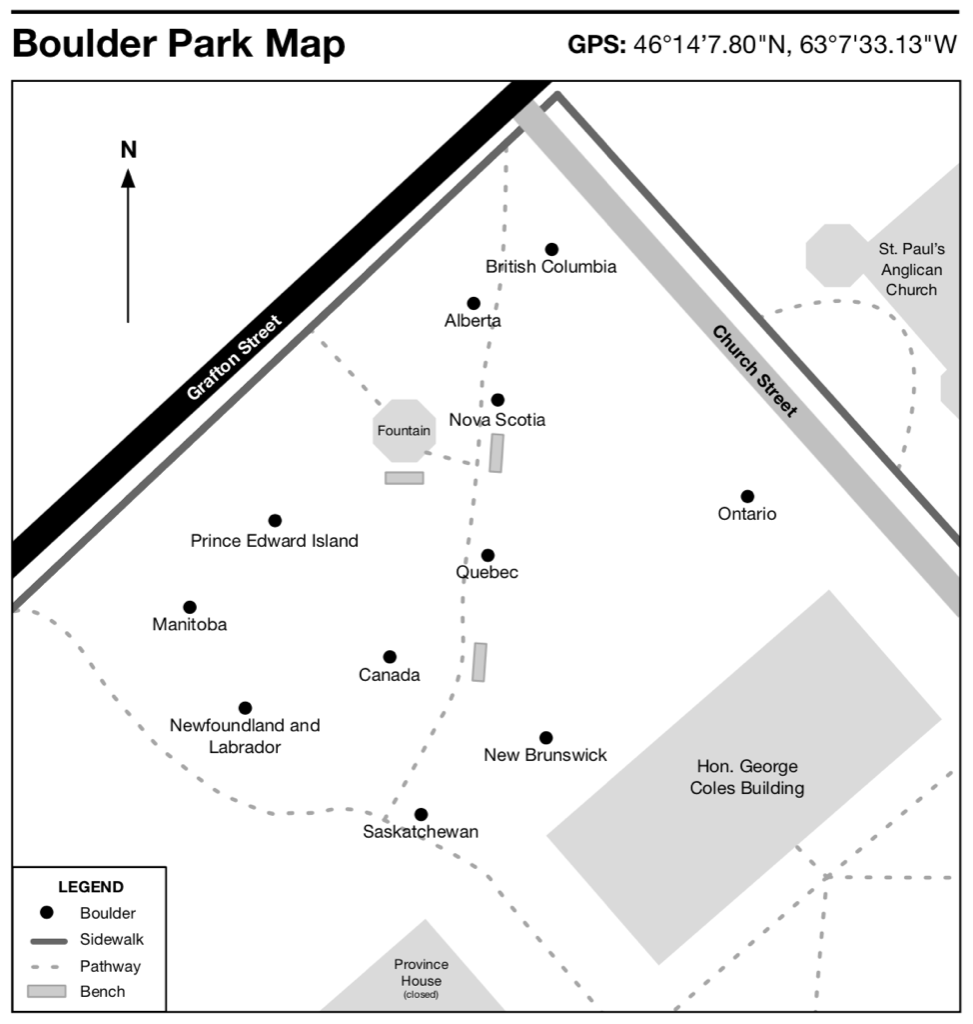
I used the Charlottetown Boulder Park Wikipedia page as a starting point for the brochure, and added descriptions of each of the boulders, a locator map and a detailed map, and a capsule history of the park. I was generously aided by my father (a retired geologist, helpfully) and by my friend Valerie, both of whom read early drafts and offered helpful commentary.

Charlottetown Boulder Park Map (from brochure)

The brochure is at Kwik Kopy for printing right now, and I’ve ordered a couple of plexiglass outdoor brochure holders so that I can distribute them at the park once they’re ready.

Matt Rainnie from CBC Island Morning taped an interview with me about the park this morning, part of a larger story about the revivification of the area; it should air soon.

And, in the next week, look for a copies of the brochure in the park itself.

🗓️

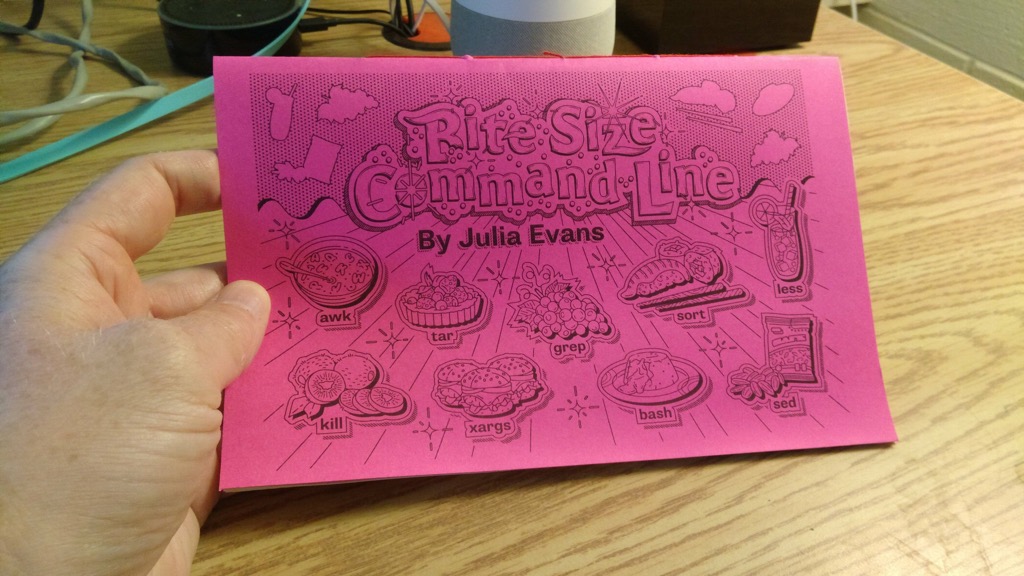
I’ve been using the Unix command line for 34 years, but there are still a lot of things I don’t know. Fortunately, there is Julia Evans, comic zine maker of all topics technology, newly out with Bite Size Command Line.

I purchased, printed and bound a copy for myself this afternoon.

Bound copy of Bite Size Command Line

🗓️
Julia Evans  •  Linux  •  Comics  •  Zines

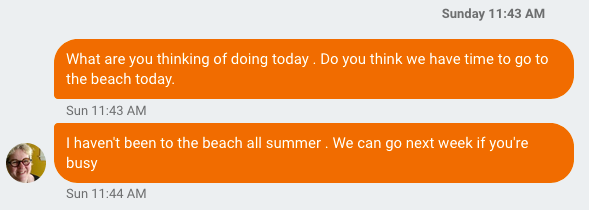
The text came in just before 12 noon yesterday: “do you think we have time to go to the beach today?”, asked Catherine.

Detail from an SMS chat with Catherine about going to the beach

It was a rainy Sunday, not beach weather. But when the call comes, small details like that are irrelevant. Our crew was in the Jetta and out the door, heading east, within 15 minutes.

Our first stop was the Morell Farmers’ Market (not the beach, but one needs sustenance). We arrived too late, just before closing, but some beef jerky and some apple juice were secured, some old acquaintances renewed. And we were off again.

With promise of a 2:00 p.m. Farmers’ Market up the road in St. Peters Bay, we continued to head east, only to find ourselves dropped into the midst of the final day of the St. Peters Blueberry Festival. Our arrival coincided with the start time for The Great Blueberry Roll in the Catholic church parking lot, wherein 500 blueberry-coloured ping-pong balls were to be rolled down the hill, with the first one through the gate winning its owner a $1000 cash prize.

As it happened, the wind at 1:30 p.m. was blowing strongly from the west, with a force almost exactly opposite to that of the gravitational force exerted on a flock of ping-pong balls. So, rather than rolling down the hill, they vacillated between staying stuck in place and rolling up the hill. Emergency organizing committee meetings were held and a Plan B developed: they gathered up the balls again and restarted the race from halfway down the hill, where the wind was a little gentler, and the rise of the hill a little steeper. It just barely worked, the result being more a molasses roll than a blueberry roll.

We continued east.

With the Morell Plan for eating lunch having been dashed, we drove up toward Greenwich and stopped at Lin’s Takeout, where all manner of fried foods were consumed, all very well-prepared, and in a location that cannot be beat.

To this point the rain had held off, but just as we were putting our lunch waste in to the recycling and the compost it started up, and by the time we were out the driveway it was in full force.

At which point I rediscovered that the windshield wipers in our 18 year old VW Jetta get seized up from lack of use, and while they worked, they worked in a way that was very much in the spirit of the blueberry roll, and not with the force required to wipe water from the windshield effectively.

We continued east.

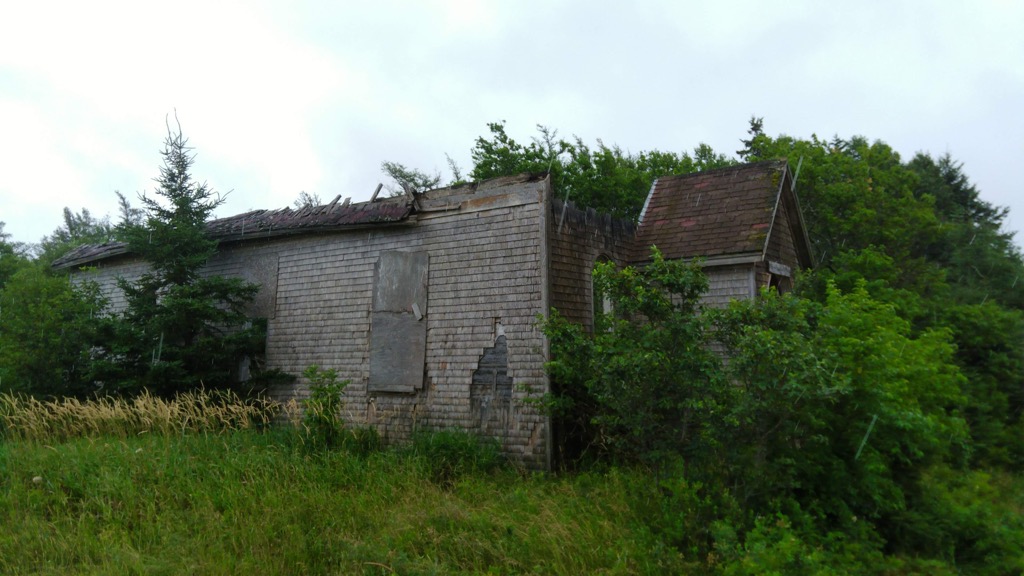
When we came to the sign, pointing up a clay road, for Cable Head West, we followed, as promises of Cable Head East being somewhere thereafter were too great to resist. Just after we made the turn, I noticed an interesting looking building off to the right and looped back around to take a closer look. It appeared to be a schoolhouse, and it was beautiful.

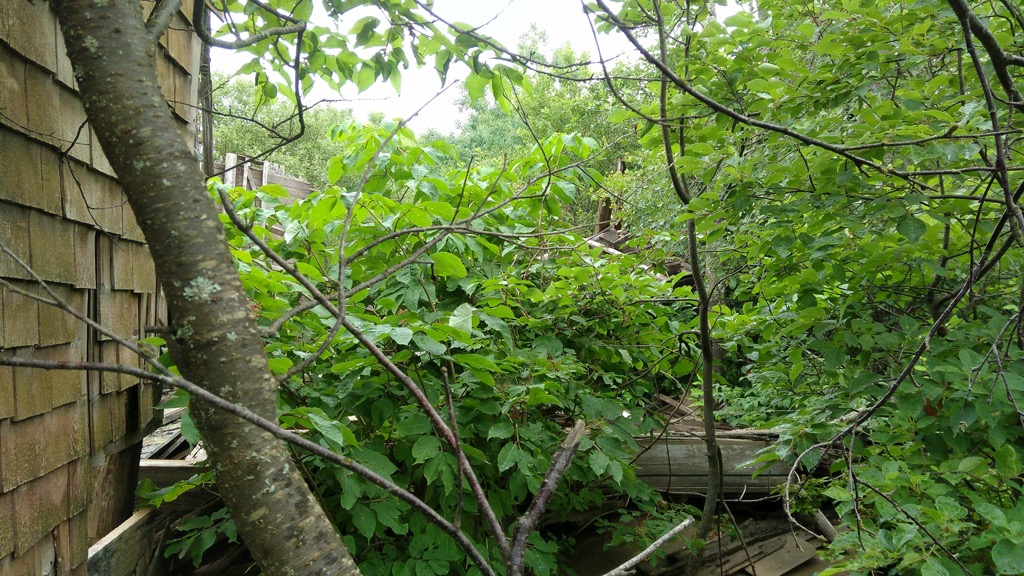
Schoolhouse near Greenwich

Schoolhouse from the side

We continued along to Cable Head West, and then reached the Turret Bell Road, which led to the beach.

The beach having been our goal all along, we set the rain aside (Oliver was unwilling, so stayed in the car with Ethan) and Catherine, cane in hand, navigated through the sand and the rocks and the slippery muck and made it down to an empty (and stunning) expanse of the shore (therein violating multiple palliative care regulations save the “continue to live life to the fullest” one).

We recoiled back to the car and continued east.

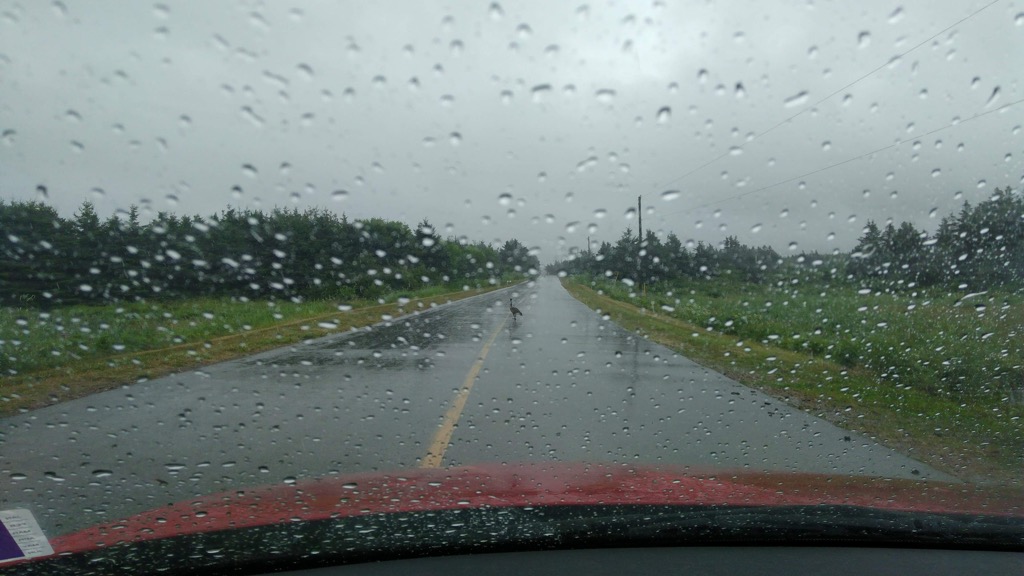
We passed through Cable Head West and then, just before Goose River, we came to a handmade sign on the road that said “Goose Crossing” and, sure enough, there was a goose in the middle of the road. Crossing.

Goose in the Middle of the Road

As my family has a history of shaky relations with the goose kingdom, I proceeded gingerly. This ginger passing gave me pause to reflect that I had a can of spray lubricant in the trunk, so I stopped (once well-clear of the goose) and spritzed the windshield wiper motors; they immediately sprang to life with youthful exuberance.

We eventually came to Naufrage. As mere minutes earlier Catherine had said “you know what would make this day perfect… ice cream!”, a brand new ice cream stand, Red Rock Adventures, sprang up before us, on the shore side just past the Shipwreck Point Café. Where we secured two ice creams, plus a coffee, for less than the cost of a chichi city ice cream.

We also learned about the Turret Bell, and why there is a road called the Turret Bell Road, from a helpful plaque just inside the front door; further research elaborated:

The ship “Turret Bell” was launched from Newcastle-on-Tyne, England in 1894. On 2 November 1906 the ship was blown off course and onto rocks off Cable Head, Prince Edward Island. The ship was a local viewing attraction for three years, until it was salvaged on 31 July 1909. The ship was towed to Charlottetown, then to Quebec for repairs, after which she returned to her work in coastal shipping and trading.

The Turret Bell Road was built to accommodate the needs of the interested viewing public, and has been there ever since.

From Naufrage we continued even farther east, eventually turning toward Souris when we got to the Hermanville/Clear Spring windmill site. The drive to Souris, along the Souris Line Road, was the rainiest of the day, with rain coming down harder than we’d seen all year. Fortunately our windshield wipers were, by this time, in peak operating condition.

As we pulled into Souris, it occurred to Catherine that someone had told her to watch out for something should she find herself in Souris, but she couldn’t remember what it was. So we stopped to see the newly-renovated boardwalk along the causeway, tucked in to Chef Michael’s Smith’s Flavour Shack, let Ethan out for a walk, and gathered our horses. At which point Catherine recalled that it was the selfsame boardwalk that had been recommended to her.

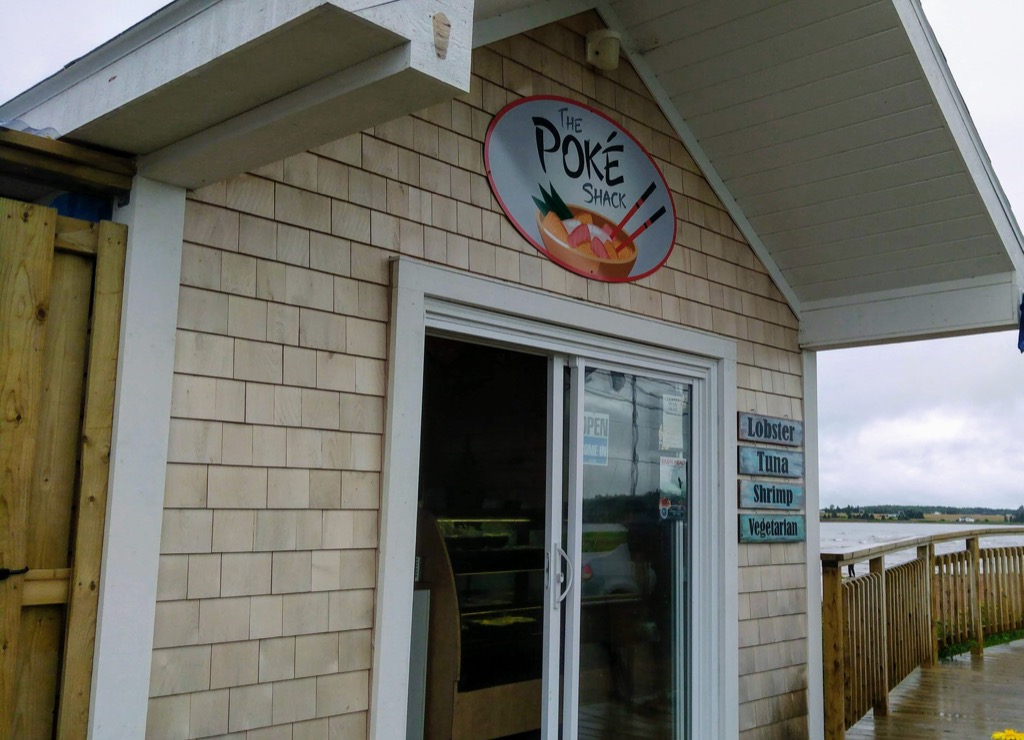
We then got back in the car, and as I was signalling to re-enter the highway Catherine saw a sign for fresh oysters, and expressed some interest, which she then quickly backed away from; “you guys don’t want to sit around watching me eat oysters,” she said. Of course we did. So I wheeled the car around, and found a new place to park. Directly in front of The Poké Shack.

Finding Hawaiian poké bowls on the beach in Souris defied all my assumptions about Souris, and there was absolutely no way we weren’t going to sample some.

So Catherine headed off for oysters, and Oliver and I headed off for poké bowls.

The Poké Shack in Souris

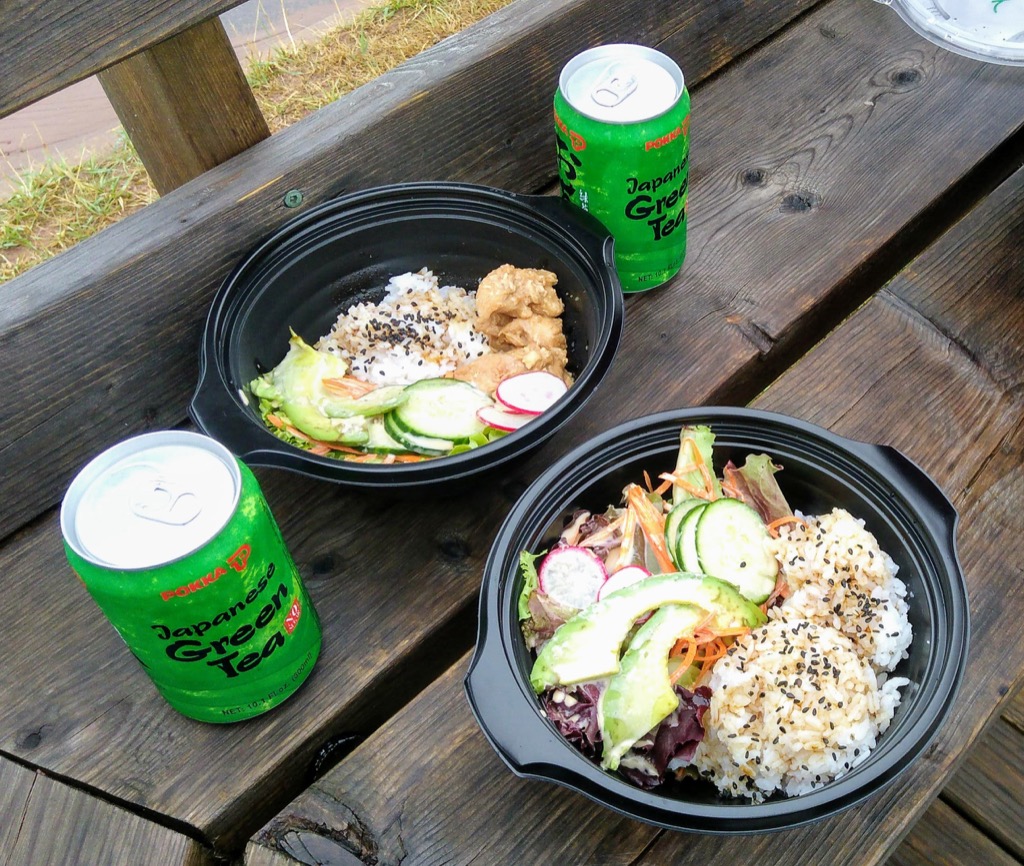
Oliver had the “farmer” poké (chicken) and I had the vegetarian (double rice); both were tasty and well-prepared, and we’ll be back, all the more for their unexpectedness. We finished them off with some tinned unsweetened Japanese green tea.

Poké bowls in Souris

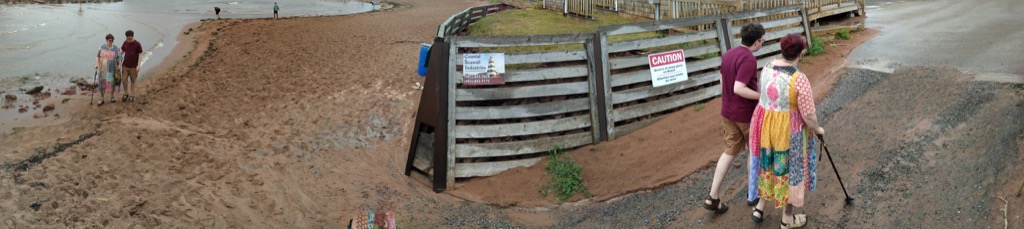
Catherine returned, sated, from her feed of oysters and, before we left again, she and Oliver went for a walk on the beach while I took photos. Google later concocted this panoramic impossibility of their walk:

Pano of Catherine and Oliver

The rain had dried up almost completely by this point. We got back in the car to pick up where we left off; with the windows rolled down all the way (miraculously, given the week’s heat, to the point where it was even a little chilly), we barreled back to town, pulling into our driveway just before 7:30 p.m.

A day well spent.

🗓️
Catherine  •  Oliver  •  Ethan  •  Travel  •  Beach  •  Jetta

About This Blog

Photo of Peter RukavinaI am . I am a writer, letterpress printer, and a curious person.

To learn more about me, read my /now, look at my bio, listen to audio I’ve posted, read presentations and speeches I’ve written, see things I’ve favourited elsewhere, or get in touch (peter@rukavina.net is the quickest way).

I have been writing here since May 1999: you can explore the 25+ years of blog posts in the archive.

You can subscribe to an RSS feed of posts, an RSS feed of comments, an RSS feed of favourites elsewhere, or a podcast RSS feed that just contains audio posts. You can also receive a daily digests of posts by email. I also publish an OPML blogroll.

InstagramYouTubeVimeoORCIDOpenStreetMapInternet ArchivePEI.artDrupalGithub.