At the end of the debate on Motion 30 on April 21, 2021, MLA Hannah Bell spoke about “conditionality”:

Finally, we also know that one of the main things that came out of the special committee in poverty that did such great work here on a basic income, one of the most important principles that committee identified that I think we need to take to heart when we talk about how we provide services and programs to people who are living in poverty is this notion of conditionality, that we have to have conditions about how you are eligible and why you get support.

Conditionality is where bureaucracy loves to live. Conditionality is where the rules happen that prevent people from being able to get the services they need and conditionality is where somebody, somewhere, gets to decide who is and is not eligible. The core of a program that is based in security and dignity does not have conditions; it has support.

If you want to see a pure expression of conditionality-gone-mad, consult the Cohabitation Policy of PEI’s Social Assistance program: what this policy attempts to do, in the name of verifying “family living arrangements for the purpose of determining eligibility,” is to attempt to describe conditions where government should consider two people effectively “married” so that “couples living together shall not receive a financial advantage over married persons by denying the existence of such a relationship.”

This includes conditions such as “The couple attends church or benevolent organizations and their related functions as a family unit,” ”The couple is listed as husband and wife (Mr. and Mrs.) on voters’ lists, assessment rolls, etc.” and “Vacation as a couple.”

This is an instance of conditionality entirely of government’s own making: it has built a structure based on certain legacy assumptions about individuals and families, and then built an additional policy on top of that in the name of “verifying compliance” with the very fictional world view it’s created.

This is not a hallmark of a “program that is based in security and dignity,” it is, rather, condescending, onerous to maintain, and needlessly adversarial.

🗓️

In February I reported the sad news that my friend Harold Stephens had died.

After Steve died, I made the acquaintance of Albert Podell, co-author of the book Who Needs A Road? that originally led me to Steve’s door.

A few weeks Al extended an invitation to attend a presentation he was scheduled to give to a meeting of Circumnavigators Club.

And so I found myself last night in the fascinating company of a group of people united by the fact that they’d all circumnavigated the globe. Al provided a cook’s tour of his 50+ years of travel, illustrated with selections from the thousands of photos he’s taken along the way. Good stories were told.

My desire for travel, which I thought I’d effectively sublimated, emerged.

Albert Podell's presentation to Circumnavigators Club.

🗓️
Audio file

The generous helping of topsy-turvy in the air caused me to think Thursday was Wednesday and thus to miss my scheduled 5:00 p.m. Charlottetown Farmers’ Market pickup.

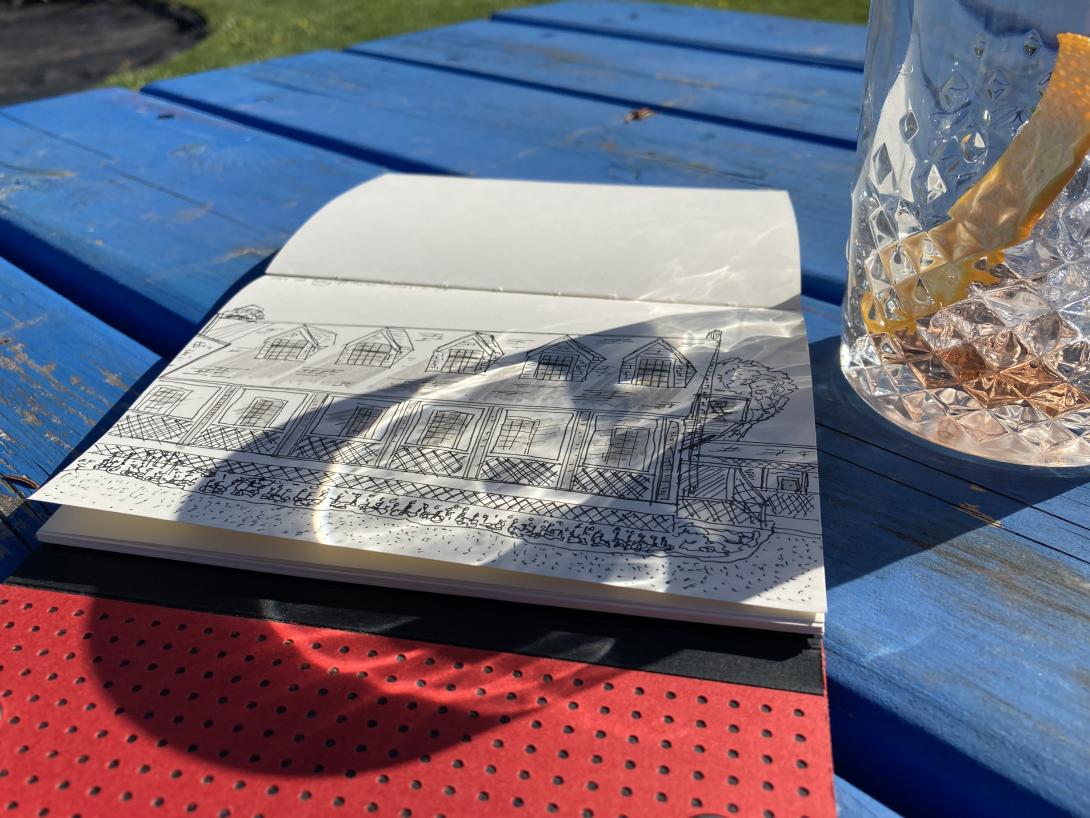
My penance was to ride my bicycle up today, a day late and in the rain; I was happy to find Caledonia House Coffee still open, and so I am currently fortifying myself with an espresso macchiato before heading back into the now-cats-and-dogs-style rain.

Market Rain

🗓️

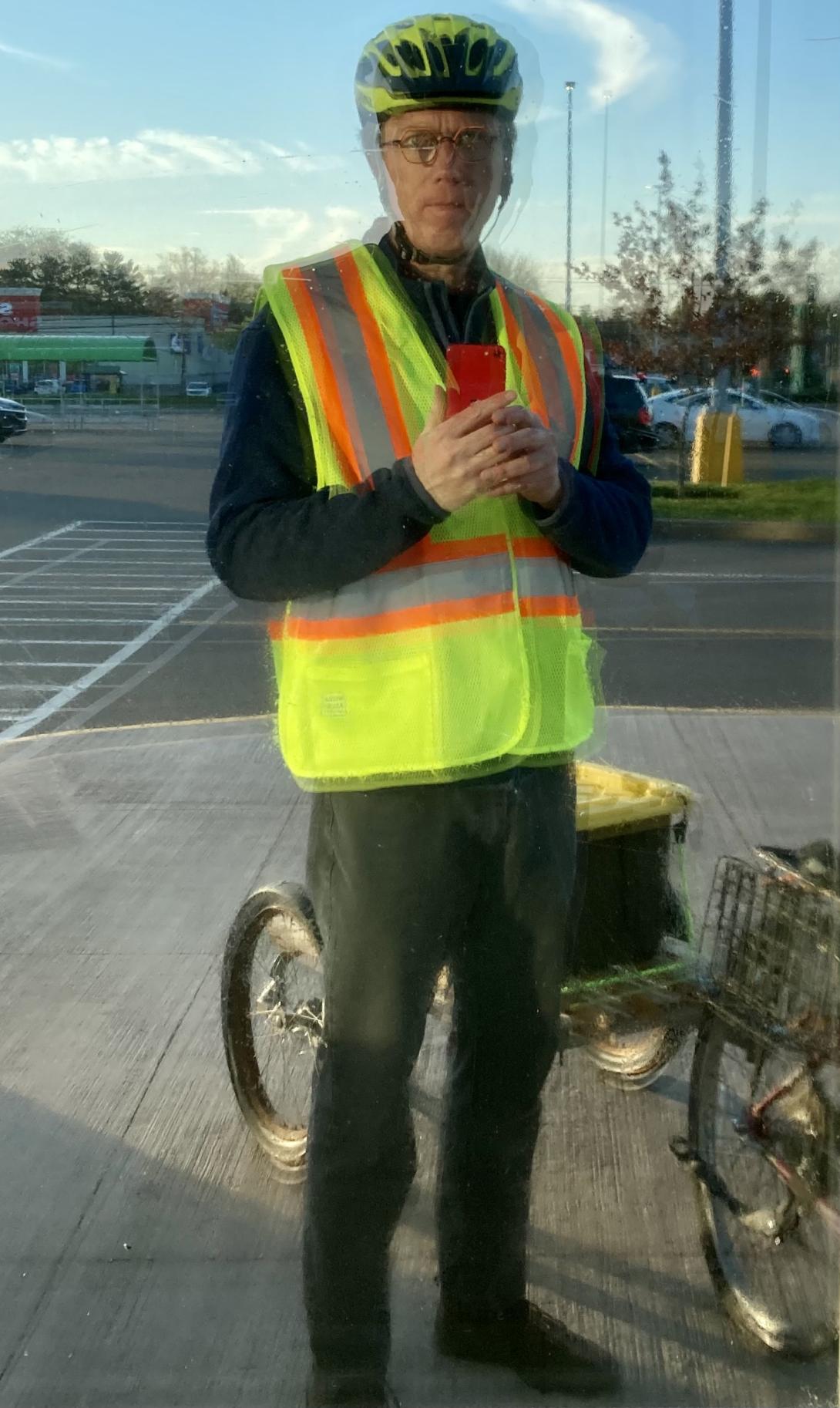
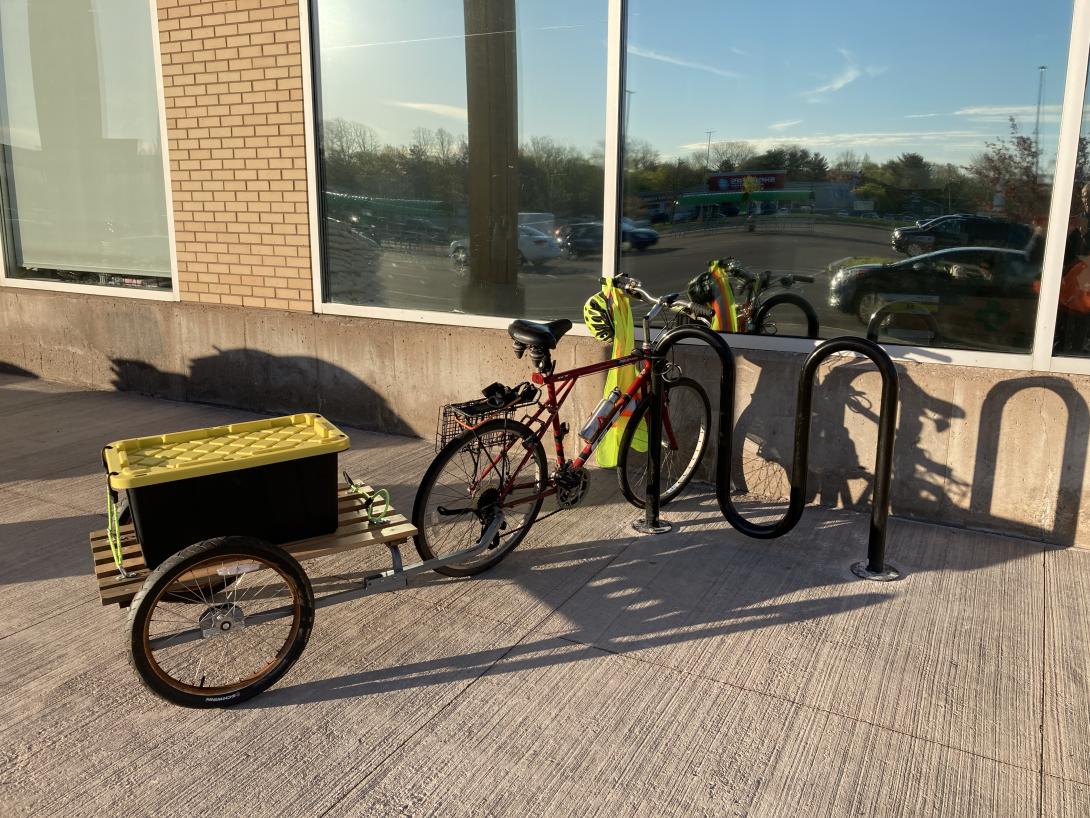
A need for both groceries and potting supplies inspired me to haul the bicycle trailer up from the basement this afternoon.

By the end of my midtown run the container was filled with food, with potting soil, pots and overflow toilet paper strapped on with bungee cords.

🗓️

Anyone who’s done any public speaking will know the feeling, when things have clicked, the presentation or the speech or the award-giving has gone well, of stepping off the podium with a surge of king-of-the-world adrenaline. It’s intoxicating, and something to both bask in and be wary of (for you are not, in truth, the king of the world). Coming down off that high, decelerating back to normal non-regal speed, can be uncomfortable: the adrenaline is addictive. 

I was thinking about this tonight because I realized that If there’s one thing my life has lacked over the past year it’s been intensity; previous to that, while Catherine was sick, it was the prevailing feeling for years: intensity was the air that I breathed. It wasn’t the pleasant king-of-the-world intensity, it was more the asteroid-about-to-hit-Earth variety. 

But adrenaline is adrenaline is adrenaline. 

It occurred to me tonight that perhaps I got addicted to that asteroid-adrenaline: that living in a near-constant state of panic went on for so long that it became a lifestyle, an expectation, a new baseline. 

Which would explain a lot about how I feel right now, 15 months after Catherine’s death, and why it’s felt like I’ve been served a special second helping of grief. Perhaps it’s simply that enough time has passed, enough of the practical bureaucratic details ticked, enough of a new daily routine established, enough evidence that I will survive this, that the adrenaline has subsided. I’m stepping off the stage.

The intensity has waned. And my mind, and my body, are confused about what exactly is going on: why aren’t we on the roller coaster anymore? What happened? Where’s the adrenaline?

(Crossposted from the Widow We Do Now group on Facebook).

🗓️
Adrenaline  •  Grief

It’s happened every single time I’ve received a new pair of progressive eyeglasses, since I got my first pair in 2012 when I wrote:

Everything’s alternately blurry and clear. They say you get used to it: I hope so. My patience for spatial discontinuity is not great.

The destabilizing experience of having everything seem slightly off for a week or two as my eyes and my brain adjust to the new prescription; and, with that, mild vertigo, increased possibility of falling down the stairs, eye fatigue, neck and shoulder strain, and, by times, an overpowering feeling of wanting to smash my new eyeglasses with a hammer and revert to my old prescription.

I’ve been through this enough times to know that all I need is patience, but not enough times to prevent me from doing a lot of “progressive eyeglasses prescription problems” Googling. 

New eyeglasses.

🗓️

The Stewart Brand biographical film We Are As Gods is streaming this weekend at Hotdocs (geo-restricted to Canadians only, alas). You can watch the trailer here.

🗓️
We Are As Gods  •  Stewart Brand  •  Hotdocs  •  Film

Five years ago, on a March school break trip to Halifax with Oliver, I went eyeglasses shopping, ending up at Gaudet Optical where I ordered the blue round eyeglasses I’ve been wearing for the past five years.

Those glasses have served me well: that they were a bold departure from the blend-into-the-background eyeglasses that I’d worn theretofore gave me a kick of self-confidence during a time when I sorely needed all that I could muster (and left me in the novel situation of receiving compliments from random strangers, which also didn’t hurt). Wearing them also threw down a sort of creative gauntlet: if I could unabashedly get away with wearing those glasses, what else could I do!?

This spring, though, it was time for a change: optician Greg Matheson, here in Charlottetown, had been generously keeping the blue eyeglasses in good repair, but, with a new prescription in hand, and realizing that I was one careless accident away from being left unable to function, I dropped into Matheson Eyewear a few weeks ago to see what they might have that would suit.

I had been strongly considering fading back into the background and finding an unremarkable pair of black or brown glasses when Greg brought out a pair of jaunty bright bright bright orange ones, arrived just that morning from Vanni in Torino, Italy. He was smiling. “I thought of you when these came in,” he said.

A bridge too far, I thought immediately.

But then I tried them on.

And they grew on me.

But, no.

I tried on some other frames.

Black. Blue. Green. Normal.

But my gaze kept turning back to the outlandishly orange.

Eventually I held my breath and blurted out “I’ll take them!”

Measurements were taken, payment made, timelines established. On the way home I was hit with waves of “have I completely lost my mind?!”

Two weeks passed.

The finished pair of eyeglasses was ready today, and I stopped in to pick them up.

I love them.

Welcome to eyeglasses next.

,
🗓️

My family were inveterate fans of the TV show WKRP in Cincinnati, which originally aired from 1978 to 1982, and then in syndication for years afterward.

Because we lived in a television reception sweet spot, there was a time where we could watch one episode on CFTO Toronto at 5:00 p.m. and another on CKCO Kitchener at 5:30 p.m.

By the time The New WKRP in Cincinnati launched in 1991, a reboot of the original sharing the premise, the set, and some of the original cast, I’d lived away from home and didn’t have a television, so until it started showing up in my YouTube feed, I’d never seen an episode.

From the episodes I’ve watched so far, the reboot never found the magic of the original: it was an AfterMASH, not a Frasier.

But one episode did catch my eye: episode 42, Johnny Goes Hollywood, was original cast member Howard Hesseman’s final one, and aired February 20, 1993.

The plot was eerily similar to the Seinfeld episode The Pilot that aired 3 months later to the day: Hesseman’s Johnny Fever character is offered a spot in a TV sitcom set in a fictional version of the (fictional) WKRP, with a cast of fictional colleagues playing his (fictional) colleagues. In the end Johnny quits the show and walks off into the sunset, and is replaced in the role-within-a-role by French Stewart (playing “Dutch Stevens” playing Johnny Fever).

In a move that was perhaps a wink and a nod to the Seinfeld sitcom-within-a-sitcom to come, Jerry Seinfeld himself makes a cameo in Johnny Goes Hollywood, running into the gang from WKRP as they arrive on the Hollywood set.

The New WKRP in Cincinnati was not great television; neither was Johnny Goes Hollywood. But if you’re going to watch only one episode of The New, it’s the one you should choose.

🗓️

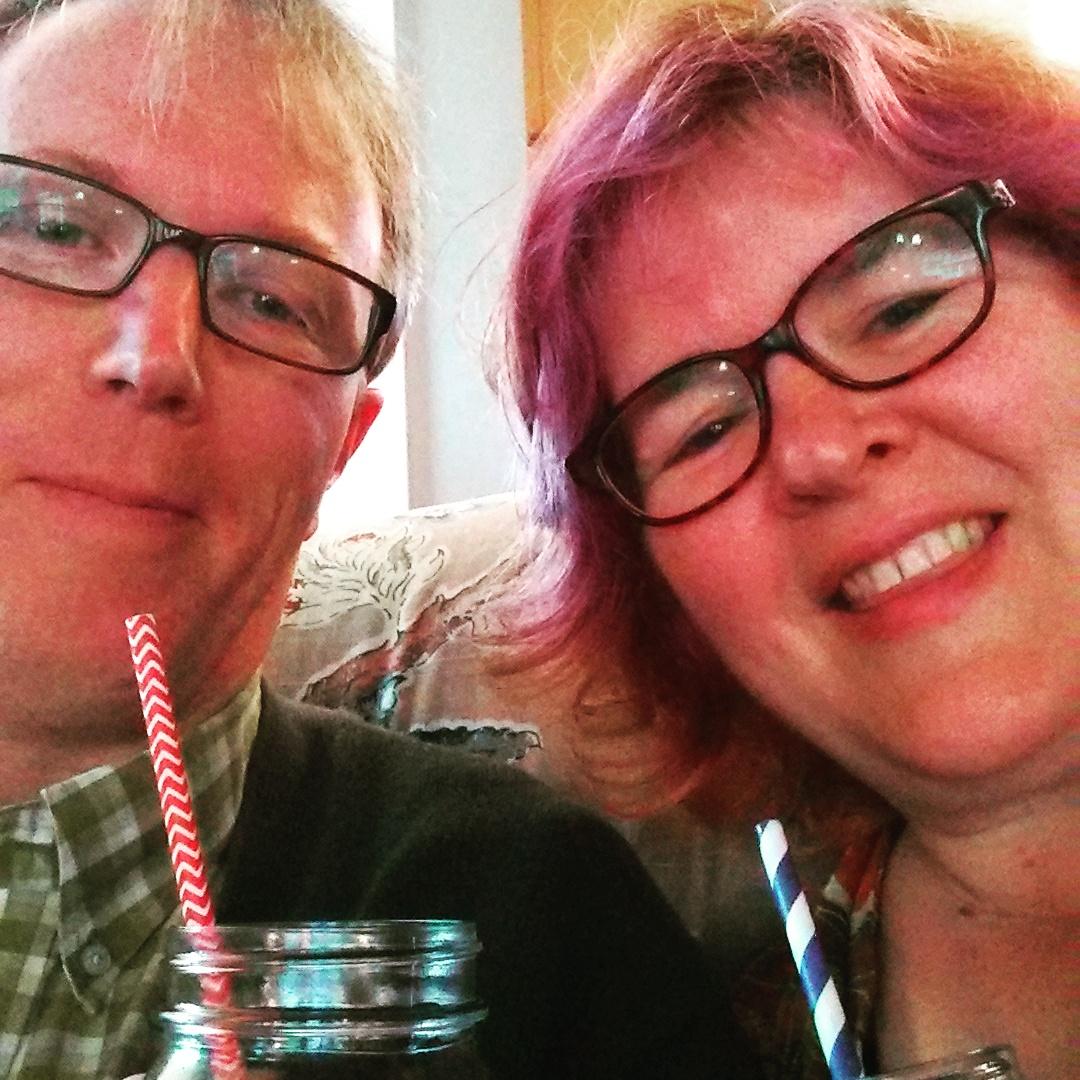
One of my lifelines this spring has been the Widow We Do Now? podcast. I stumbled across it a early in the new year, and I’ve been a regular listener since; I find the hosts refreshing frank, and bearing witness to others’ stories of loss and grief has proved helpful.

While the podcast, and the Facebook group it spawned, are widow-focused, they’re widower-welcoming, and so, given the paucity of widower guests stepping up for the podcast, it seemed only right to put my hand up.

The result is the episode released today, which we recorded last month.

🗓️
Widow We Do Now?  •  Grief  •  Podcast

About This Blog

Photo of Peter RukavinaI am . I am a writer, letterpress printer, and a curious person.

To learn more about me, read my /now, look at my bio, listen to audio I’ve posted, read presentations and speeches I’ve written, see things I’ve favourited elsewhere, or get in touch (peter@rukavina.net is the quickest way).

I have been writing here since May 1999: you can explore the 25+ years of blog posts in the archive.

You can subscribe to an RSS feed of posts, an RSS feed of comments, an RSS feed of favourites elsewhere, or a podcast RSS feed that just contains audio posts. You can also receive a daily digests of posts by email. I also publish an OPML blogroll.

InstagramYouTubeVimeoORCIDOpenStreetMapInternet ArchivePEI.artDrupalGithub.