
Reporters at the CBC in Montreal are blogging the campaign trail.
Now that we’re almost 24 hours into The War, here are some thoughts about how it’s being covered on television:
ABC — The only major network to omit the annoying “crawl” from the bottom of the screen, and thus the only source I can watch with any regularity and not get dizzy. Peter Jennings is smart and well-spoken. Correspondents are the weakest, with the exception of Ted Koppel, who is excellent.

CBS — Can anyone take the corn-ball Dan Rather seriously? Completely unwatchable. The big green LIVE blob in the top-right of the screen is very annoying, especially when combined with the ever-present “crawl” at the bottom.

NBC — Best correspondents. I can take or leave Brokaw. Same “crawl” problem. Good alternative is CNBC, which uses the intelligent and insightful Forest Sawyer as host during the evening.
FOX — Like watching an SCTV imitation of real news.
CBC — Seems like second generation news: I get the impression that people at CBC are watching the pool feeds from afar, and reporting what others are reporting. Correspondents seem remote from the war, and experts seem to neither be expert nor particularly informed. And there’s the usual “Mansbridge as automaton” problem.
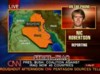
CNN — Very full of themselves, but arguably the best coverage going. Smart, well-informed experts; correspondents all over the place (including Nic Robertson, who’s taking his life in his own hands by staying in Baghdad). Aaron Brown is very annoying — almost as much as Dan Rather — other hosts less so.
PBS — Charlie Rose has the best commentary with the best guests.
🗓️
Apparently Tom Dressen (who guest-hosted the Late Show tonight ) is “Corporate America’s Favorite Entertainer.” Is that a good thing?
🗓️
George Kells is Chair of the Human Rights Commission of Prince Edward Island. He’s been raked over the coals of late for speaking his mind in a Guardian opinion piece about the War Against Iraq.
There is no doubting the Mr. Kells is a strong-willed man who sees the war through a particularly aggressive black-and-white set of glasses. A quote from the CBC story about the issue:
He [Kells] says in issues such as a military conflicts you have to pick one side, and his “Friends of Saddam” comment was not out of line.”Some of them must be. Surely it boils down to you’re a friend of George Bush or a friend of Saddam’s. That’s the only two sides you could be on, isn’t it?”
Surely it’s not unusual for a man who spent 37 years in the military to see the world of war as a binary system; there’s little room for shades of grey on the battlefield, and this is the culture from which he comes.
The question at hand — at least the one raised by Leo Broderick of the Council of Canadians — is whether Kells’ comments should disqualify him from serving on the Human Rights Commission. Again from the CBC:
Some of the people who were at the meeting want Kells to leave the Human Rights Commission. A group called the Council of Canadians says Kells should have chosen other words to describe the crowd.
Kells, obviously, thinks not:
“I have no intention of resigning. I think if I were to resign I would be giving in to the people who are trying to squash freedom of speech, so I have no intention of doing that.”
And I support him in this regard.
The Human Rights Commission doesn’t exist to ensure that everybody thinks happy thoughts, it exists specifically to prevent “the unequal, stereotypical and prejudicial treatment of persons.”
The arenas within, and grounds upon which discrimination is prohibited are very clearly laid out by <a href=”the Commission.
And they don’t include “calling people names.”
If George Kells, private citizen, calls a group of people “The Friends of Saddam”, “America Haters,” and “Peace-at-any-Price Appeasers,” he is simply exercising his right to free speech. He’s not discriminating against anyone. Indeed he’s not suggesting that those who hold other opinions should have less right to speak than he does.
If Mr. Kells made his comments in an official capacity, and suggested they reflected the policy of the Commission, or if he suggested that those against the war, say, weren’t worthy of employment, housing, or a right to be heard, well that would be one thing. But he didn’t.
Free speech is hard. Sometimes it’s uncomfortable. Sometimes it means people are going to call you things you would rather they didn’t. But it’s way, way better than the alternatives.
Go George. Go Leo. Onwards and upwards into the court of ideas.
🗓️
CBC is reporting that Canada will not participate in the U.S. backed war against Iraq.
I’m not smart enough to understand this war and the reasons for and against, but setting all that aside, it takes guts for Prime Minister Chretien to not join the U.S. war bandwagon.
I may even be feeling a titch of patriotism.
Won’t have to move to France after all.
🗓️
 Keeping in mind that I would handily win a contest for “person least likely to quote from the Bible in any situation,” here is John 17:21 (King James Version):
That they all may be one; as thou, Father, art in me, and I in thee, that they also may be one in us: that the world may believe that thou hast sent me.
I mention this because it is the biblical citation referenced in the first logo of the World Alliance of YMCAs, in 1878; the reference remained there for almost 70 years.
From the time I was eight until the time I was sixteen, I spent almost every Saturday morning, and a good portion of every summer, at the Hamilton YMCA on James St. In more ways than I can count, the ‘Y’ helped me become the person I am today; I owe the organization a great debt of gratitude for this.
One of those “more ways than I can count” is that the ‘Y’ is where I got my start as a typesetter. In those days the “page” was large rolls of newsprint end-runs from the Hamilton Spectator and the “ink” was thick watercolour paint. And the subject of my “typesetting” was usually large banner for some YMCA function or another. But it’s where I caught the typographical bug that stays with me.
The transition of the YMCA logo from 1878 to the present day represents one of the masterstrokes of graphic design of the last century.
This original logo was a circle overlaid the Greek letters X and P (Chi and Rho, representing Christ), in turn overlaid with the Bible open to John 17:21.
By the 1890s, the use of a red triangle — with each side representing one aspect of the YMCA’s world: Spirit, Mind and Body — came into common use.
By World War One, a simple red triangle, overlaid with a blue bar with YMCA set through it was in use (top right), and by the 1950s, this red triangle was combined with the original logo, with a second ring added (middle right).
The masterstroke comes in the transition, in the mid 1960s, to the logo that is in use to this day (bottom right), with the red triangle set beside a bent solid black bar so that together they form the letter ‘Y’.
This logo takes the best feature of the historical logos — the red triangle, Spirit, Mind, Body — and updates it without diluting it. The result is a potent symbol that, says the YMCA, is recognized by 97 percent of Americans.
🗓️
Councillor George Trainor responded as follows to my query about his opinion on a ban on cosmetic pesticide use with in the City of Charlottetown:
Municipalities have the responsibility to provide their citizens with access to clean and healthy parks and open spaces. Due to increasing concerns about the potential hazards of pesticide usage on public greenspaces many municipalities are seeking ways to reduce or eliminate the non-essential use of pesticides . The City of Charlottetown is one of these municipalities.
The largest applications of pesticides in most municipalities occurs on turf surfaces such as sport fields, cemeteries, park lawns and road corridors. I think it is prudent that the City focus on a small number of significant targets, such as the above, for action.
It may also be prudent for the City to consider a model such as the “Integrated Plant Health Care” model which is defined as ‘An ecologically based approach to establishing and maintaining developed and natural landscapes in an urban environment. It integrates an understanding of living systems, urban stresses, human needs and horticultural principles in developing maintenance solutions that are environmentally sound, healthy and sustainable.”
In this model human needs are considered as part of the equation. A model such as this promotes the development of solutions that addresses both the need for landscape facilities and for pesticide reduction/elimination. It notes the concept of education as being critical and suggests that a new class of “Eco-Gardener is required in order to address the growing need for sustainable, economical landscapes that meet the needs of a community.
In this model there are five stages to adopting an effective IPHC: Inventory current practices, Evaluate and prioritize options, Implement, Monitor and maintain, Plan organize and communicate. Hopefully this is the Model that our City will follow, we need more information, the direct needs and impacts on human beings have to be considered as key challenges and goals.
Thanks to Councillor Trainor for taking the time to respond.
🗓️
Ten years ago today, the first version of NCSA Mosaic was released.
Ten years ago tomorrow, I arrived at work for the first time at the PEI Crafts Council.
It has been an interesting journey.
🗓️
About This Blog
 I am Peter Rukavina and this is my blog. I am a writer, letterpress printer, and a curious person.
To learn more about me, read my /now, look at my bio, listen to audio I’ve posted, read presentations and speeches I’ve written, see things I’ve favourited elsewhere, or get in touch (peter@rukavina.net is the quickest way).
I have been writing here since May 1999: you can explore the 25+ years of blog posts in the archive.
 You can subscribe to an RSS feed of posts, an RSS feed of comments, an RSS feed of favourites elsewhere, or a podcast RSS feed that just contains audio posts. You can also receive a daily digests of posts by email. I also publish an OPML blogroll.
Instagram • YouTube • Vimeo • ORCID • OpenStreetMap • Internet Archive • PEI.art • Drupal • Github.