From earlier this spring, Signs of a magnetic pole flip in company ownership by Matt Web:

What if the dominant model of company ownership inverts? What if we’re at the end of an era of companies being owned by external stockholders, and at the beginning of bottom-up ownership by the people who do the work – the employees? 

The signature example of employee-ownership Matt cites is ustwo, a company—er, fampany—that I have some familiarity with, as my friend Jonas worked from their Malmö branch for some years.

Yankee Publishing, my client for more than 25 years, made the transition from 84 years of family ownership to becoming an ESOP—employee stock ownership plan in 2019:

ESOPs are a way for family-owned business to keep their business intact. Yankee, which has been family owned for 84 years, now has 17 owners including the fourth generation, with no clear successor, Jamie Trowbridge, president and CEO — and a third-generation owner himself — explained to NH Business Review.

“The family members were all in favor of this,” said Trowbridge, who has been working on the plan to transition the company to an ESOP for the last 2 1/2 years. “The alternative would probably have been to sell the assets off to different buyers, breaking up the company, and perhaps moving pieces elsewhere. That was unacceptable to us. We didn’t like the idea of good paying jobs leaving New Hampshire.”

I’m not a part of the ESOP—I’m a vendor, not an employee—but the benefits of the ESOP to me, inasmuch as they’re allowing the company to remain intact and right-scaled, are clear.

🗓️

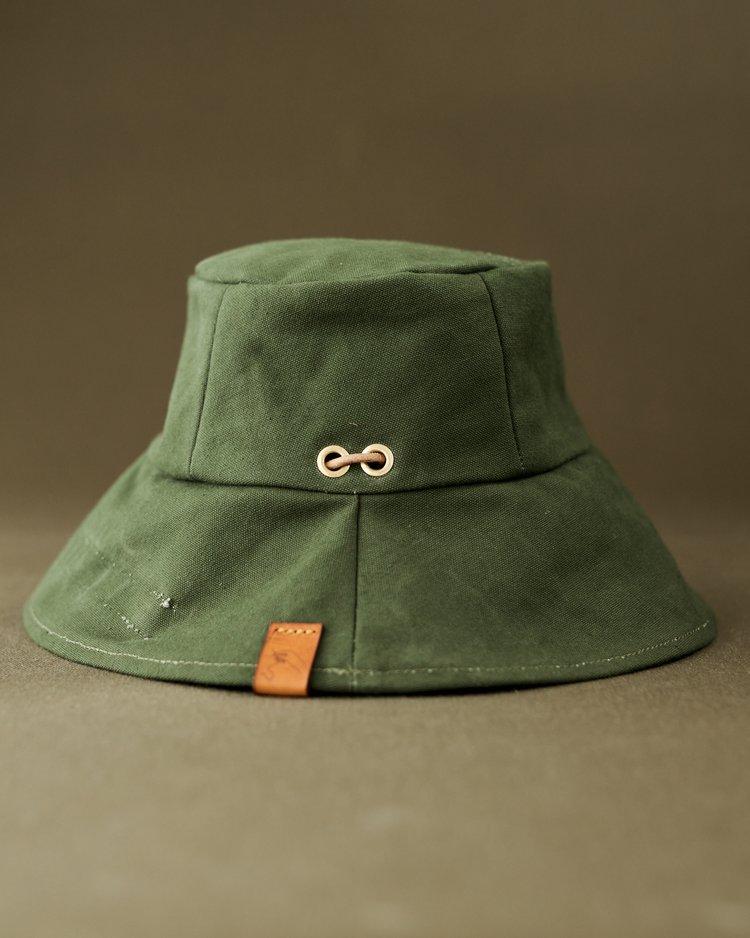
Oddments from Francli Craftwear:

An on-going project where the only rule is that we can’t buy anything new.

A collection of craftwear and carry goods entirely remade from our workshop off cuts, ends of roll and salvaged fabrics and trims.

Each piece is created with minimal pattern cutting and a build-as-you-go approach. This is our space to let go of repetition and efficiency, and give way to a sense of flow. Listening to the behaviour of the material, and how it wants to be reformed.

This collection will continue to grow and evolve over time. Each piece realised will never be exactly repeated.

🗓️

Crocuses gave way to tulips gave way to ferns. It’s not yet June and we’re already three species into the plant season.

🗓️

From Huck, photos celebrating South Africa’s skater girls:

In recent years, a new wave of South African skateboarders have shattered barriers across race and gender. Skaters like Wandile Msomi, Nhlanhla Ngubane, Melissa Williams, Thato Moet, and Olympian athlete Boipelo Awuah have been creating an inclusive space for Black men and women in a sport that had long been dominated by cis white males.

🗓️

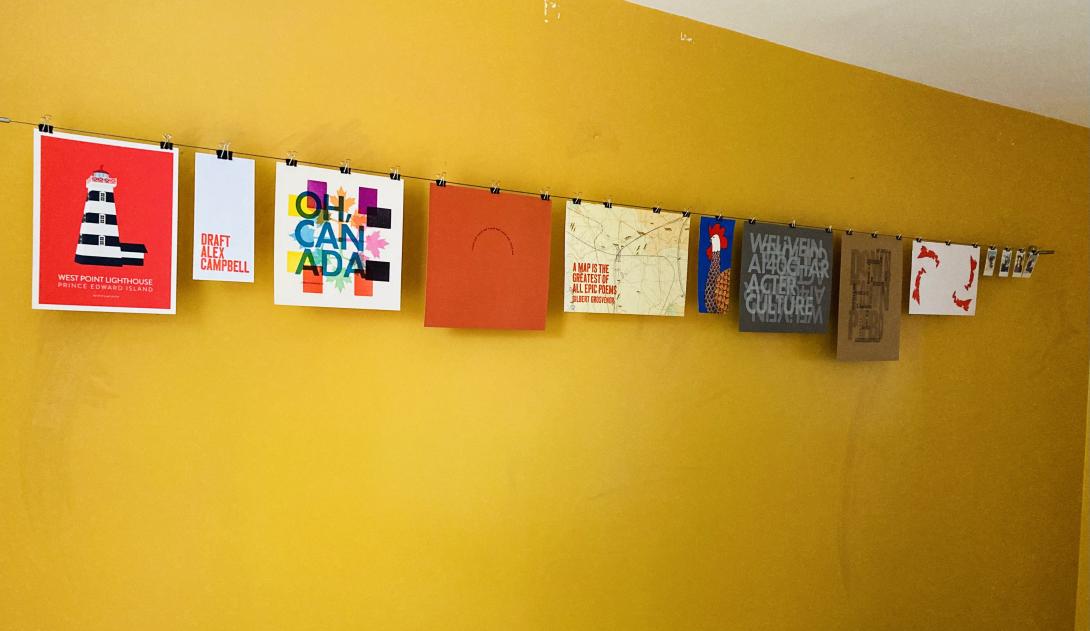
More of others’ work than my own on the dining room wire for the next month.

🗓️

Sarah Miller:

Badger told me about a book he read with no punctuation. I said fuck those no punctuation people. I read him a paragraph from a P.G. Wodehouse story which wasn’t even that good, but it did have well-placed periods and commas. I told the Badger how I was hoping I was truly done eating animals because I saw a sad photo of two cows. “I really don’t ever want to eat another cow again,” I said. “They just look so much like my Ruthie, with their sweet eyes.” I tried not to cry and I succeeded. My Fake Son was parking their truck and we waved and they came over and told us about all the people they know who have Covid. We all went for a walk around the block and talked about times we’d projectile vomited. My Fake Son said they’d done it once looking into their friend’s eyes, their story was the best.

I simply love everything about that paragraph.

🗓️

Louisiana interviews Swiss artist Miriam Cahn:

“Female artists have a lot to do. Because art history is mostly done by men,” says Miriam Cahn. Although she has no problem with art done by men, she noticed that women often lie passively in works done by men: “Females are to be erotic,” she says and continues: “It’s a tradition in art history. So we have a lot to do. Because we have to rewrite the art history.”

🗓️
Louisiana  •  Art  •  Feminism  •  History

On Penkiln Burn:

This is The Kettle that boils the water that brews the tea that fuels the urge to make things happen.

(via Olle)

🗓️

Alexandra Zayas interviewed by Chip Scanlan about editing:

Editing isn’t about fixing the copy in front of you, it’s about squeezing the best possible version of the story out of the universe by helping the writer to see it and capture it. What that help looks like will vary between individuals and fluctuate for the same writer at different points in the process. A big part of the job is removing obstacles, especially those that are self-imposed. One writer may need help seeing the forest for the caveats. Another may need reminders to get inside subjects’ shoes and hearts. Editing is knowing when to stay out of their hair and when to give them a nudge, when to insist they keep pushing for the impossible and when to let them cut bait. It’s making sure they feel comfortable arguing with you and recognizing when they’re right — but also recognizing when, amid a nasty bout of 11th-hour second-guessing, the writer is just tired and hangry; then, you send them a sandwich. You can’t do this job without legitimately loving these people and living for their victories and growth.

I’ve been thinking a lot about finding an editor: we bloggers have, to our detriment, steadfastly held onto disintermediation as a inviolable tenet; my writing can be better, and involving an editor is one way to get there.

🗓️
Writing  •  Editing

My father had this uncanny ability to take broken things, figure them out, despite knowing nothing of them, and fix them. I saw him do it with lawnmowers, tractors, shavers, radios, MP3 players. He was indefatigable.

We four boys, his sons, have each inherited some of this quality. Not at Dad’s high level. But we’ll tread into realms we know nothing of, and bang away until we find a solution.

One of the delightful side-effects of dating L. is that she has a camper by the shore, meaning that, for the first time in 29 summers on the Island, I’ll have a summer place.

Campers are a completely foreign realm for me: we had various tent trailers when I was growing up that Mom and Dad knew the ins and outs of, and some of that must have rubbed off. But this is a camper of a completely different scale, with a dishwasher and a shower and an outside kitchen.

Despite its sophistication, the camper’s Achilles heel, or at least a significant point of possible failure, is its 12 volt battery, a deep-cycle battery in its “basement” that’s responsible for running the lights, the “slide out” hydraulic pumps, the refrigerator, and the ignition system for the furnace. Because the camper is designed to be, well, mobile, it’s designed to be able to exist off-the-grid, and so although it will happily plug into the Maritime Electric mains, the 12 volt system is integral to its operation.

When we arrived at the camper this spring to open it up for the season, the 12 volt battery was dead (the multimeter is a required piece of the standard issue Rukavina-boy repair kit). It was dead enough that it needed replacing, so I pulled it out, hefted it to town, and near-$300 later at PEI Home & RV Centre, and a trip out to the camper, we were back in business.

Until the next week, when we returned to find the battery half-drained and none of the mission-critical systems operating.

Fortunately the online forum for the RV has copious owner-written documentation, including an electrical system troubleshooting guide. 

And so I learned that upstream from the battery is a “converter,” a box that converts mains electricity to 12 volts, charging the battery.

Exactly where the converter was proved something of a Saturday afternoon mystery (the owners manual is frustratingly missing such helpful details); I eventually located it behind a wall in the basement, under the stairs. I put my multimeter on it: dead. I pulled it out and took it to town.

Another trip to the parts department this morning: they generously tested it and confirmed that it was dead. And then sold me a replacement for near-$600.

I drove out to the shore this morning with tools aplenty, and carefully followed the instructions for installing the new converter (a process punctuated by a call to the helpful techs at the home office in Marshall, Michigan to confirm some finer points).

Once it was installed and the power turned back on, presto, the camper sprang back to life. Light! Ice! Hot water! Furnace!

I was 100% channelling Dad through this entire adventure: I know next to nothing about RVs and batteries and electrical systems and converters. Or at least I used to know next to nothing. Now I know quite a lot.

What I learned from Dad, most of all, was how to learn: it was a a great gift.

🗓️
Camper  •  Dad  •  DIY

About This Blog

Photo of Peter RukavinaI am . I am a writer, letterpress printer, and a curious person.

To learn more about me, read my /now, look at my bio, listen to audio I’ve posted, read presentations and speeches I’ve written, see things I’ve favourited elsewhere, or get in touch (peter@rukavina.net is the quickest way).

I have been writing here since May 1999: you can explore the 25+ years of blog posts in the archive.

You can subscribe to an RSS feed of posts, an RSS feed of comments, an RSS feed of favourites elsewhere, or a podcast RSS feed that just contains audio posts. You can also receive a daily digests of posts by email. I also publish an OPML blogroll.

InstagramYouTubeVimeoORCIDOpenStreetMapInternet ArchivePEI.artDrupalGithub.