My cashier at Riverview Country Market said “it’s exactly as amazing as you think it will be,” which I took to mean “like jumping into Wonka’s chocolate river.” And it’s pretty close.
Made in Newfoundland. One ingredient. Not cheap. But worth it.

My cashier at Riverview Country Market said “it’s exactly as amazing as you think it will be,” which I took to mean “like jumping into Wonka’s chocolate river.” And it’s pretty close.
Made in Newfoundland. One ingredient. Not cheap. But worth it.

Apple’s Photos apps, across iOS and Mac, have matured very nicely since the days of iPhoto. One of the things they do remarkably well is face recognition; because of this, I have a huge collection of photos that have been automatically identified as being of Catherine. Which is great.
Except that my phone, in a drive to be helpful, does things like this:
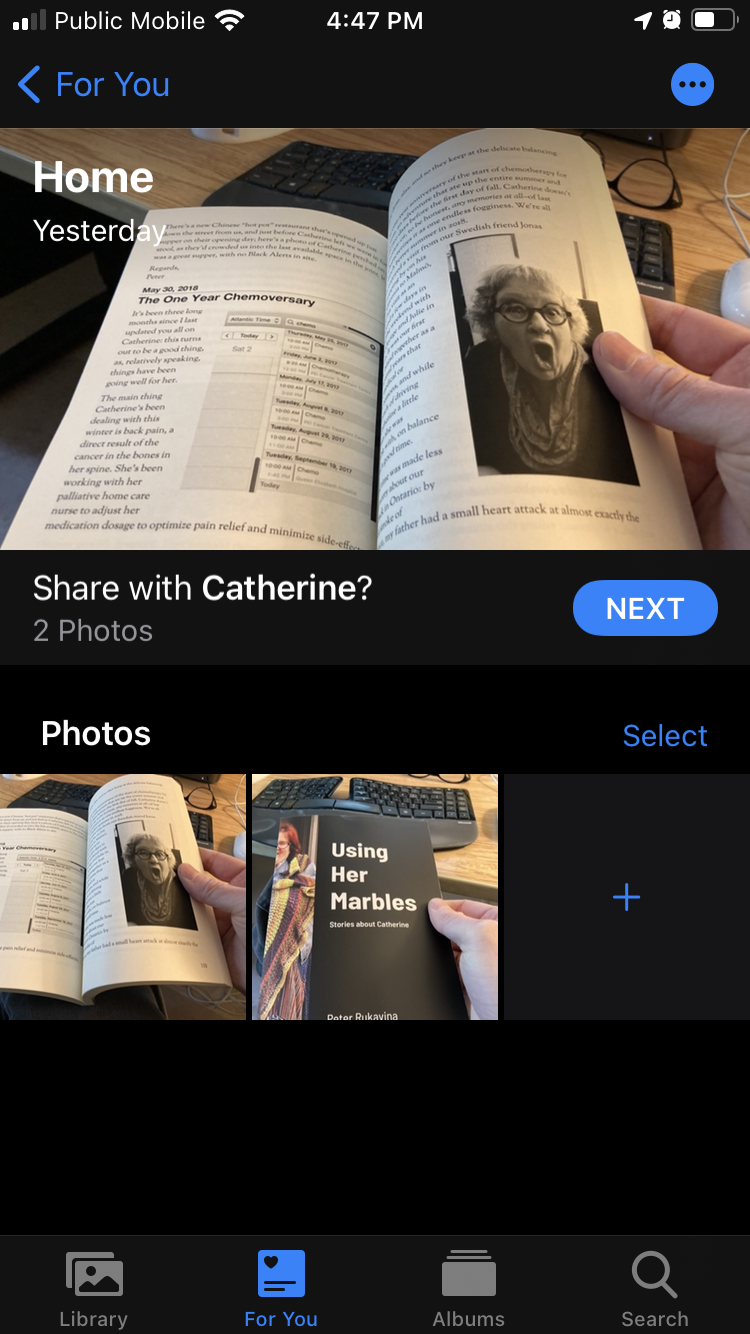
That’s a new photo of Catherine (inside a work-in-progress), and so my phone, recognizing this, suggests that I share the photo with Catherine.
But Catherine died 10 months ago.
I could, I assume, remedy this by some combination of deleting Catherine from my contacts and removing her from the list of recognized people in Photos, but I don’t particularly want to do either of those things.
What I want is a way of telling Photos that Catherine died, and some control over how that gets handled; a slider, perhaps, ranging from “never show me this person ever again” to “I wanted to be reminded often of this person,” along with some automatic steps, like my phone no longer offering to share things with them.
It seems like all the pieces of doing this are already in place; it would be a helpful, humane thing for Apple to implement.
This is a list, which I’ll add to as I encounter new things, of ways in which content on this blog has disappeared over the years.
I had a meeting, on Zoom, of the Island Studies Press Publications Committee this morning. I wasn’t looking forward to it: the meeting itself wasn’t the reason—collegial company and interesting material was expected—I simply couldn’t conscience another hour sitting motionless in front of my screen.
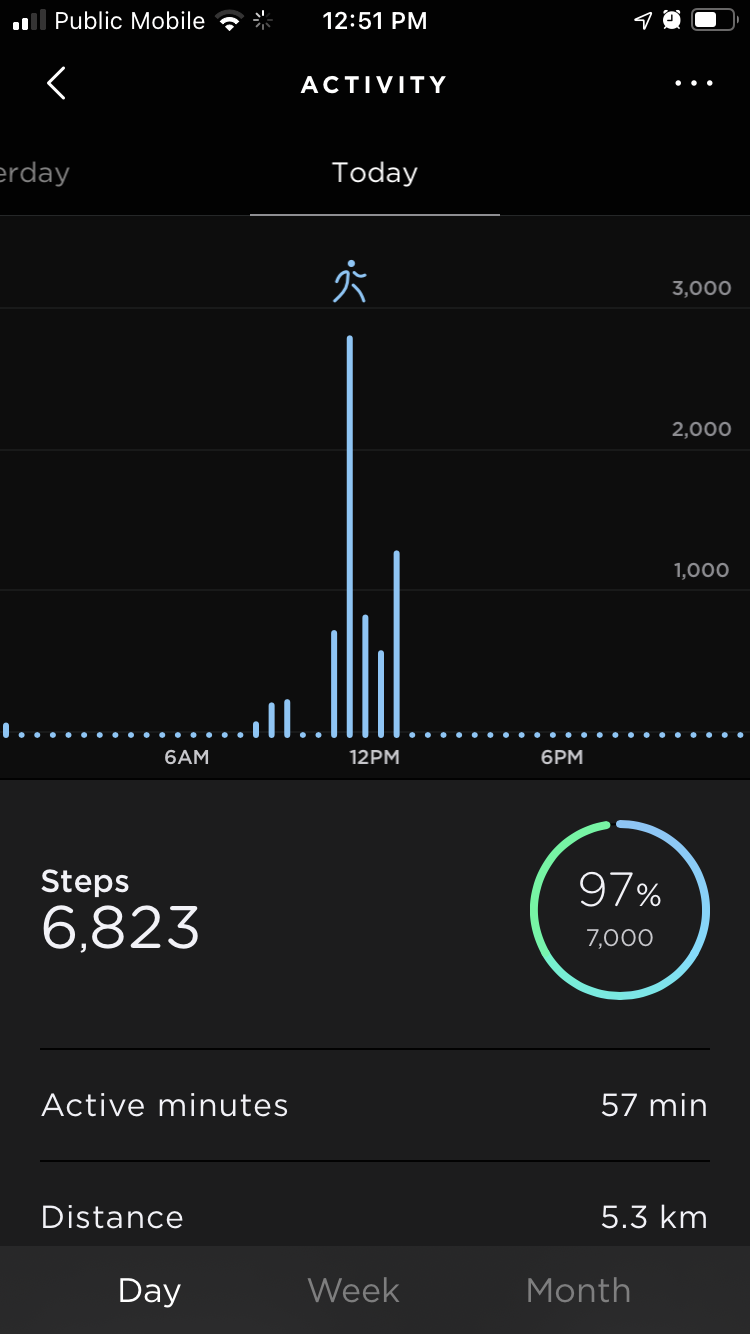
So I took a page out of brother Mike’s playbook and went for a walk during the Zoom, calling in from my iPhone. I alerted my colleagues in advance, turned off video and mostly muted audio. And ended up walking more than 5 kilometres, from downtown to the Experimental Farm and back, in the process. The meeting was great, and that I was on the move didn’t compromise my participation.
Along the way back to the office, once the Zoom was over, I stopped for a sandwich at Non La, and at Island Activewear for a new autumn coat. So a bolster for both my own activity and the local economy.
Enough is Enough by Karine Polwart, Oi Musica & The Soundhouse Choir:
This piece of music has been composed with the express purpose of inviting choirs, street bands and community groups to learn and perform it, and join an exciting, collective musical response to the UN Climate Change Conference (COP26) which will be held in Glasgow in November 2021.
Licensed with Creative Commons Attribution-NonCommercial-ShareAlike 4.0 International Licence 2020.
Remember time claustrophobia?
I have a new claustrophobia to add to the canon: the weight of the mostly undocumented, and thus theoretically endless, list of tasks to be completed around the house. Not the “install a new septic system” or “get the roof replaced” list, the “fix the wobbly step” or “touch up the paint in the bedroom list.”
I had cause to quickly commit my personal list, for 100 Prince Street, to paper this weekend, and here’s what I came up with:
I was pleasantly surprised to find the list only has 6 items on it. And, to be honest, if the upstairs bedrooms went without quarter-round for the rest of my life, I wouldn’t lose a lot of sleep.
With the exception of the screen door, which I think needs the skills of a professional, I think I can probably take on the rest of the list myself over the winter.
With the list committed to paper, its claustrophobic powers are much reduced.
I pointed to this 19 years ago; it’s since disappeared from its home place, but the Wayback Machine kept a copy.
I have been working remotely from my clients since 1995, and, on balance, it suits me. But on days the basement shop seems more like a prison bunker than an escape pod, I would chuck it all in for the stresses and pleasures of real coworkers. Sometimes you really do want some to ask “how was your weekend?”
Because of various excavations of photos from platform to platform to platform (Flickr, OVI, Google Photos, iPhoto) over the years, now that I’ve settled on Apple’s ecosystem to maintain my photos, I’ve ended up with a bunch of photos that have the wrong date.
By “have the wrong date,” I mean, for example, “Photos thinks they’re from May 2020 when, in fact, I took them in March 2013.”
The thing is, the right date is burned into the EXIF data in the photo itself, so I needed a way to say to all the affected photos “change your date to match what’s in the EXIF.”
I wasn’t up to mystically incanting this in AppleScript, but I figured that I could give JavaScript a try, now that JavaScript is an equal scripting partner under macOS.
So here’s a try at a JavaScript that does just that:
var Photos = Application("Photos");
var path = Path("/Users/peter/Desktop/photos");

for (var photo of Photos.selection()) {
	var filename = photo.filename();
	Photos.export([photo], {to: path, usingOriginals: true});
	var tmpfile = Path("/Users/peter/Desktop/photos/" + filename);
	app = Application.currentApplication();
	app.includeStandardAdditions = true;
	var newDate = app.doShellScript("/usr/local/bin/exiftool -T -DateTimeOriginal '" + tmpfile + "'");
	if (newDate != '-') {
		var d = new Date(newDate);
		photo.date = d;
	}
}
With that script in Script Editor, I can select one or more photos in Photos, run the script, and have those photos with an EXIF date get their date updated.
You’ll notice that there’s a kludgey export of the original photo to a working directory; that serves two purposes:
To get this to work you’ll need to install exiftool, and adjust the path to it in the script as necessary.
Your mileage with the script may vary, but it worked for my purposes, and that glut of May 2020 photos are now safely back in March 2013.
My father died a year ago today, marking the start of difficult season of loss and grieving that lasted, two months to the day, to Catherine’s death this January, and beyond.
It has been hard going, by times, and settling into this changed life is still a work in progress. Time has healed some things, and amplified others. There’s anger in grieving, all manner of it, and things to be reckoned with; as the anger subsides it reveals gentler layers underneath, and, for both my father and for Catherine, many of those gentler layers are only just now coming to the surface.
Of all the photos I have of me and Dad together, I like this one the best: in the fall of 2004, sixteen years ago, we were visiting Plitvice Lakes National Park in Croatia, part of an epic father-and-son trip to the old country. Toward the end of our walk through the park it started to rain.
And rain.
And rain.
We got soaked. Really really soaked.
But, as you can see from the smiles on our faces, we didn’t mind at all.
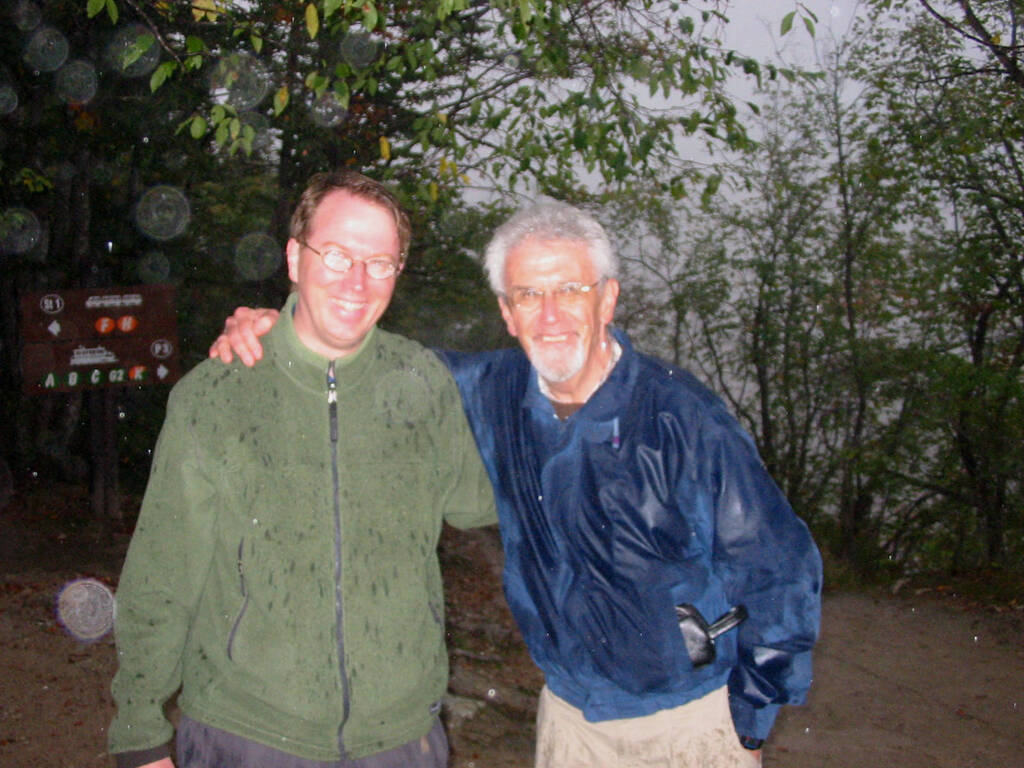
My father and I, especially in my teenage years, didn’t have the gentlest of relationships; of the arguments I’ve had in my life, the longest and most dug-in were with him. That we found ourselves in deepest Croatia, in the rain, with smiles on our faces, was a testament to our working through that.
You are missed and loved, Dad.
As the secrets of cooking for the household reveal themselves to me, the next step in my questing was baba ghanoush.
I’d imagined all sorts of alchemy would be required; turns out to be as simple as:
That’s it. There’s a batch waiting for tomorrow’s snack curing in the refrigerator right now.
 I am Peter Rukavina and this is my blog. I am a writer, letterpress printer, and a curious person.
To learn more about me, read my /now, look at my bio, listen to audio I’ve posted, read presentations and speeches I’ve written, see things I’ve favourited elsewhere, or get in touch (peter@rukavina.net is the quickest way).
I have been writing here since May 1999: you can explore the 25+ years of blog posts in the archive.
 You can subscribe to an RSS feed of posts, an RSS feed of comments, an RSS feed of favourites elsewhere, or a podcast RSS feed that just contains audio posts. You can also receive a daily digests of posts by email. I also publish an OPML blogroll.
Instagram • YouTube • Vimeo • ORCID • OpenStreetMap • Internet Archive • PEI.art • Drupal • Github.