Back in the late 1980s the bee’s knees of “you don’t have to be a programmer to make awesome stuff” tools was HyperCard for the Mac. It was, in its essence, a visual data juggling tool that let applications get “painted” rather than “programmed.”

Making systems that allow complex, powerful and interesting things to be constructed with a simple tool-set with a gentle learning curve is not easy: believe me, it’s what I’ve been asymptotically doing this for years. Simple is never simple.

Yesterday I attended a workshop about Hoist. Going in I had no idea what Hoist was about; Luisa invited me to go along with a group from Signal Digital and I was intrigued by the “something cool in the state of Denmark” prospect to set aside the “oh, and the first hour is in Danish” as something I could press on through and overcome.

Through a combination of good visuals, kind translators, and a hands-on workshop that was quickly hacked into English for my benefit, I emerged with a fairly complete picture of what Hoist is.

Hoist is, in its essence, HyperCard for Drupal.

Drupal is a fabulously capable open source toolkit for making websites. It is part content management system, part programming framework, part pattern language. Like any open source fabulously capable system, Drupal has rough edges and UI bottlenecks; the modern Drupal 6 is light years ahead of the antique Drupal 4 in this regard, but there’s still ground to cover before Drupal’s ease-of-use catches up with its awesome power, and it’s into these crevices that Hoist is shining its light.

If you’re Drupal-literate, the technical description of what Hoist does is roughly as follows:

  • A web interface for creating new Drupal instances (they call them “Spaces”).
  • A new UI layer for creating CCK content types (they call them “Apps”).
  • A set of Views that automatically get attached to new content types.
  • A set of canned “Apps” — content types and related Views — for common tasks like “Meetings” and “Events” and “Ideas.”
  • A simple method for creating Blocks (they call them “Widgets”).
  • A wrapper around all of this that lets them sell it as a web service, charging on a cost-per-user basis.

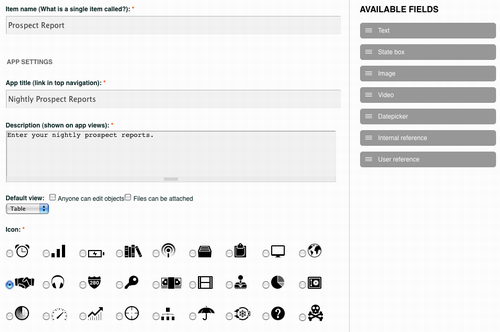
If you’re not Drupal-literate, the simpler explanation of what Hoist does is “makes creating websites that gather and report on different sorts of information easier.” So if you need to have your staff of 35 salespeople enter their nightly prospect reports, you can, with relative ease, create a “Nightly Prospect Reports” application in a few minutes of drag-and-drop action:
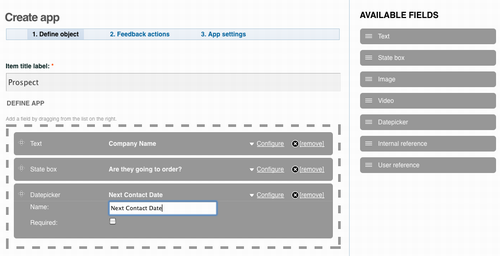
Hoist Screen Shot Hoist Screen Shot

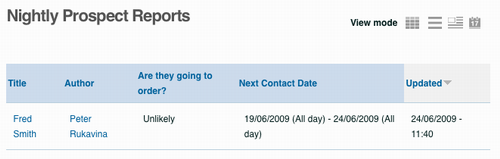
You end up with a new menu option that gets exposed to all the “members of your Space:”

Hoist Screen Shot

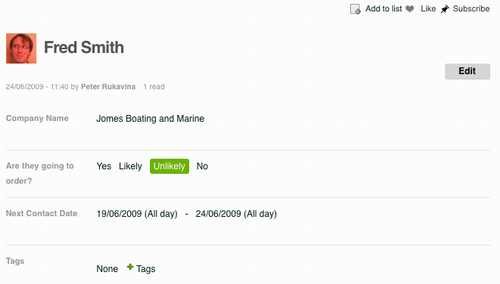
And they can start entering their Nightly Prospect Reports:
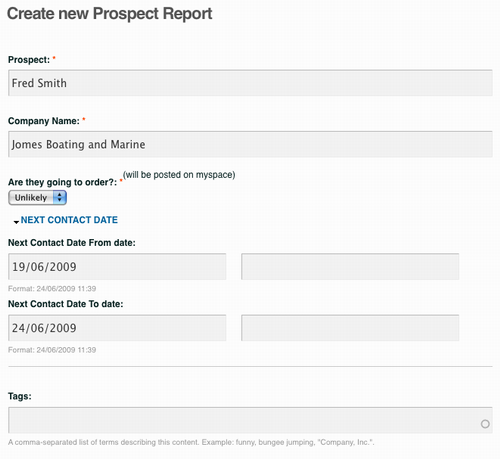
Hoist Screen Shot Hoist Screen Shot Hoist Screen Shot

While it might be something of an exaggeration to anoint Hoist with HyperCard ease-of-use, especially in these early days, compared to the regular Drupal “create a new CCK content type, add new views, configure the display of the fields, create Views to all the content type to be reports on” string of actions required to achieve the same thing, Hoist is a considerable leap forward in the HyperCard direction.
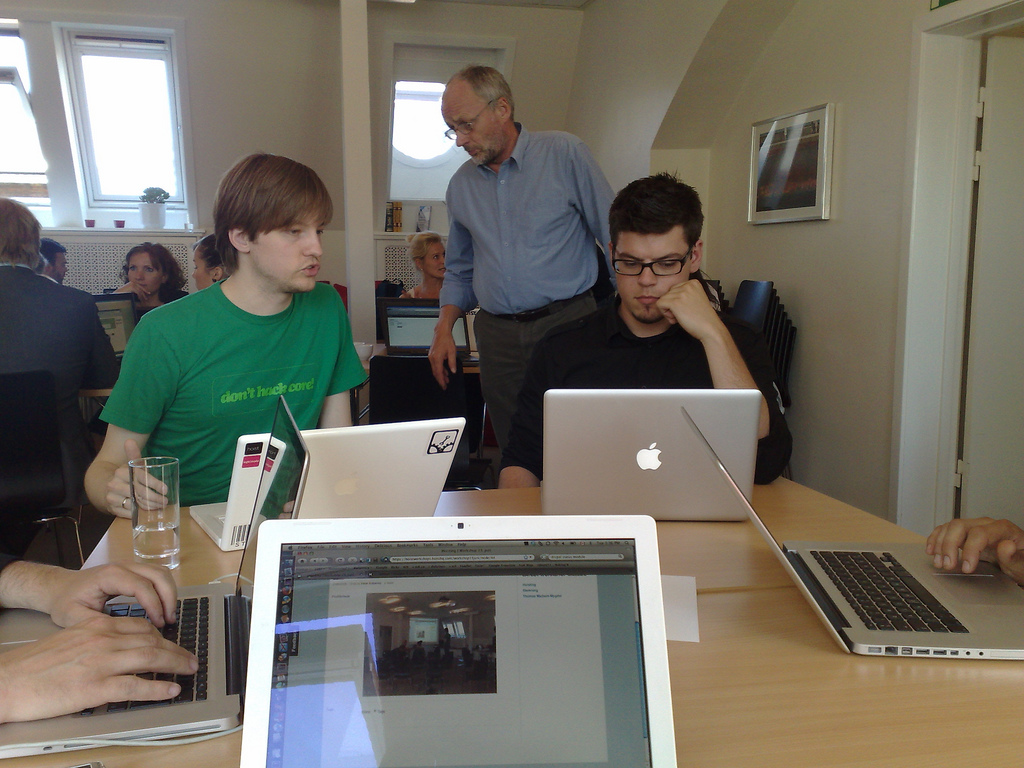
Hoist Workshop

While Hoist is still a little rough around the edges, something exaggerated, perhaps, by the abysmal wifi at the workshop, there’s clearly considerable talent involved in rounding these off, and kudos must go to the entire Hoist team for being involved in the workshop, and for listening as much as telling. They hold their workshops every week, and at the intermission between the format presentation and the hands-on they serve cake, coffee and fresh fruit; it’s hard not to love a company that serves cake.
🗓️
Copenhagen  •  Drupal

Today was my day to go exploring outside of the immediate neighbourhood of our apartment here in Malmö and south into so-called “integrated Malmö,” which is to say “interesting Malmö,” which is to say “the rich and diverse part Malmö that includes people from many cultures.”

The dividing line between downtown touristic commercial Malmö and the other Malmö is quite stark: you walk past the Triangeln shopping centre on Södra Förstadsgatan and all of a sudden H&M gives way to Myrorna, and the innumerable Espresso House of downtown disappear, replaced with innumerable places to buy falafel.

Both sides of Malmö have their attractions, but this “other” Malmö certainly pulses with a more dynamic energy.

My immediate destination was Restaurang Nowroz — and I had a wonderful meal of grilled chicken and rice there — but I spent an hour or so wandering around the streets and alleys, eventually ending up in front of Carib Kreol, our destination for tonight’s pre-reboot supper (as I picked the place, I felt the least I could do was to ensure it was actually there).

On the way back to our neighbourhood I came very close to buying, for 125 SEK, a fetching dark-green waist-length wool jacket at the aforementioned Myrorna used clothing shop; I ultimately decided, despite its wonderfulness, that it was about a size too small for me (or I a size to large for it). If you’re more L than XL and are in the market for a nice jacket, it’s waiting there for you…

I walked back to our Västergatan apartment in time to meet up with Guy, just arrived from Manchester. On the way I stopped at the Five o’clock tehandel tea shop to pick up a small bag of 2009 first-flush Darjeeling, which sounds more impressive until I tell you I’ve no idea what that means and even less impressive once I managed to bungle its preparation and produced the evilest, foulest-tasting tea ever prepared. To his credit, Guy grimaced, but finished his cup. Nobody asked for more. Darjeeling needs a gentler touch than I can offer it, I fear.

After some time in our beautiful courtyard knocking around ideas with Guy, we were joined by Olle and headed back into Other Malmö for supper with Luisa, Morgan and, later, M.C. Widerkrantz (who introduced himself by saying “Deb Richardson says to say hello,” thus proving the Escher-like nature of the hacker community that we think is vast but that actually only includes 112 people).

After supper (tasty, served with friendliness, but ultimately not life-changing) we stopped for a brief spot of coffee and Setúbal-sourced alcohol and then walked Guy back to retrieve his gear and set him off on the train over to Copenhagen (the other Other Malmö).

Tomorrow morning it’s up before the dawn to join Luisa at Signal Digital for the day, where they’ve kindly offered me a temporary desk to set down and do a day of concerted paying work amidst all this merriment.

🗓️
Design  •  Malmö  •  Sweden  •  Travel

Odd and sad coincidence given my post referencing Projects for Change: I just got word that Jim Hamilton, one of the original P4C gang, has died. Jim and I never lived in the same place at the same time, but our lives overlaid in many places and he was always very nice to me. Thoughts to his brother Richard (my old roommate and fellow warrior) and everyone else who knew Jim.

🗓️
Friends  •  History

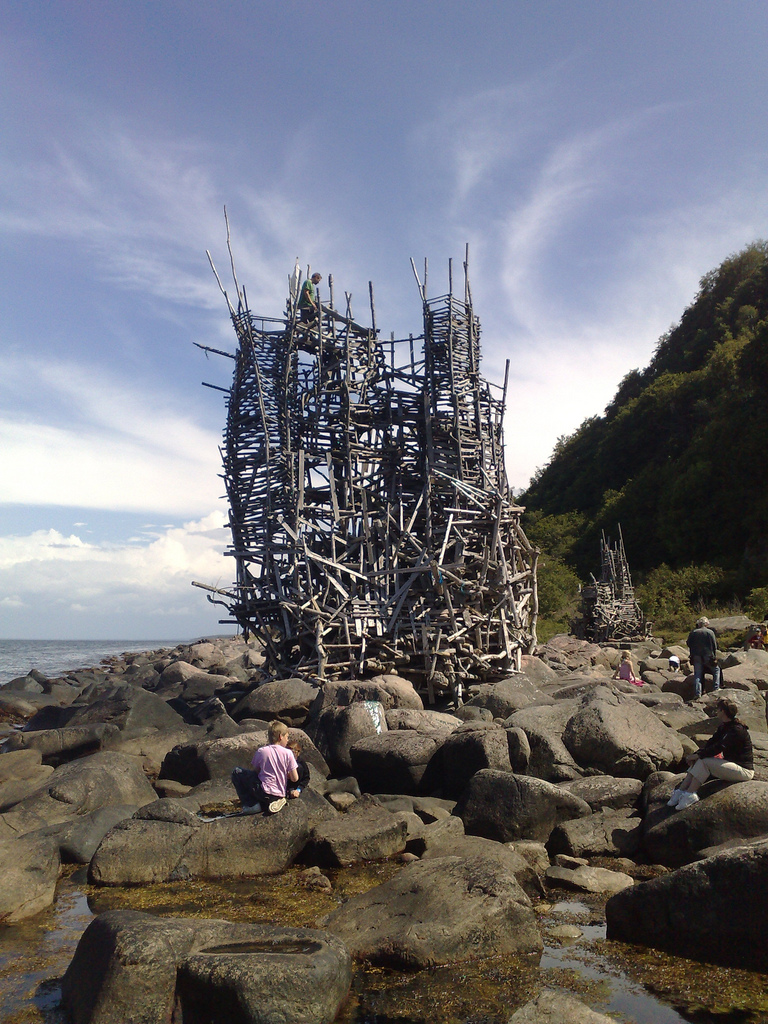
Today we joined a gaggle of Malmöians and drove up to the northern tip of Skåne to visit the occasionally putative independent country of Ladonia. It was a beautiful day: sun shining, temperature around 18 degrees, no bugs, good company.

To get to Ladonia we headed to the Kullaberg Nature Reserve, parked our car in the second of two parking lots, and then followed the unofficial wayfinding — yellow Ns painted on trees — through the forest and then down a steep slope to the boulder-strewn shore.

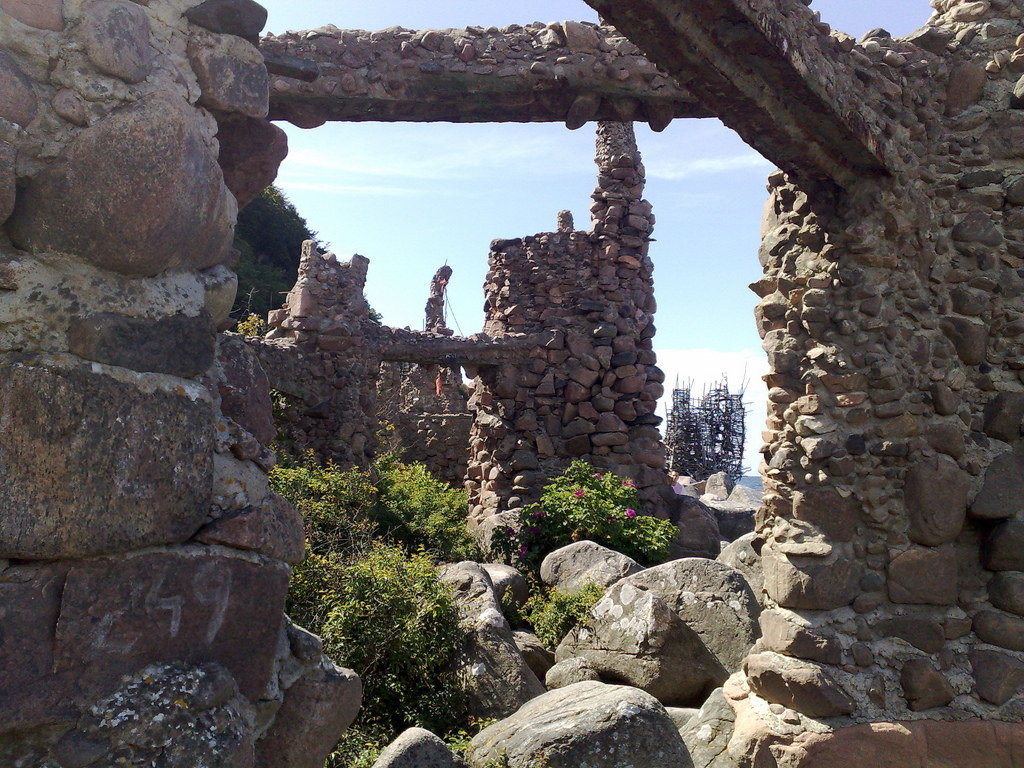
Once there we found the “village” of Nimis:

Nimis

And, up the shore a little, the “village” of Arx:

Arx

Both are the product of the imagination, resolve and hard labour of artist Lars Vilks and are quite a site to behold (see a map of all my photos here).

If you do go yourself beware that it’s quite a strenuous hike at times, especially the steep parts as you head down to the shore from the main path. There are rocks and roots to trip over and mud to slip on. You need good shoes and good balance.

A silver lining at the beginning or end of your journey to Ladonia is Himmelstorpsgården, a pleasant little café with outdoor seating that serves coffee, cinnamon rolls, and nice pear-flavoured ice cream treats.

🗓️
Travel  •  Sweden
Locked
🗓️

Olle took us to Forskningsavdelningen today — Research Department in Swedish. It’s a hackerspace here in Malmö that he’s a member of. To get there meant walking out of the bourgeois heart of the city into its near-industrial fringe and into a collection of low-rise red brick buildings that house, among other things, a Greek school and artists lofts.

Forskningsavdelningen itself is part of a broader “creative and political freehaven” called Utkanten that includes a performance space, workshops and lounge. The aesthetic is spray-paint and concrete slash old couches slash power tools. Emma Goldman meets This Old House means CGBG.

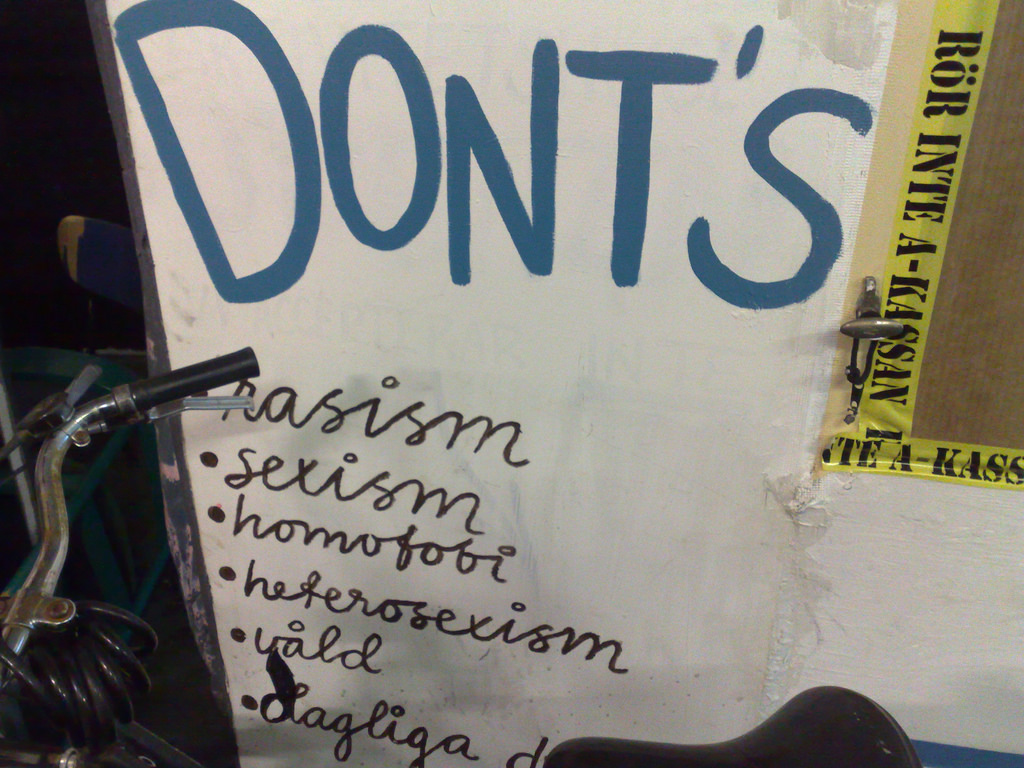
Dont's

And it did all feel vaguely familiar: back in the mid-1980s I was involved with a group, Projects for Change, that you could call a sort of “analog Forskningsavdelningen.”

The tools of our trade were Letraset and Gestetner duplicators the great issues of the day were capital punishment, the war in El Salvador and the arms race. We had a tiny store-front at 139½ Hunter Street that contained some desks, a library, a slide projector, a turntable with a collection of Tom Waits records. And a lot of piss and vinegar. It was a rag-tag group of young and old, with political bents ranging from socialist to anarchist. I made a lot of good friends there, learned a lot about issues I knew nothing of, and developed the shape of my own political philosophy, such as it is.

Forskningsavdelningen is decidedly more digital in nature and is more Mechanics’ Institute than political salon. There are computers and telephones and an electric organ, soldering irons and old switchboards and piles of old hard disks. And a few copies of The Whole Earth Catalog.

Whole Earths

Utkanten describes itself as a space “free from the capitalistic and static society that has invaded and corrupted our lives and tries to smash all our dreams and hopes that anything ever could be different than the present” and it’s interesting, heartening, to see digital work happening in such an environment when so much of the digital landscape is littered with the petty concerns of monetizing friendship, selling the dream of the finally-perfected mobile device and helping cloistered academics navigate their siloed specialties more effectively.

You don’t need a freehaven to set your sights on pointing digital work in more interesting, enlightening and valuable directions, but it certainly doesn’t hurt: working in an environment that’s infused with a spirit of boundarylessness does wonders for removing the walls of the prisons we choose to live inside.

My visit to Forskningsavdelningen has set my mind racing, and has ignited some long-dormant passions. And put me in a good frame of mind to take on reboot’s “action” theme with a newly-refreshed set of eyes.

🗓️

As a longtime admirer and user of Mint, and someone never-quite-satisfied with the state of my RSS toolset, I was excited to find that Mint author Shaun Inman has a new project, a web-based feedreader called Fever.

Fever is an interesting kind of software: it’s not a desktop application, and it’s not a web-based service. Instead it’s a PHP application you install on your own server and thus to use it you need something capable of running PHP and MySQL. And while that “something” can be as simple as your own Mac or PC, and while the installation into that something has been made about as dead simple as such a process can be, it’s still not a process for those who find “drag the program’s icon into you Applications folder” about all the technical knowledge they want to possess. It was easy for me; I wouldn’t necessarily suggest my father take on the task.

Here’s the Fever elevator pitch:

Your current feed reader is full of unread items. You’re hesitant to subscribe to any more feeds because you can’t keep up with your existing subs. Maybe you’ve even abandoned feeds altogether. Fever takes the temperature of your slice of the web and shows you what’s hot.

That’s a pretty good description of where I was at: 128 feeds in NetNewsWire, a mixture of locals and must-reads and generic cruft, and a general lack of enthusiasm for the whole task combined with a vague feeling that if I dropped out of the flow entirely I might miss Something Important.

Fever aims to cure that malaise by sectioning your feed landscape into two big piles: the Kindling, must-read feeds like your son’s blog or news from Ward 3, and Sparks, the “inessential” feeds that serve only to pop interesting links into Fever’s automated automagical “Hot” list of items in your feed-pool that have received attention from multiple sources.

It took me about 30 minutes to get up and running with Fever: setting up a MySQL database, installing and running a pre-flight check script that makes sure your setup is Fever-capable (a pre-customer-service masterstroke), purchasing a license ($US30), exporting my feeds from NetNewsWire and importing into Fever. I then spent some time paring down my feed list, getting rid of old feeds that never get updated, and feeds that concerns interests I no longer have.

And here is the punchline: Fever actually did for me what it said it was going to. At first I couldn’t believe it: this morning there were only 5 unread items in my “Kindling” to read when I would usually be faced with 40 or 50 unread items in NetNewsWire. I thought something was broken, and fired up NetNewsWire to see what Fever was missing. It turns out that it wasn’t missing: there really were only 5 must-read items waiting for me to read; everything else was just a lot of “cool iPhone 3GS hacks”-like posts that I was simply in the habit of scanning right over. Now, if enough authors of my “Sparks” feeds think I really oughta know about the cool iPhone 3GS hacks, then that news will show up in “Hot.” Otherwise, I never have to be bothered with it.

Suffice to say that, at least so far, I am happy with my new Fever, and it’s become my newsreader of choice.

🗓️
Fever  •  MySQL  •  PHP  •  RSS

Steven Garrity, who blogs far too little for his own good, writes with insight about chronic belonging.

🗓️

Our choice of Finnair as the airline to get us to Copenhagen was based entirely on price. Well, that and that it wasn’t Air Canada.

Things started out well enough: quick check-in, on-time departure, seats together. Our seats were a little cramped, mind you — more Japan Airlines-like than I would prefer — and the presence of Gigantor and his partner in the seats in front of us, constantly moving their seats back and forth, switching positions, flailing their arm rests back at us and complaining about the indignity of it all, didn’t help (recall that every social nuance, good and bad, is amplified 10 times in the low-oxygen environment 10km in the air). But we were making out okay.

And then the toilets filled up.

It seems that older planes such as ours are not, according to the flight attendant, equipped with advanced technologies that allow things like the filled-upness of the sewage tanks to be detected by anything other than faith. And so when the ground crew in Toronto forgot to empty them, the only way to detect this was when they filled up to the top over Greenland, 4 hours into the flight.

I’m not sure what the specific regulations governing this are, but apparently you’re not allowed to fly 200 Clamato and Diet Coke-filled passengers for 3 more hours without a way to pee. So arrangements were made to divert us to Reykjavik for de-sewage and re-fuel. And this is how we came to be on the ground in Iceland at 3:30 a.m.

The turnaround was quick — not surprising given the paucity of 3:30 a.m. air traffic at Keflavik Airport — but with the delay itself and the additional flying miles required for the diversion we were 90 minutes late getting into Helsinki and our flight to Copenhagen had already left.

Fortunately Helsinki-Vantaa Airport sports free, fast public wifi and I was able to tweet our delay, and this was quickly received and passed along. And Finnair quickly threw together a new routing for us via Stockholm that would see us arriving in Copehnagen only four hours later than planned.

The rest of the journey, save, ironically, any free time to pee, went without problems; we even had special “premium economy” seats on the SAS flight from Stockholm to Copenhagen that entitled us to slightly more leg room and a tasty snack of smoked salmon on hearty dark bread. Much to our surprise our luggage made it with us, and we were on the train to Malmö at 15h16.

Olle, bless his heart, was wandering around the outside of Central Station in Malmö canvassing for our arrival, and he picked us up in his hands and dropped us at our lovely downtown apartment, kindly rented to us by his coworker Isak, and before we knew it we were, despite significant jet lag, showered, dressed, and eating Indian food accompanied by Chinese beer and discussing the geopolitical.

It’s good to be back.

🗓️
Denmark  •  Finland  •  Iceland  •  Sweden  •  Travel

When I was a kid I used to go and visit my grandmother in Brantford and she would take me to the public library and we would borrow books in a series that included The City of Gold and Lead.

I don’t remember much about the books but I do remember a character named Beanpole who, what with the books being post-apocalyptic and all, was forced to fashion his own crude eyeglasses.

I recalled Beanpole today as I drove around Burlington, Ontario trying to find someone to repair the arm of my own eyeglasses, an arm that inexplicably went wonky over the weekend. The sad truth I discovered is that eyeglasses, like so much else these days, are now considered a consumable that you simply throw away when they break; my image of finding a master optician who would rummage around in the cellar until he found the materials needed to weld my glasses back to form has been dashed. Like television repair, there is no more eyeglasses repair; it is a dead craft.

Which is how I find myself sitting in the food court of the Mapleview Mall beside a gaggle of Bluetooth-headset-wearing seniors drinking Grandma Lee’s coffee and waiting for the personable staff at Lens Crafters to whip up a brand new pair of eyeglasses for me.

The staff at Lens Crafters were nice enough and all, but they are factory workers, not craftspeople, and they could no more construct a Beanpole-like pair of eyeglasses from scratch than today’s auto mechanics could build their own car.

The DIY silver lining in this story is that when I was stymied by a one-day closure of my eye doctor yesterday and unable to retrieve my prescription, I remembered that last year I’d blogged my prescription, and I simply grabbed it from there. Let those who cast aspersions on my habit of obsessive self-documenting take this as a lesson that, at least once in a Blue Moon, there’s a practical pay-off.

🗓️
Books  •  Design  •  Economy

About This Blog

Photo of Peter RukavinaI am . I am a writer, letterpress printer, and a curious person.

To learn more about me, read my /now, look at my bio, listen to audio I’ve posted, read presentations and speeches I’ve written, see things I’ve favourited elsewhere, or get in touch (peter@rukavina.net is the quickest way).

I have been writing here since May 1999: you can explore the 25+ years of blog posts in the archive.

You can subscribe to an RSS feed of posts, an RSS feed of comments, an RSS feed of favourites elsewhere, or a podcast RSS feed that just contains audio posts. You can also receive a daily digests of posts by email. I also publish an OPML blogroll.

InstagramYouTubeVimeoORCIDOpenStreetMapInternet ArchivePEI.artDrupalGithub.