If you’ve been following my exploits you’ll know that my journey from Charlottetown to Berlin for PlazeCamp has been, err, interesting. Here’s a brief rundown of the story so far:

4:30 p.m. - Air Canada website says flight from Charlottetown to Montreal will be late, potentially cutting my connection time for the British Airways flight to London down to 30 minutes.

4:35 p.m. - I phone Maritime Travel, where I booked my ticket. They tell me that I am “protected” because my whole journey is on British Airways, so if I miss my connection in Montreal BA will rebook me and “take care of me.”

5:00 p.m. - Johnny arrives to drive me to the airport.

5:15 p.m. - Arrive at the airport and check my bags. Agent tells me that my connection will be tight, but echoes the “you’re protected” sentiments of Maritime Travel.

5:21 p.m. - Through security. Pay Aliant’s exorbitant $7.50/hour for wifi to check AirCanada.com and find that flight is now showing arrival in Montreal at 7:23 p.m. — leaving me 20 minutes to connect.

6:50 p.m. - Flight boards, 60 minutes late. Then spends another 10 minutes on the tarmac “waiting for an incoming flight to land.”

7:45 p.m. - Arrive in Montreal at the exact time my BA flight is set to leave. Walk very quickly the 17 miles from the arrival gate to the departure gate, aided in part by a holf cart ride on the last leg.

7:50 p.m. - I can see the plane! But BA staff look at me as though I have commited a crime, and suggest that I was insane to ever think I could make the connection even before the delay. Am instructed to go to talk to Air Canada to get rebooked.

7:55 p.m. - Am told by security guard that I am, in essence, in “international waters” and cannot leave without clearing customs in the company of a BA agent. Find a BA agent just as she is leaving (incredibly nice and helpful) and we find an open gate and simulate an international arrival. I fill out a customs declaration and delight in not checking off the “have you been on a farm since you left the country” question. Turns out that I didn’t need to fill out the form, and I’m handed a special green “get into Canada free” card to show on the way out.

8:00 p.m. - Back out into the general prison population, my friendly BA agent accompanies me to the Air Canada ticket line, and then wishes me good luck. Five parties in front of me in the line.

9:00 p.m. - After an hour in the line I am starting to lose my will to live. Am finally ushered up to the counter and the agent tries to rebook me. She says that the BA flight for the next day is showing “no availability” and that she could rebook me on Air Canada through Frankfurt. Cool, I say. No, says her supervisor, “BA won’t pay us to do that.” I am told that I have to get on the phone with BA to rebook, but assured that my bag will be waiting for me downstairs.

9:05 p.m. - I go hunting for BA staff behind a door marked “Servisair” as my friendly woman earlier suggested I might do. Turns out “Rinalto,” the head man, has just left, but he is summoned by cell phone. He looks exasperated when I tell him my tale, and takes my boarding passes and says he’ll work it all out in the morning. He seems like a good guy, but at this point I don’t trust anyone.

9:10 p.m. - Head down to pick up my back. What a naive fool I am. There are hundreds of bags all over the place, none of them mine. And a party from my original flight who also missed connections, who have been waiting since they arrived for their bags.

9:30 p.m. - The other bags finally arrive, but not mine. Get in line at the baggage office.

10:00 p.m. - After 30 minutes in line I get to talk to a baggage agent. He checks on the radio to see if my bag is in the BA area and finds it isn’t. Says my bag will probably make its own way to Berlin, and there’s nothing he can do. Says I might check through the hundreds of bags on the floor to see if any are mine.

10:30 p.m. - After a thorough search, no bag is in evidence. Give up, and head out to catch a cab to my brother Steve’s (lucky he lives here, as neither airline would give me a hotel anyway).

11:15 p.m. - Arrive at Steve’s. Call British Airways baggage and they say “there’s no way we have your bag — talk to Air Canada.” Call British Airways reservations to see if I can rebook and am told “that’s Air Canada’s responsibility as the delay was their fault and there’s nothing I can do.”

11:20 p.m. - Amazingly, the agent from BA calls back, says he was mistaken, and offers to rebook me. Takes 5 minutes and I appear to be set.

11:50 p.m. - Sleep.

9:00 a.m. - Back at it. Call the Air Canada baggage office, and spend 15 minutes on hold to be told, again, that I need to simply look for my bag in Berlin.

9:20 a.m. - Call BA baggage office and am told that my back won’t be in Berlin.

9:50 a.m. - Go to BA’s website to try to check in. System tells me that I cannot check in. Call BA reservations, and they tell me it’s a website problem and transfer me to technical support, who tell me it’s a reservations problem and transfer me back. I end up making three calls to each department before the problem — “your eticket dates aren’t aligned with your itinerary dates” — is resolved and I can check in.

11:19 a.m. - I check in, and actually have a seat assignment on BA94 for tonight!

12:00 p.m. - Email Maritime Travel to ask them to double-check that me reservations are good, and the email back a confirmation.

As I type it’s 4:30 p.m. in Montreal and I’m about to head out to the airport. No idea where my bag is. The BA website shows the flight will leave 30 minutes late tonight, so who knows what will happen with my tight connection in London tomorrow.

Thank goodness for Brother Steve and his sunny personality, excellent bagels, and spare toothbrush — there are worse fates than being consigned to Montreal for an extra 24 hours!

Off I go again…
🗓️
Air Canada  •  Berlin  •  British Airways  •  Charlottetown  •  London  •  Montreal  •  Travel

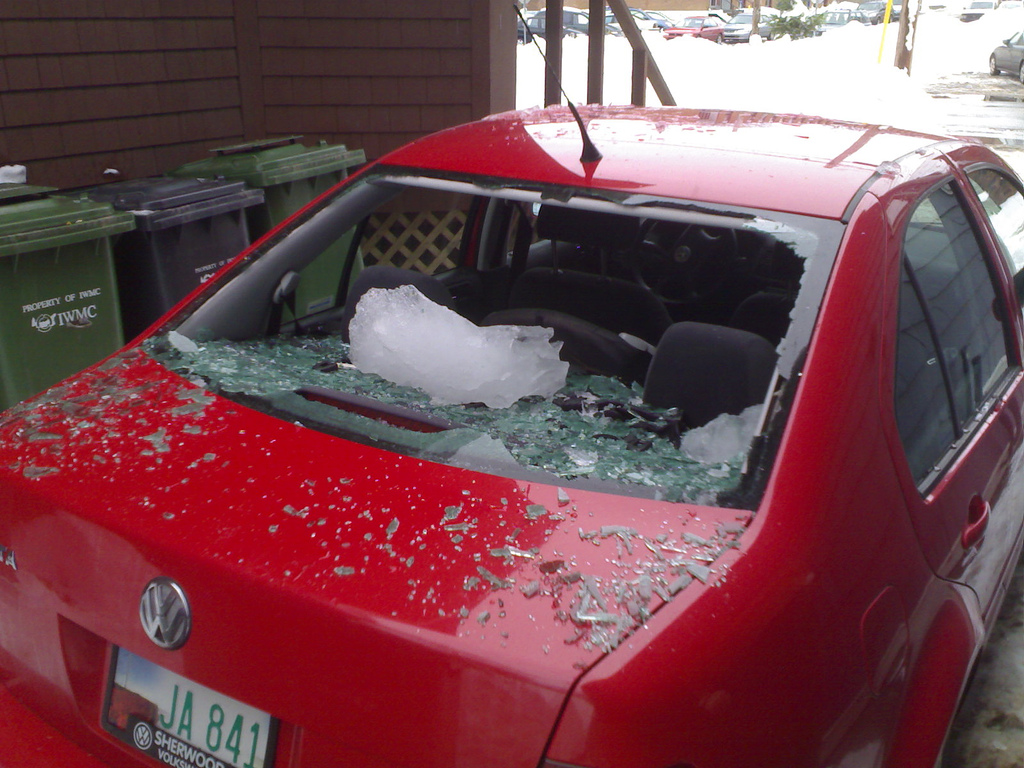
If you’re around and about downtown Charlottetown for the next while, please pay attention to the buildings around you: there’s a lot of ice on the houses and buildings and with the thaw we’re experiencing, there are chunks of this ice falling off. Witness the back window of our VW Jetta:

Ice through my Jetta Ice through my Jetta

A big meteor-sized chunk of ice fell of the house next door and right through the back window of the car, shattering it completely. Fortunately there was nobody around when it happened, so there are no injuries to report.

I just got back from dropping the car off at Good Guys Auto Glass across the the CBC on University Avenue. I’ve been watching their television commericals for 15 years during Compass and their advertising investment finally paid off.

🗓️

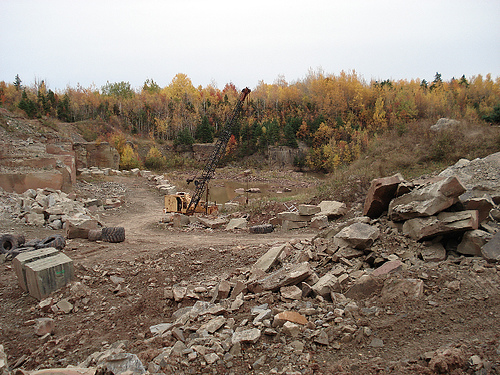
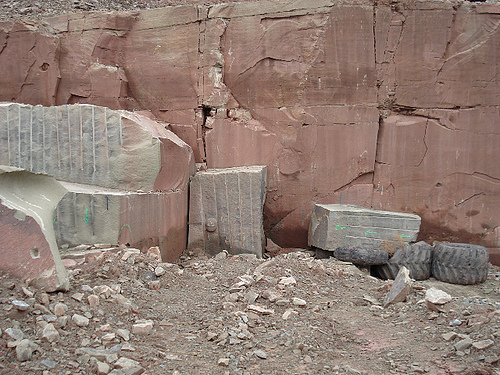
Back in the fall our friend G. took a trip over to Wallace Quarries in Nova Scotia to pick up a slab of sandstone. While he was there he took some photos of the quarry:

Wallace Quarries Wallace Quarries

For a quarry that has produced the stone for some of the substantial buildings of Canada, I expected it all to look, well, more grand. Regardless, the stone that comes from those ungrand hills is impressive. G. says there seems to be enough there to make many, many more buildings.

🗓️

My friend Pedro and his Segway were subject of a story on Portuguese television last week.

🗓️
Friends  •  Lisbon  •  Portugal  •  Segway

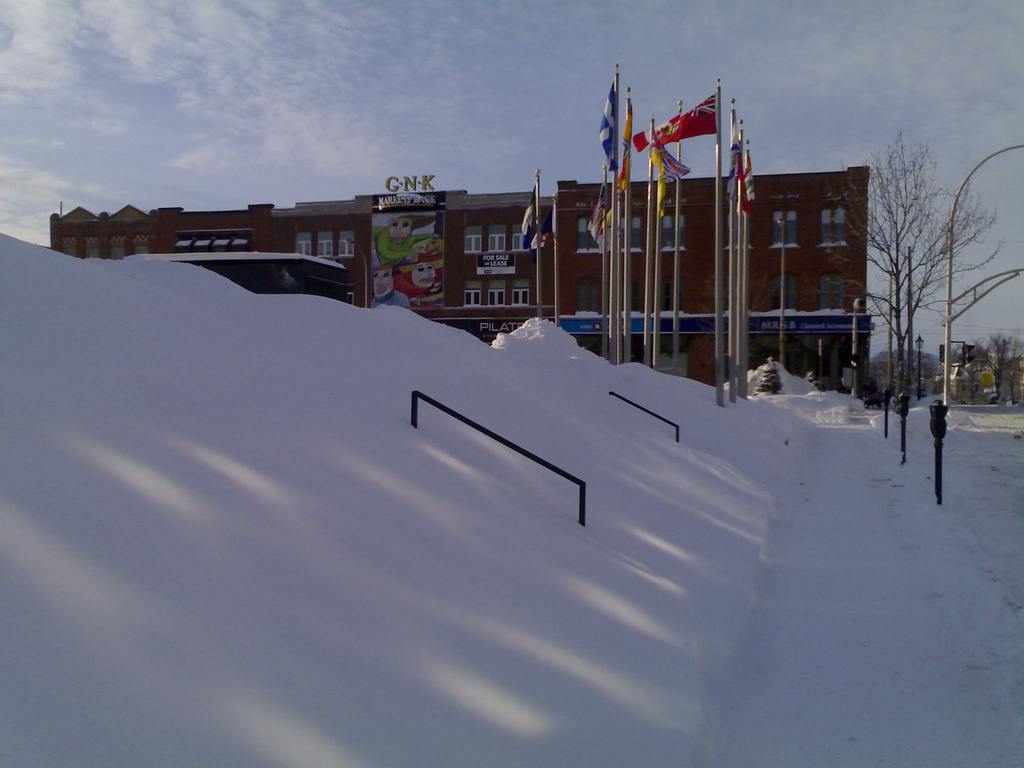
The front stairs at the Confederation Centre of the Arts this morning, after a week of snowstorms:

Snow on Confederation Centre Steps
🗓️

PlazeCamp LogoI’m off next Tuesday evening to Berlin to help organize and participate in PlazeCamp. Plans are coming together nicely for the event: there’s a good group of interesting people coming, and the agenda is a nice mix of formal and informal activities.
Plazes developer Tilmann Singer and I recorded an episode of the Plazes Podcast yesterday where we talked in a little bit more detail about what we hope PlazeCamp to be, and how the new Plazes API might be used.

One of the nice things about working with the Plazes crew is that crazy ideas I come up with in the middle of the night — “hey, maybe we should have a developer day!” — can be brought to life like this: now the crazy idea is happening, and it even has a logo. I’m really looking forward to seeing what cool stuff comes out of it.

If you can’t make it to Berlin in person, this page has some details about participating remotely.

🗓️
Germany  •  PlazeCamp  •  Plazes  •  Travel

This spring, while acting as Education critic for the then-Opposition Liberal party, Hon. Carolyn Bertram had this to say about the province’s so-called “common assessments” program (that is a code-word for standardized testing):

There’s testing that goes on to students every day in the classroom. Teachers test every day, but yet this government wants to spend three-quarters of a million dollars testing on a common assessment across this province. Every child learns differently and we can’t fit them all in the same box, and that’s what we believe in this side, on the opposition. We believe in each child, the whole child.
My question is this: Why are we spending three-quarters of a million dollars when you could be investing this money into frontline services into the classroom, more educational assistance, more teachers, more speech language pathologists? Three-quarters of a million dollars is a lot of money. Why common assessments, Madam Minister?

Hon. Ms. Bertram, a teacher herself, echoed my feelings exactly on this subject. My son Oliver has been in public school since September of last year, and if there’s anything I’ve learned from the experience it’s that, especially when compared to my own elementary schooling in the 1970s, the classroom is now indeed based on the notion that every child learns differently.

Teachers, principals and support staff live this out every day, and if you had been there when we sat down for two hours with everyone at Prince Street School involved with Oliver’s schooling at last fall’s parent-teacher interviews you would have seen this fact born out in ways that would amaze you: these folks know their stuff, they know my son, and they are, more than I thought possible, individualizing his (and every other child’s) education to learning style and skills.

The notion that we can somehow glean something useful from a province-wide multiple choice questionnaire about Bobby’s Big Toe, an “assessment” that distills the uniqueness of every child down into a set of statistics like “62 per cent of the students who wrote the assessment achieved the standard in reading,” is absurd. By the time the numbers are abstracted to a level there they can be used for policy-making they are so removed from the “whole child” that we might as well assume we’re teaching identical robot children who need a software upgrade to do better.

In other words, I, like Hon. Ms Bertram, think that common assessments are a waste of time and money.

But I also think they’re dangerous in another way: despite the suggestion that the role of the tests is to provide teachers “with the time and opportunity to study in-depth curriculum documents and to gain a better understanding of the expected outcomes,” they will ultimately be used, if not by educators then by the public, to rate and compare schools and teachers.

If your kid’s school scored “57 percent” and the one across town scored “75 percent,” what parent in their right mind wouldn’t start to wonder if they’re sending their kid to the wrong school. And if Ms. X’s grade 3 class did better than Mr. Y’s grade 3 class on the writing test, which class do you think the grade 2 parents are going to be angling for their kids to get into next year?

All of which happens to set aside completely the notion that “we can’t fit them all in the same box,” and that the ability to score well on Bobby’s Big Toe interpretation may in fact have nothing to say at all about the quality of instruction in a particular class or particular school.

It’s not that I think that all teachers and all schools are created equal, it’s just that I think that common assessments are a primitive tool to make judgments about them with.

Presumably this particular genie in this particular bottle was something that the Task Force on Student Achievement, the body that gave rise to the standardized tests in the first place, had in mind when they said:

Student Assessment … must not be used to for the ranking or comparison of either students or schools.

That’s all very well and good to suggest, but also extremely naive, as once the numbers exist, it’s inevitable that they’ll be used in this manner eventually.

All of this became very tangible to me last fall when, on a balmy Sunday morning, I found myself at a coffee shop in downtown Charlottetown eating breakfast at a table around the corner from a group of senior education bureaucrats who were discussing the results of the assessments. They were, I sensed, freaked out by what they’d found, and afraid of what was going to happen when word got out about how poor the results were.

Of course by the time a summary of the results was released later in the fall, the freaking out had been replaced by calm eduspeak.

Presumably because of the desire to avoid school and teacher ranking, the release of the results only included province-wide data.

Now you may think that, as someone who thinks common assessments are both a waste of time and money, and also a dangerous genie in a bottle, I would applaud this decision. But I don’t. The only thing worse than a genie locked up in a bottle is a genie that’s unlocked for some and not for others. I know that politicians, administrators, principals, and teachers have access to school-by-school data, and I know that, even with all the good intentions in the world, they are making, if not formal policy decisions, at least value judgments about schools and teachers based on the results.

I want to know what they know. And I want everyone to have access to this information so that, absurd and meaningless though it may be, we all have the raw data in front of us. Furthermore, I want those responsible for the common assessments to be forced to explain, when the data is available to everyone, why it shouldn’t be used to rank and compare schools (thus perhaps exposing, in some small way, it’s absurdity and lack of meaning).

And so, in early November, I asked for it.

And I was told that I couldn’t have it — as I expected because, to quote from the email I received, “The Department does not plan to release those results following the recommendation of the Task Force on Student Achievement to not rank or compare schools.”

And so I asked again, this time as a formal Freedom of Information request (what is FOIPP legislation for if not to put all of us, citizens and public servants, on the same data playing field?). Here’s what I asked for:

On October 25, 2007 the Minister of Education tabled the provincial results of “common assessments” conducted on Grade 3 students. In the public news release that accompanied the tabling, only provincial aggregate data was provided. I would like an electronic copy (spreadsheet, database, text file) of the results on a school-by-school basis, for the “Grade 3 Writing” and “Grade 3 Reading” common assessments, for every school on PEI where the common assessments were conducted.

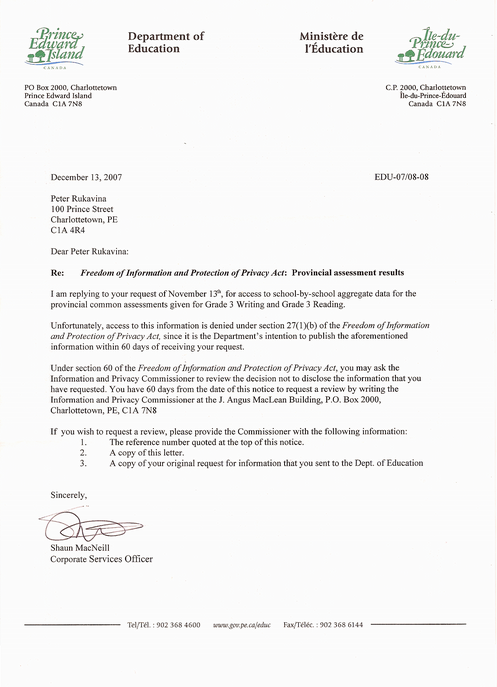
Thirty days later I received this letter:

Letter in Response to my FOIPP request to the PEI Department of Education

While my request was denied, it was denied because the Department, according to my math, plans to release the data on or before January 13, 2008 (10 days from now as I write). So in a couple of weeks I’m looking forward to receiving my digital data, data that I may very well mold into a handy (albeit meaningless and absurd) interactive mapping tool that will allow the very ranking and comparison that the assessors hope to avoid.

And I have every hope that the reaction to this will be a concerted effort by politicians and educators to reinforce how, to quote Hon. Ms. Bertram again, “[e]very child learns differently and we can’t fit them all in the same box” and “we believe in each child, the whole child.” Which is where our eyes should have been focused all along.

🗓️

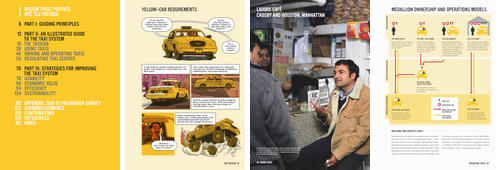
Taxi 07: Roads Forward, from The Design Trust for Public Space — “the first long-term plan for improving the taxi system” in New York City — may be the most well-designed report I’ve ever seen.

You can purchase a printed copy for $20, or download the PDF for free. Thanks to More Intelligent Life for the link.

🗓️
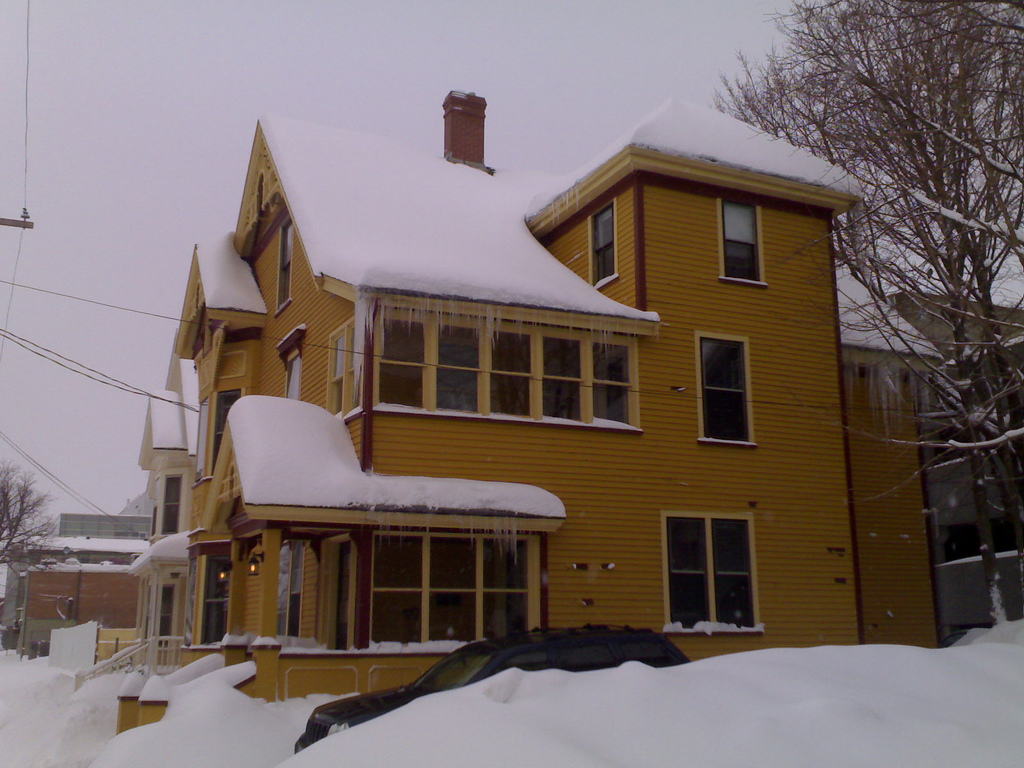
84 Fiztroy Street with Snow
🗓️

Circumstances conspired to leave me without the time to prepare a detailed levee schedule for January 1, 2008, but fortunately The Guardian has a complete run-down. See you out there.

🗓️

About This Blog

Photo of Peter RukavinaI am . I am a writer, letterpress printer, and a curious person.

To learn more about me, read my /now, look at my bio, listen to audio I’ve posted, read presentations and speeches I’ve written, see things I’ve favourited elsewhere, or get in touch (peter@rukavina.net is the quickest way).

I have been writing here since May 1999: you can explore the 25+ years of blog posts in the archive.

You can subscribe to an RSS feed of posts, an RSS feed of comments, an RSS feed of favourites elsewhere, or a podcast RSS feed that just contains audio posts. You can also receive a daily digests of posts by email. I also publish an OPML blogroll.

InstagramYouTubeVimeoORCIDOpenStreetMapInternet ArchivePEI.artDrupalGithub.