I landed in Boston 3 hours ago and it’s been pouring rain since.
Things died down a little as I stopped for supper at Mi Jalisco in Milford, but as I emerge, 30 minutes later, it’s raining as hard as I’ve ever seen it. Here’s a taste.

I landed in Boston 3 hours ago and it’s been pouring rain since.
Things died down a little as I stopped for supper at Mi Jalisco in Milford, but as I emerge, 30 minutes later, it’s raining as hard as I’ve ever seen it. Here’s a taste.

We visited the new Princess Auto store in Charlottetown for the first time tonight (it opened yesterday).
We had little idea what to expect. And even after visiting the store I can’t tell you exactly what business they’re in.
But I did buy a stethoscope for $13.
Why?
Because at the vet on Tuesday when Dr. Jameson was checking Ethan’s heart I distinctly remember thinking “it would be so great if civilians were allowed to have stethoscopes.”
And apparently we are.
It turns out that a stethoscope is essentially a tube with a tiny snare drum at the end. I had no idea (I’m not sure what I thought a stethoscope was, but it wasn’t that).

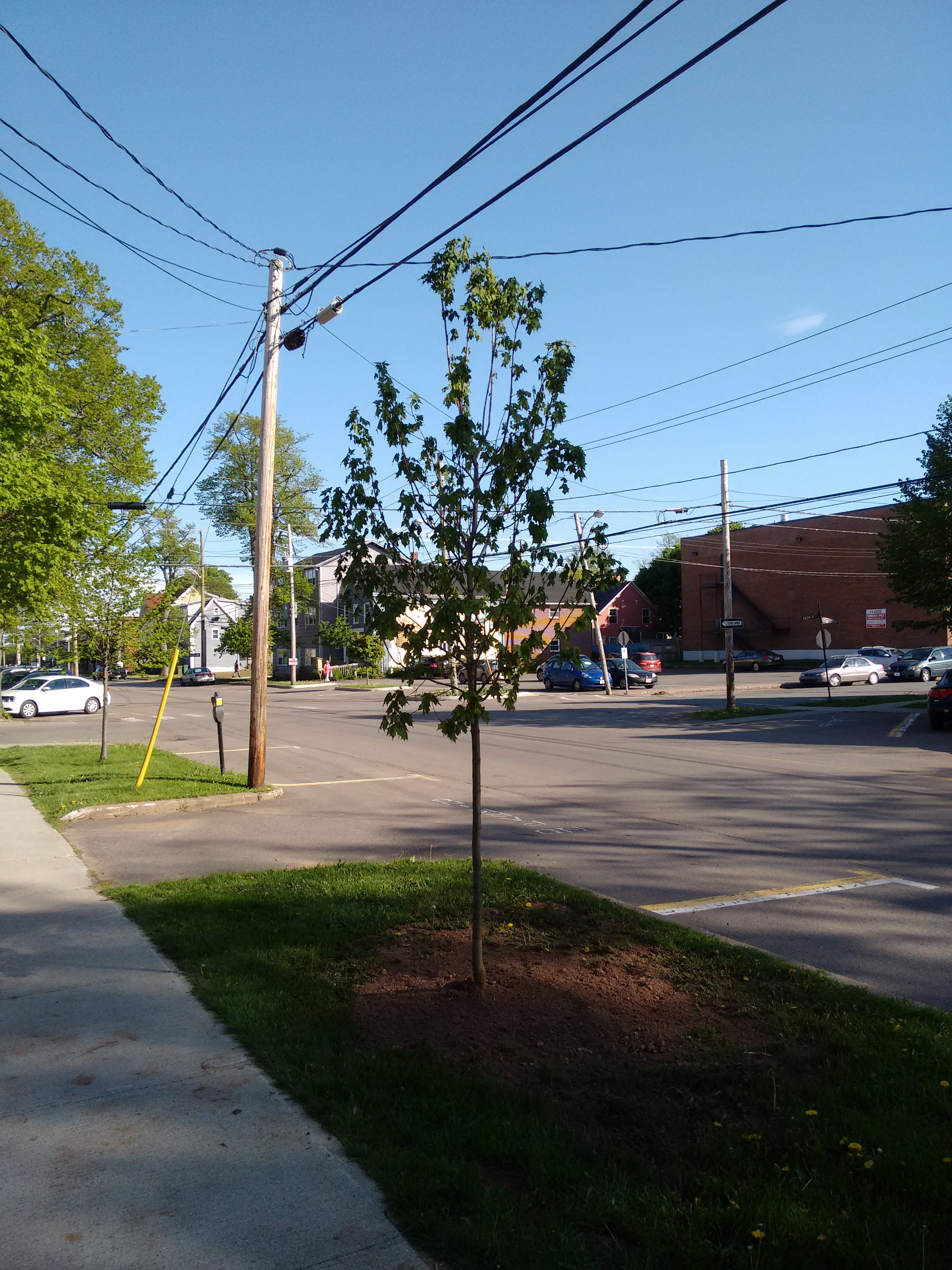
For the benefit of future residents of 100 Prince Street, reading this on your holoreaders, here’s a photo of the replacement tree that was planted the City of Charlottetown on Monday, May 30, 2016 in front of the house.
I hope you are enjoying its shade.
Granite Island: A Portrait of Corsica is the subject of the next The Happy Reader issue so I got myself a copy.
And, now that the ink is dry, I have a bookmark.

I’m not sure how Rukavina became Rukàvinà, but, setting that aside, my colleagues at the Internationale Gutenberg-Gesellschaft in Mainz know how to give good envelope.

Spending time in Berlin with my friend Morgan reignited my interest in learning more about Chinese cooking.
To the point where, sitting in Morgan’s living room, I ordered a copy of Every Grain of Rice from Amazon; it was waiting for me when I arrived home to Canada.
Step number one, working my way through the book’s introduction, is to stock up our pantry; I was greatly aided in that effort by the opening of a new Asian grocery store a few blocks from our house.
Top Fresh Asian Market is on Grafton Street across from Holland College. It’s very well stocked, and I was able to find everything on my list, from Chinkiang brown rice vinegar to fermented tofu. They’re open most days from 10:00 a.m. to 7:00 p.m.
I suspect I’ll be a regular customer.

I’ve been making a concerted effort – although, to date, with somewhat lackluster results – to wean myself from Twitter, Facebook, et al., given their increasingly low signal to noise ratio.
Facebook’s not a big issue: I don’t write anything there, and I’ve found it not-too-difficult to live without pictures of the baby goats of that woman I once had the crush on in the mid-1980s.
Twitter, though, is proving harder to kick. I have, after all, tweeted more than 33,000 times over the last decade, so it’s become something of a habit built in to my daily flow.
But, spurred on by the POSSE crew, I’ve come to realize that I don’t need to quit cold turkey: I can revert to the pre-2006 style of using this blog as my exclusive place to write on the web, and push as needed to other services to syndicate what I write to people who can’t, or won’t, drop by here.
Sort of like John Steinbeck in The Guardian in the 1940s.
Twitter’s ace in the hole, posting-wise, is its excellent Android client, which makes posting photos quite easy. I wanted to continue to be able to post photos, but I didn’t want to have to open a mobile browser, login to Drupal, and navigate through the process of creating a new post in that tiny environment.
So I decided to create a workflow that would allow me to post here via email.
Here’s how I did it.
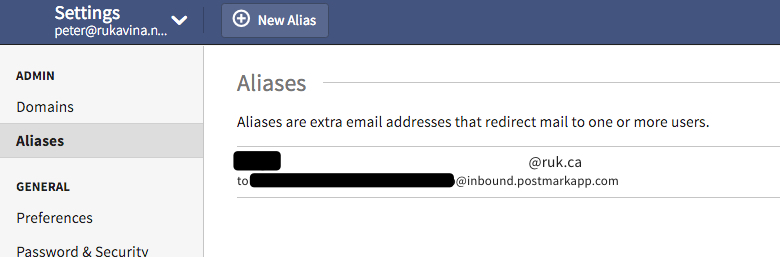
I host my email with Fastmail, and Fastmail makes it very easy to set up new email aliases, so I set one up: a dedicated email address that would exist solely to receive and forward new posts for this blog.
Next, I created a new Postmark account and set up a new “Server” and then setup an Inbound webhook, allowing me to receive email at a special inbound.postmarkapp.com email address and forward it on as JSON via HTTP POST to a web service of my choice:
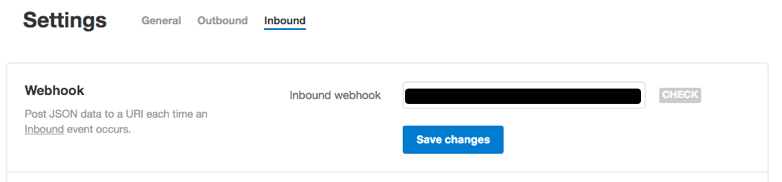
A new Postmark account includes 25,000 “credits,” and each inbound email processed uses a single credit, so I should be good posting-by-email until pretty close to the end of time with my available balance.
Back on Fastmail, I set the “forwarding address” for my new blogging email address to this new Postmark webhook:
And, finally, I created a PHP script to be the target of the webhook and strapped it to a secure server: the script receives JSON from Postmark, pulls it apart, finds any photos in the body and resizes them if needed and moves them into place where Drupal can find them, and finally creates a new Drupal node using the email’s subject line as the node title and the body of the email as the node body.
As a result, the flow for posting a photo here by email is as simple as this:
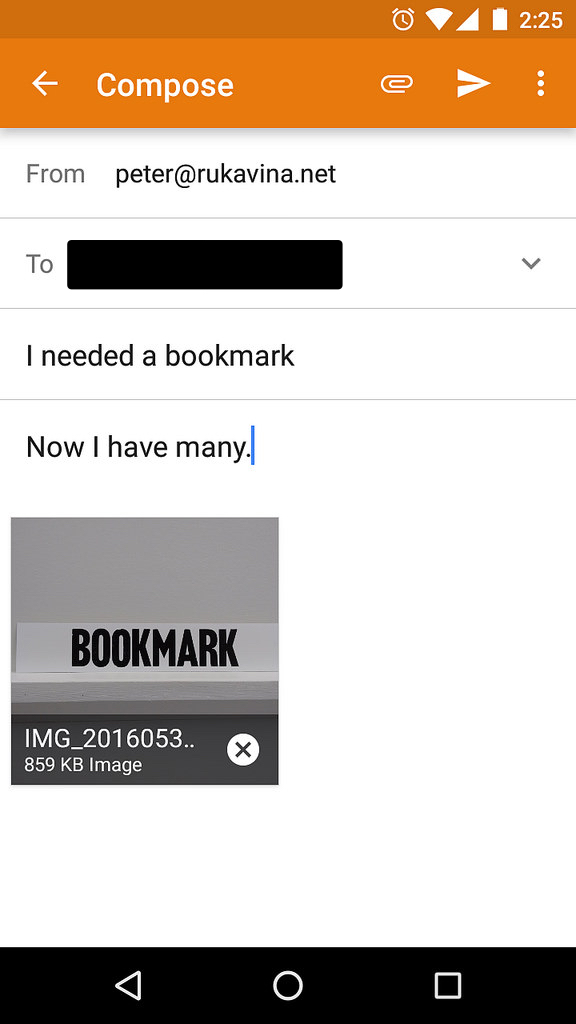
I sent that email and, a few seconds later, this post resulted.
A few important things to note:
This workflow has proved very satisfying. It’s now as easy to post a photo (or sound, or note) here as it is to post it to Twitter. And whatever I post ends up on Twitter anyway, via an IFTTT recipe that echoes all posts to new tweets:

And to Facebook as well:
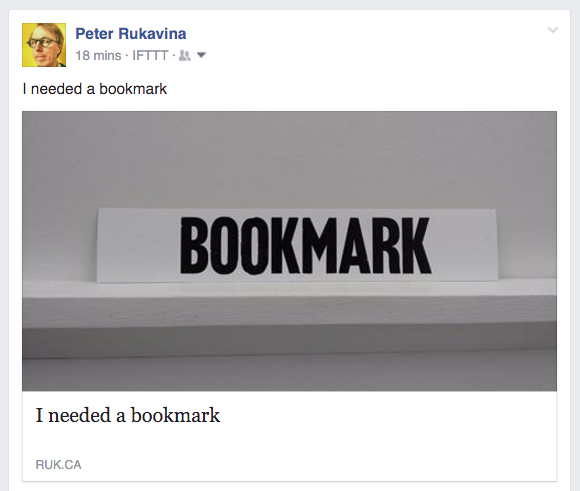
My digital emancipation continues.
One aspect of our shared childhood that my brothers and I all remember clearly is The Budget.
We were never completely sure what it meant, but we all remember our parents talking about it, and we remember that there were various systems in place that regulated it.
For example, if we needed $5 for fish and chips in the cafeteria on Friday, there was a pencil case on our father’s dresser that held petty cash that we could get the $5 from, but we had to note this on a chit, and the chits were collected and factored somehow into The Budget.
Our parents are both systems thinkers, and The Budget was an integral part of maintaining and organizing the economic fuel that allowed a family of 6 people to get by on a single salary.
In the mid-1980s we started to have computers in the house: first a TRS-80 Colour Computer, which my father brought home one day and upon which he (and I) spent many hours typing away (I sometimes think that 20% of my youth was taken up typing in program listings from Creative Computing and Byte).
Dad’s tour de force, programming wise, was the creation of a BASIC program to track The Budget. In the years since this has been replaced by off-the-shelf applications like Quicken, but at the time it was all hand-coded and thus custom-tailored around the economic ecosystem of our family.
Another aspect of our parents’ systems thinking is a predilection for archiving, and so that BASIC program, in its various versions, has survived in Dad’s digital collections all these years and the version from 1986 — BUD86.BAS — surfaced recently and he wondered whether it was possible to run it on a modern computer.
It turned out to be surprisingly easy.
PC-BASIC is a free cross-platform GW-BASIC emulator that’s available for the Mac. I downloaded and installed it, and once I realized that its “working directory” was my home directory on my Mac, I simply copied the BUD86.BAS code into that directory and:
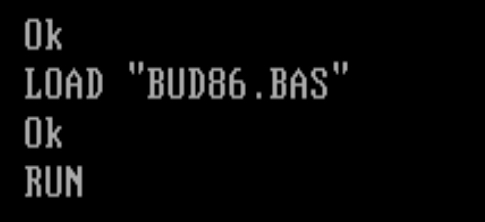
at which point — somewhat magically given that 30 years had passed — this appeared on the screen:
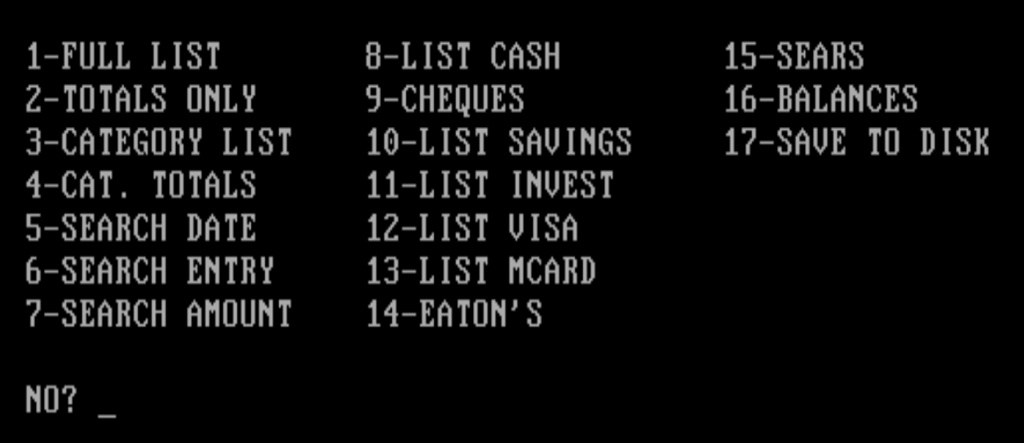
Just looking at the menu can tell you a lot about the financial setup of our family the year that I turned 20: a MasterCard, a Visa, department store cards from Sears and Eatons, and a chequing account.
There’s no actual data there. And, it seems, no way of adding new transactions (I’ve asked Dad whether there was a separate program for that). But entering “4” for “CAT. TOTALS” you can gain some additional insight into the way that things got categorized:
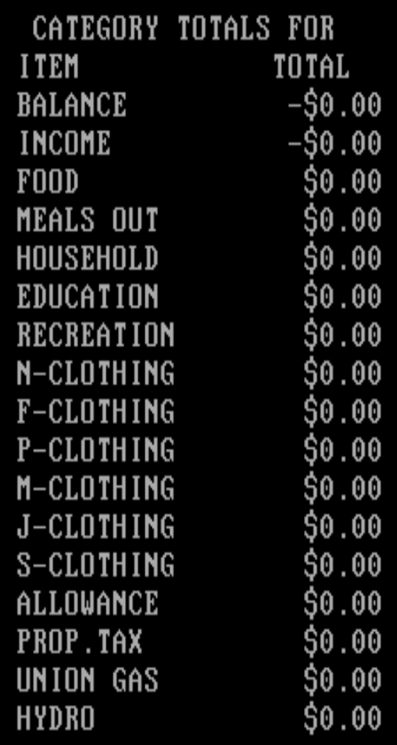
Every member of the family — N, F, P, M, J and S, listed in birth order — got a “Clothing” category. And there were categories for Food, Meals Out, Household, Education, Recreation, Property Tax, Union Gas, and Hydro. On the next page the list continued: Phone, Car, Gasoline, Fitness, Medical/Dental, Professional Dues, Christmas, Life Insurance, House Insurance, Computer, Miscellany.
That there was a budget category for “Computer” is interesting in and of itself. Indeed, surely there’s much to be mined from this sort of information about the social and economic history of the late 20th century Canadian family; I hope other families have an archival bent and have saved their own particular budgeting schemes so that they can form the part of a broader analysis of this type of thing for anthropologists of the future.
Meanwhile, I’m sad to report that there are no aspects of the formal organization The Budget left in my Charlottetown branch of the family; perhaps because we’re a smaller crew, perhaps because we’re lazy, but our approach to budgeting has been, most of the time, “save what we can, spend the rest.”
Vestigially expressed from deep within me, however, is an economy of spending that I inherited from my parents (that, I imagine, they inherited from their parents, who lived through the Great Depression): I feel guilty every time I spend money, and if there’s a way of avoiding it, I’ll always take that way first.
It may not be the least stressful way to live, but it got my family through the 1970s and 1980s in one piece, so it can’t be all that bad.
 I am Peter Rukavina and this is my blog. I am a writer, letterpress printer, and a curious person.
To learn more about me, read my /now, look at my bio, listen to audio I’ve posted, read presentations and speeches I’ve written, see things I’ve favourited elsewhere, or get in touch (peter@rukavina.net is the quickest way).
I have been writing here since May 1999: you can explore the 25+ years of blog posts in the archive.
 You can subscribe to an RSS feed of posts, an RSS feed of comments, an RSS feed of favourites elsewhere, or a podcast RSS feed that just contains audio posts. You can also receive a daily digests of posts by email. I also publish an OPML blogroll.
Instagram • YouTube • Vimeo • ORCID • OpenStreetMap • Internet Archive • PEI.art • Drupal • Github.
