Making my way through both Trapped and Lava Field, Icelandic crime dramas streaming on Netflix, I’ve so far experienced five times more fictional Icelandic murders than the single real murder in Iceland last year.

Both series are compelling, especially Trapped, which I loved for its cast, landscape and plot twists.

🗓️
Iceland  •  Crime  •  Netflix

Four years ago I was an early adopter of the effort to build a mobile operating system on top of Firefox; as part of this effort, I purchased a Firefox OS-powered Geeksphone Peak in May of 2013 and, the next year, upgraded to a Geeksphone Revolution.

There seemed to be such promise in a non-iOS, non-Android mobile OS, and Mozilla made great progress toward this.

But it didn’t work out: in 2015 Mozilla abandoned the effort, and Geeksphone has faded out of existence. The Peak and the Revolution are sitting in my museum of dead phones.

After seeking solace in the arms of a Moto G for a couple of years–a generally happy and productive time–I opted to back another dark horse and purchased a Nextbit Robin, a crowdsourced Android-based phone with an intriguing design and a promise of a unique “we’ll dump overflow into the cloud so you don’t need to manage” storage promise.

I’ve been using the Robin for the past seven months. It’s proved itself a serviceable, mostly-snappy Android phone. The cloud features haven’t proved useful for me at all: their web-based photo management site is primitive and, in the end, I seldom bump up against the 32 GB internal memory anyway. The promise of better community engagement that the Kickstarter origins suggested never really materialized: there are discussion forums, which is something, but seldom is there much useful information there. Perhaps most frustratingly on a day-to-day basis, the camera and gallery apps Nextbit includes have always been pale imitations of what’s available elsewhere.

And then, this week, the announcement that, like Geeksphone before it, Nextbit is shutting down.

Perhaps the promise of the artisanal mobile phone maker is one that simply cannot be realized in a sustainable way; perhaps these devices are simply too complex to expect a small team to be able to design, build, sell, distribute, manage firmware for, and so on. In any case, I’m not likely to buy a phone from Novterinity or Cellphotophia any time soon, and, when my Robin begins to degrade, will likely need to invest some time in understanding the world of commodity iOS or Android phones to find a replacement.

Either that, or just go back to my Nokia N70.

🗓️
Mobile Phones  •  Geeksphone  •  Nextbit

I’ve been thinking of developing a side business card-printing service that would be highly constrained: one typeface, one ink colour, one name, one paper. My working assumption is that, in a world of business cards jam-packed with logos and telephone numbers and Instagram handles, there’s a market for something that goes in the opposite direction.

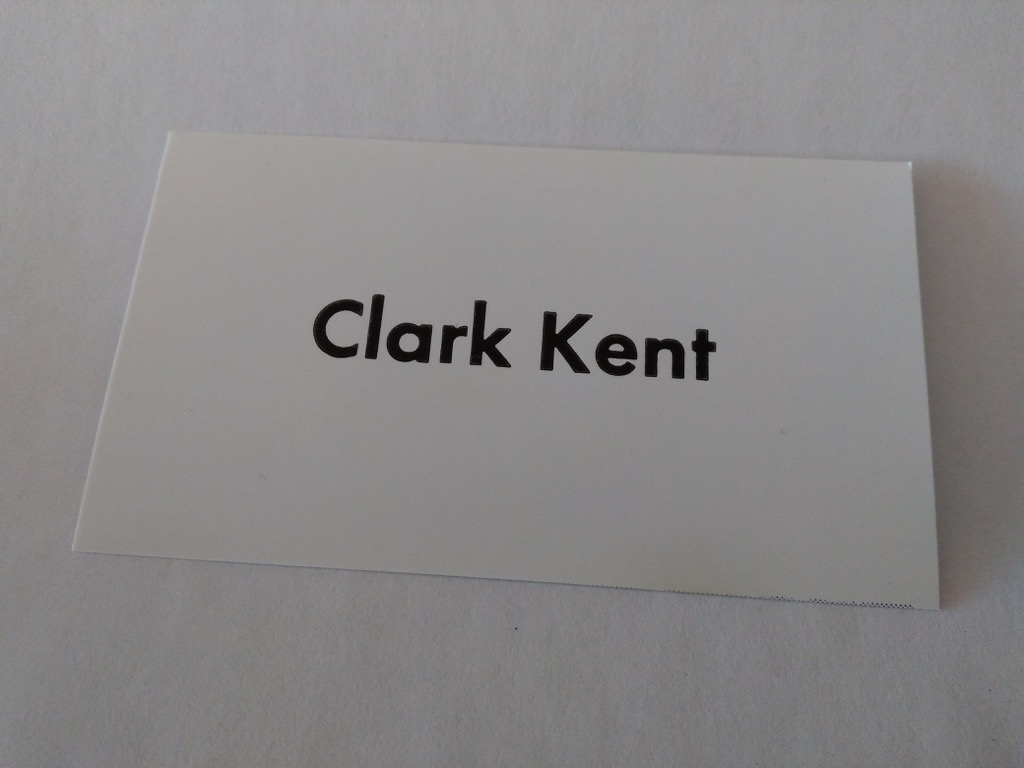
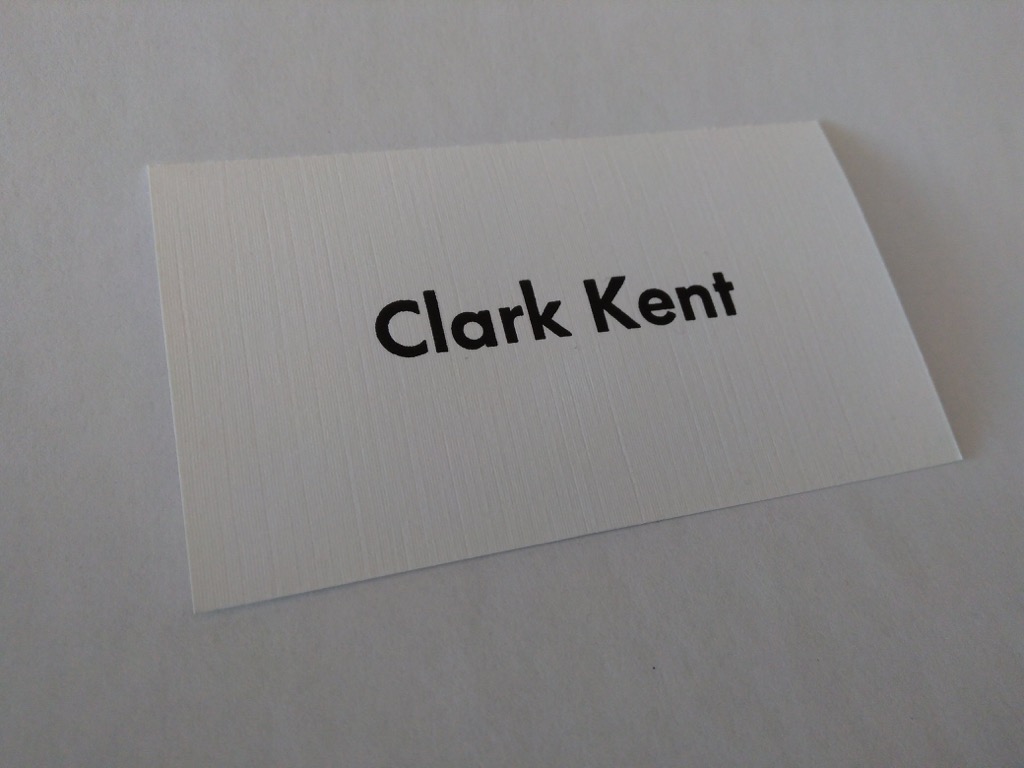
By way of prototyping the idea, I printed up some Clark Kent cards in 30 point Futura Bold (purchased two years ago from Letterpress Things). in black ink, on two different types of paper, both of which I inherited from Campbell’s Printing when I bought their Golding Jobber № 8.

The first run was on a glossy card stock; the type bites slightly into the paper and there’s a pleasant shimmer to the ink:

Clark Kent business card photo on glossy paper

The second run was on textured card stock; the effect is more muted, but it’s pleasant to hold in the hand and feels like it will live up to more wear and tear than the glossy stock:

Clark Kent business card on textured paper

I could use some more prototyping work on this project, so if you’d like me to give a go at your name, please let me know and, as capacity and time allows, I’ll see what I can do, no charge.

🗓️

Oliver is getting ready for bed.

Me: Oliver, is Pokemon Go a meme?

Oliver: No, but Pokemon Go Vote is a meme.

🗓️

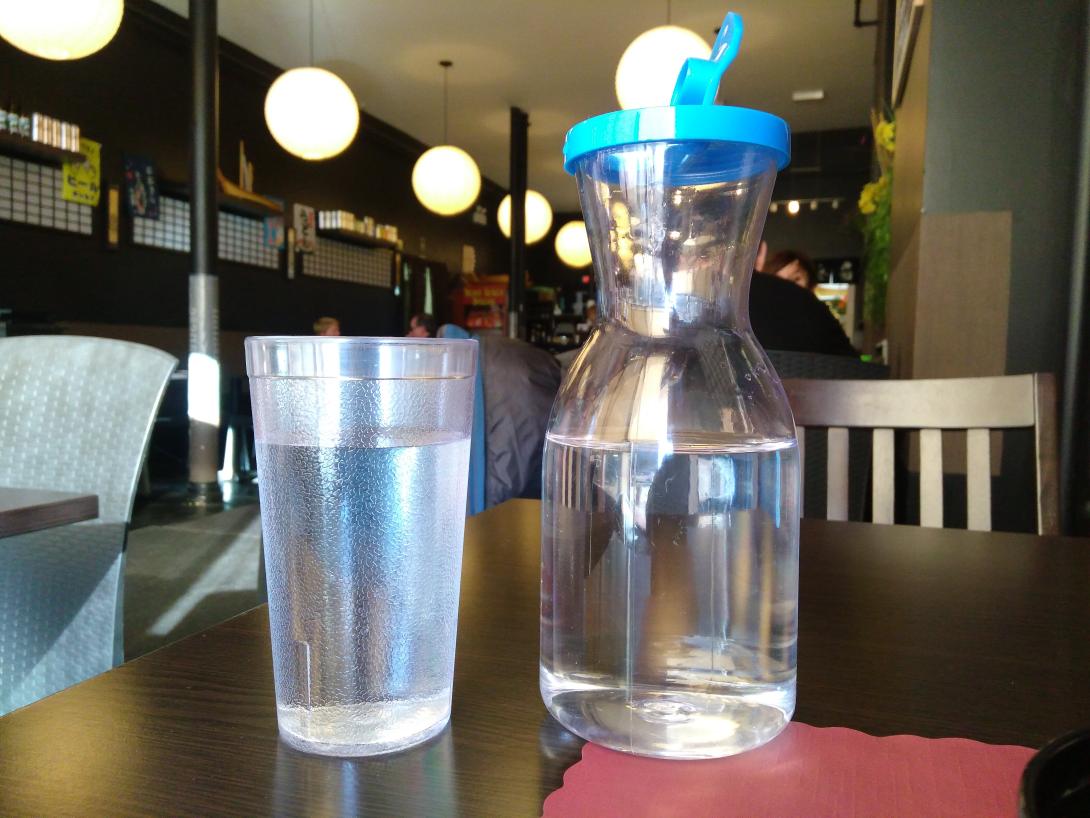
My favourite feature of Ta-ke Sushi is that they bring a flagon of water to your table as soon as you sit down. All restaurants should do this.

🗓️
Restaurants  •  Charlottetown  •  Customer Service  •  Water

Photo of a collection of freshly-printed Clark Kent business cards,

🗓️
Letterpress  •  Clark Kent  •  Superman

I have long been fascinated by DNA Lounge in San Francisco, mostly because its genesis and operation are so well-documented online. It likely ranks as the place I know the most about but am least likely to ever visit (for reasons of both geography and demographic).

The place has been going through an existential crisis of late, trying to establish itself on a financial footing that doesn’t require its generous patron-founder. And so they have been casting about for new ideas to bring people in the door:

We’ve also been brainstorming about what other similar pop culture parade we could get in front of. I think the sweet spot might be “I was into it when I was 12, and it’s still popular today, so the ‘sexy costume’ version of it makes me feel all funny inside.”

Nostalgia seems to be the rule of the day. Stranger Things. Fuller House. Gilmore Girls. World-ending grief outpourings as music and film stars of the 1970s and 1980s die. Pinball. Vinyl. Four-colour pens.

Lord knows that I can wallow in it myself, pining for the good old days of Live from the Formosa Tea House and CA*Net.

My wise old friend—nostalgia, yes—Ken Hone once said that as soon as something had a history it was time to jettison it and move on to something new. He was talking about progressive movements, but I think the idea has broader application.

As Oliver will attest, not a day goes by when I don’t make passing reference to “back in the 70s,” either seriously or in jest. Perhaps this should be the year that I stop doing that, stop wearing the sexy costume version of my younger days and looking forward into the abyss.

🗓️
Musing  •  DNA Lounge  •  Nostalgia

Ethan the Dog has not been getting enough exercise this week because our back yard is one giant ice rink. So I thought I would take him out to the dog park behind the PEI Humane Society for a good run this afternoon.

Except that the dog park was also one giant ice rink, and so was closed. Which we only found out once we’d driven out there.

To save the afternoon, we decided to go to the movies instead, to see A Dog’s Purpose, the latest Lasse Hallström film.

So instead of a good run in the winter sun, Ethan got to lie on the floor of theatre four, confused by an hour and forty minutes of dogs he could hear but not smell.

To boot, the main human character in the movie was named Ethan, so for much of that hour and forty minutes he was also hearing his name called out from the screen.

We owe you one, boy.

🗓️

Ryerson librarian Jane Schmidt wrote last year about Little Free Libraries in an essay The Trouble with Twee that I found recently via William Denton.

It is a lovely piece of library advocacy that cuts to the heart of the fallacy that these “libraries,”  popping up across the countryside, should universally revered, which is tantamount to canon law inside the literacy movement. She concludes:

Do you really just want to share your old books and meet your neighbours? That’s fine – start a book exchange, but please don’t call it a library. Are you a teacher and want to use it as a class project? Fabulous idea, but please ensure advocacy for the public library is part of that learning module. Do you really want to ensure that there is equitable access to reading material and support literacy in your neighbourhood? Maybe your energy is best directed supporting the local public library or grassroots advocacy for universal daycare.

There are many ways to build community – a box of books is one of them, to be sure, but there’s more to the story than appears.

Contrast her words to the mission statement for Reading Town PEI’s little library project:

Reading Town PEI’s Tiny Lending Library legacy project promotes literacy and the love of reading by building free book exchanges, little houses for books, that are then adopted into communities across PEI. Tiny lending libraries will be adopted into communities from one tip of the Island to the other, each will celebrate reading and promote curbside literacy through community book sharing.

These little community magnets foster a reading culture in whatever neighbourhood they are adopted into. The libraries encourage the development of sharing networks and support universal access to a diversity of literature.

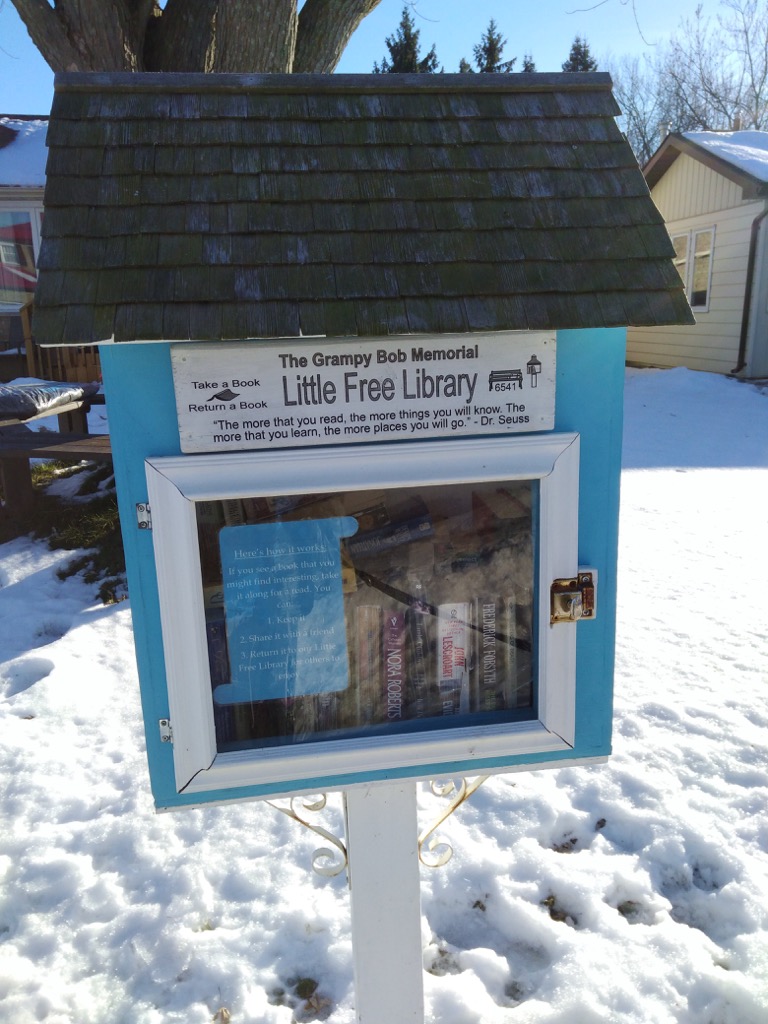
I’ve benefited twice–once when I was about to get on a train in Vermont and once over Christmas when I found a spy thriller in the box pictured below near my in-laws in Napanee–from the presence of Little Free Libraries. And I’ve done what I can to encourage their development here in Charlottetown. But Schmidt makes a strong case for the notion that, by investing efforts in these twee projects, we’re taking our collective eyes off the important ball, which is the nurturing of real public libraries, the continued existence of which is always in some doubt.

Photo of a Little Free Library in Napanee, Ontario

🗓️
Libraries  •  Charlottetown  •  Design  •  William Denton

One Saturday in October I was charged with being chaperone for Chef Tony Geraci as he made his way around Charlottetown meeting people and talking about school food for the PEI Home and School Federation.

It was a rainy Saturday, and I was concerned that the rain would continue all day, so I brought umbrellas for us.

At the Charlottetown Farmer’s Market, I asked Tony if he wanted one.

“No, that’s okay,” he said, “I’ve got a jacket with a hood.”

It had never occurred to me, until that moment, that a jacket with a hood provided the same service as an umbrella.

But, thinking about it, with the possible exception of some additional trouser protection that a big umbrella might provide, I realized Tony was right: what do you need with an umbrella when you have a hood.

This may seem like an insignificant little realization, but it was one of the most important things I learned last year.

🗓️

About This Blog

Photo of Peter RukavinaI am . I am a writer, letterpress printer, and a curious person.

To learn more about me, read my /now, look at my bio, listen to audio I’ve posted, read presentations and speeches I’ve written, see things I’ve favourited elsewhere, or get in touch (peter@rukavina.net is the quickest way).

I have been writing here since May 1999: you can explore the 25+ years of blog posts in the archive.

You can subscribe to an RSS feed of posts, an RSS feed of comments, an RSS feed of favourites elsewhere, or a podcast RSS feed that just contains audio posts. You can also receive a daily digests of posts by email. I also publish an OPML blogroll.

Instagram • YouTube • Vimeo • ORCID • OpenStreetMap • Internet Archive • PEI.art • Drupal • Github.