Here’s a map, using data extracted from the federal Connecting Canadians lookup tool, showing the areas of Prince Edward Island that are served either by Bell Aliant fibre or Eastlink cable Internet.
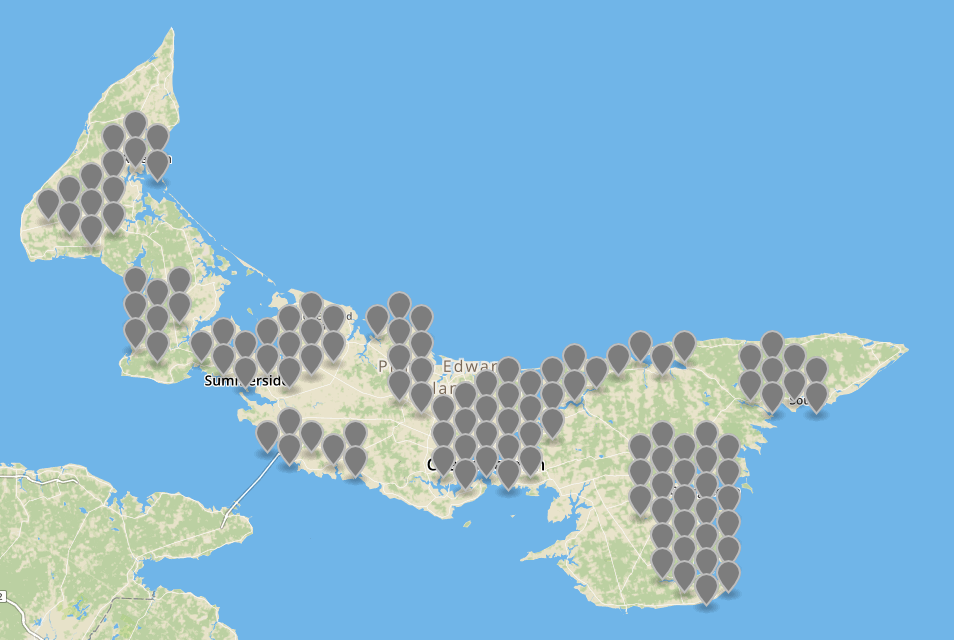
Wired Internet on PEI

The federal tool divides the Island into 308 hexagon-shaped segments, and then overlays ISP-provided coverage area maps to show what services are offered in what segments; as such it’s a blunt instrument, but not an useless one.

If you’d like to do some additional data analysis using the information I extracted from the tool, you can use these two CSV files:

  • hexagons.csv contains 308 rows, one for each hexagon, with its latitude, longitude, community name, population, dwelling count and ID.
  • providers.csv contains all the information for each provider offering service in each hexagon; it’s related to the hexagons data file by hexagon ID.

So, for example, here’s a row in hexagons.csv:

PE46470633,"North Rustico",46.473231,-63.312532,501+,251-500

that defines a hexagon-shaped region around North Rustico centred on 46.473231,-63.312532, with an ID of PE46470633.

In the providers.csv file there are seven rows with this ID, showing the 7 Internet access options offered inside that hexagon:

PE46470633,Bell,5,8,"Mobile Wireless"
PE46470633,"Bell Aliant",5,1,DSL
PE46470633,Eastlink,5,2,Cable
PE46470633,Eastlink,5,8,"Mobile Wireless"
PE46470633,"Rogers Communications",5,8,"Mobile Wireless"
PE46470633,"Route 2",5,5,"Fixed Wireless"
PE46470633,"Xplornet Communications Inc",5,7,"Direct-to-Home Satellite"

If you import these data files into an SQL database, you can then do queries like:

select distinct hexagons.hexid,hexLat,hexLon 
from hexagons,providers 
where (hexagons.hexid = providers.hexid) 
and providers.ispType in ('Fixed Wireless') 
and name='Xplornet Communications Inc';

which extracts those areas where Xplornet Communications offers its fixed wireless service. You can then use that data with a web mapping tool like GeoJSON.io, to map those areas:
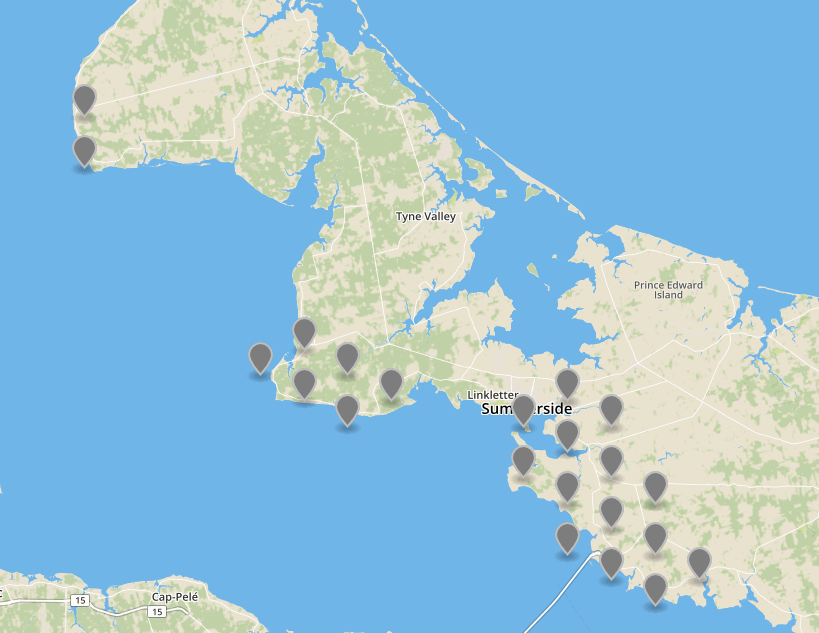
Xplornet Fixed Wireless

As I found out first-hand when preparing for the Rural Internet Access Town Hall in September, finding your way through the complex thicket of Internet access options (or lack of options) is confusing. While this tool, and the data underlying it, don’t explain the difference among providers (unlimited vs. usage-based billing, for example, can make providers that appear apples-to-apple decidedly not so), at least it provides a geographically based “Yellow Pages”-style starting point.
🗓️
Internet  •  Prince Edward Island  •  Eastlink  •  Bell Aliant

Update: As of summer 2017, many of the materials formerly in the Provincial Autism Lending Library have been integrated into the Provincial Library System. These are in the process of being added to the catalogue, and are or will shortly be available for searching here.

Last month I had occasion to learn that the Department of Education, Early Learning and Culture maintains an autism resource library in the Arsenault Building here in Charlottetown.

I’ve been the father of a child with autism for 16 years, so you’d have thought I would have known about this before now, but it’s a cleverly hidden resource, the only reference to it on the province’s website coming in a brief mention on page 6 of the Autism Funding Guidelines:

If additional materials are required, the parent is encouraged to borrow materials from the Autism Lending Library. The library can be accessed by calling 368-6513 or the Autism Consultant at the school board. Non-consumable materials must be returned to the library once the child has finished with them to be available for other children

Once I found out about the library, I called to find out how I could search its catalogue, and was told there there is no public catalogue, but that I was free to identify resources and a local database search could be done to see if they could be located.

As someone with a strong belief in the power of public library catalogues as one of the integral public faces of a collection, this dismayed me, and so I began the process of trying to advocate for the creation of such a catalogue.

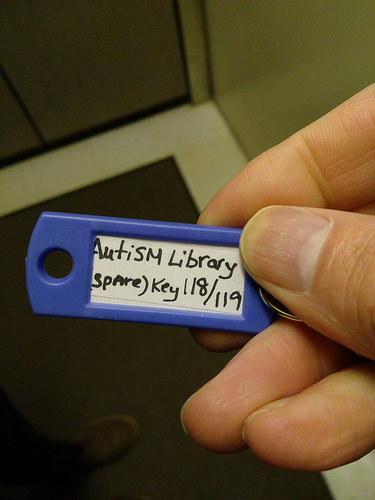
This morning, on the way to school, Oliver and I had a few minutes to spare, so we decided to drop into the Arsenault Building to visit the catalogue for ourselves, and to return a book that Oliver’s autism consultant borrowed on our behalf. The person responsible for the library kindly loaned us a set of keys and helpfully set us off on our way to the basement to find it.

PEI Autism Lending Library Keys

The library shares a corner of the Arsenault Building basement with the Early Childhood Education Library and it was that library we let ourselves into first, by mistake. In that room we found a computer with a sticky note on it titled “Koha Library Log In”:

Autism Lending Library Koha Login

Koha is the open source library catalogue system that Prince Edward Island school library use, so I had cause to hope that perhaps there already was a public catalog for the autism collection, but that it simply wasn’t widely known about. When I got back to my office I visited the main PEI School Library Catalogue site, and, sure enough, below Athena Consolidated and above Belfast Consolidated was a selection for Autism Library:

School Library Portal for PEI -- school collection selection

Which led me to the PEI Autism Lending Library’s public catalogue. Woohoo!

The collection is small, but broad, and there were many resources I saw in our brief breeze through that I’ll return later to borrow. There are books about anxiety, sexuality, school and work, to name but four.

Support services and resources for people with autism and their families are in woefully short supply in Prince Edward Island; the very least we can do is to shout from the rooftops about the resources that we do have, and this library, and its catalogue, is something that everyone should know about. Spread the word!

(By the way, there’s a public catalogue for the Early Childhood Education Library too).

How To Access the Collection

So, if you would like to access the resources in this collection:

  1. Search the catalogue.
  2. Go to the Arsenault Building during Government Office Hours and visit Room 319 on the third floor to gain access to the library.

Be warned that although Koha has provision for it, the circulation module appears not to be in use, so whether or not any given resource has been checked out or not may not be accurately reflected in the catalogue.

But wait, there’s more!

In addition to the province’s collection of resources, Stars for Life Foundation also has a small lending library of materials available to people with autism and their support network in its house on Maypoint Road.

To access the Stars for Life collection, visit the house during office hours (you can call ahead to confirm); the resource library is in the basement day program area; enter from the parking lot and go to the end of the hall and downstairs and talk to the receptionist, who will point the way.

Stars for Life Autusm Lending Library

Stars for Life’s collection has no public catalogue, but as I recently joined the board of the foundation, I’m in a position to help do something about that.

My hope is that, in short order, we can have a union catalogue of autism resources available from many different sources of PEI; stay tuned.

🗓️

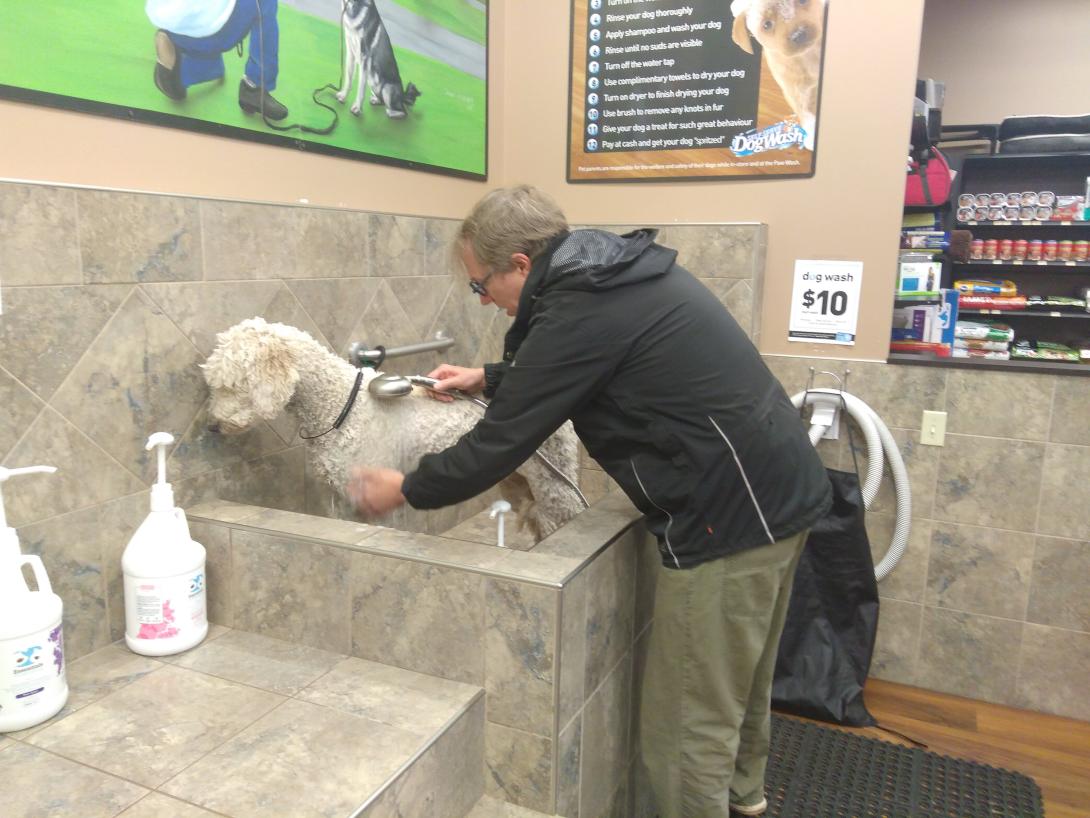
My friend Carol turned me on to the fact that Pet Valu, in the Smitty’s Plaza in Charlottetown, has a do-it-yourself dog washing station.

For $10, you get access to a tub (at chest height), shampoo, towels, a dryer, grooming tools and treats.

There’s no time limit. What a great alternative to washing Ethan at home in the bathtub!

🗓️

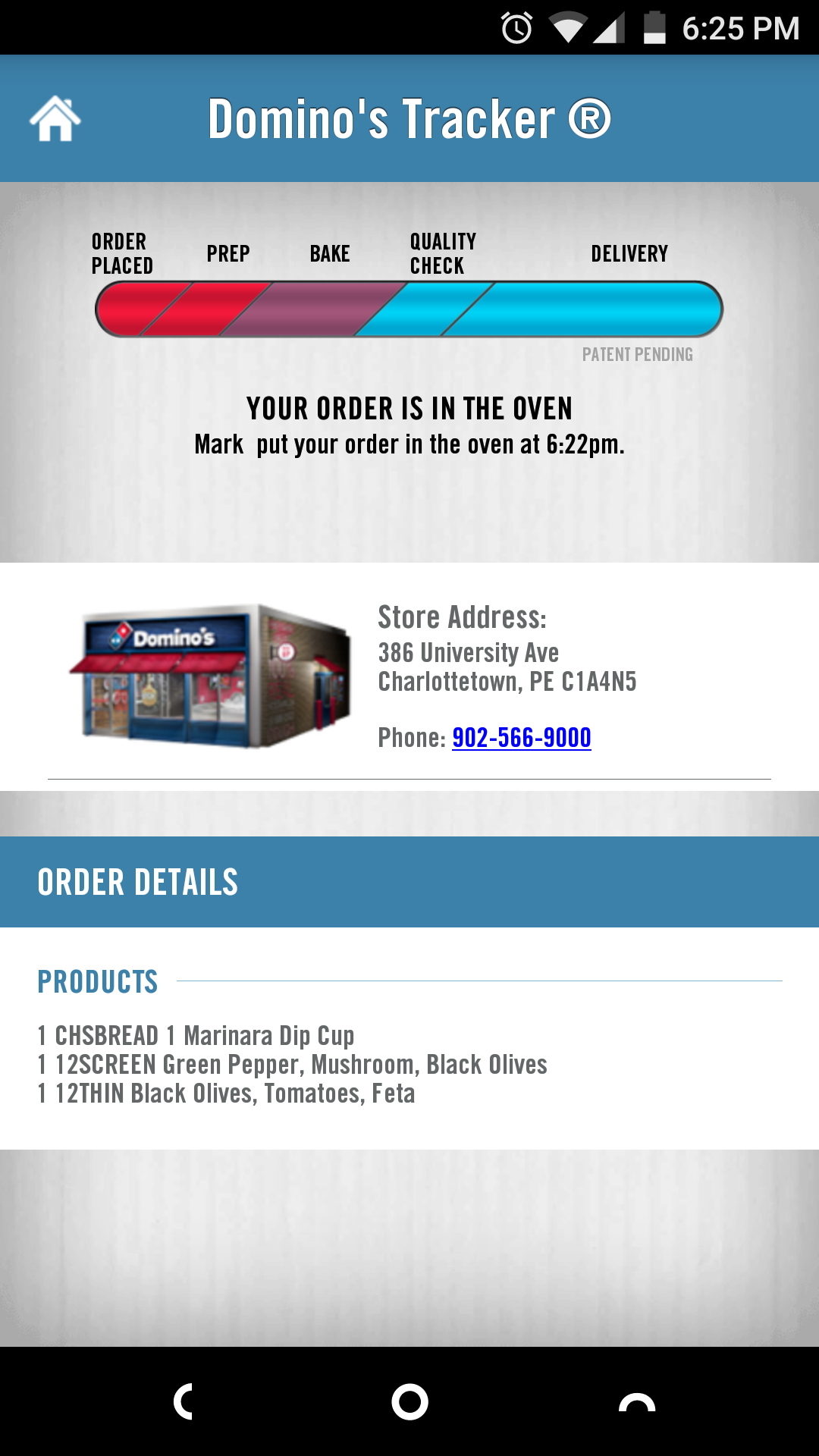
I have no idea whether Domino’s has the best pizza in town — I’m pretty sure it doesn’t — but there’s no doubting it has the best mobile app. And that wins me over 9 times out of 10.

🗓️

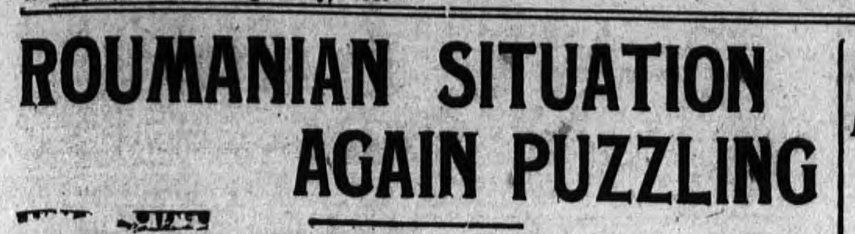
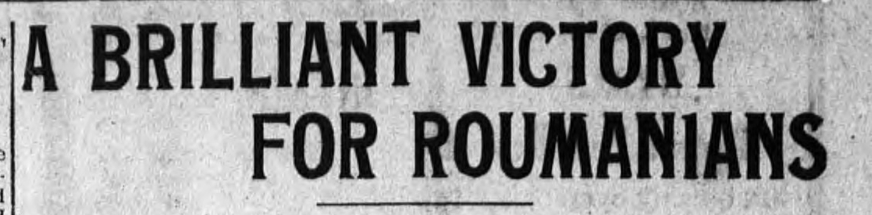
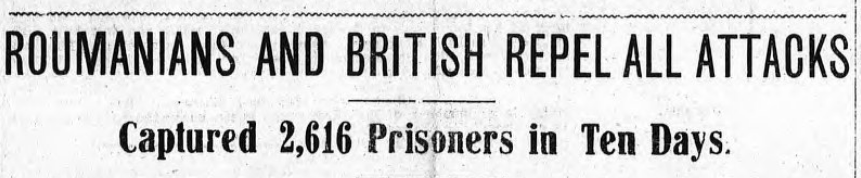
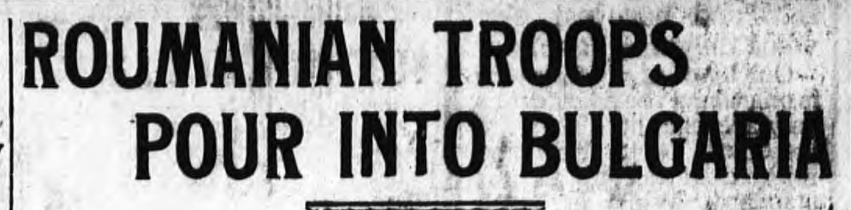
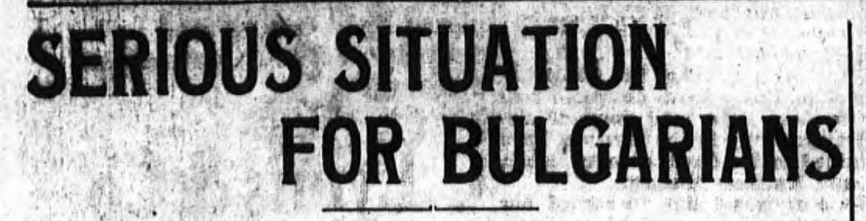
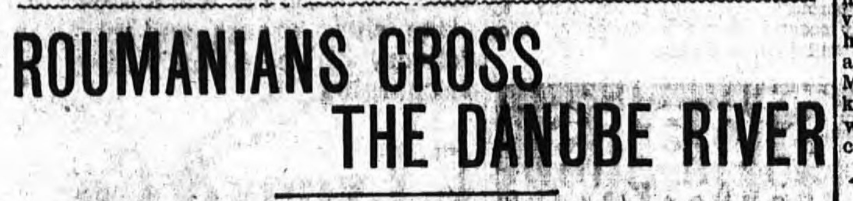
If you are reading the headlines of The Guardian newspaper 100 years on, you’re now making your way through the fall of 1916, and no more than a day or two passes without an update from the front in Roumania. Here are the headlines on those stories, working backward from November 3, 1916 to October 3, 1916.

November 3, 1916

November 1, 1916

October 30, 1916

October 28. 1916

October 27, 1916

October 26, 1916

October 21, 1916

October 18, 1916

October 17, 1916

October 13, 1916

October 12, 1916

October 6, 1916

October 4, 1916

October 3, 1916

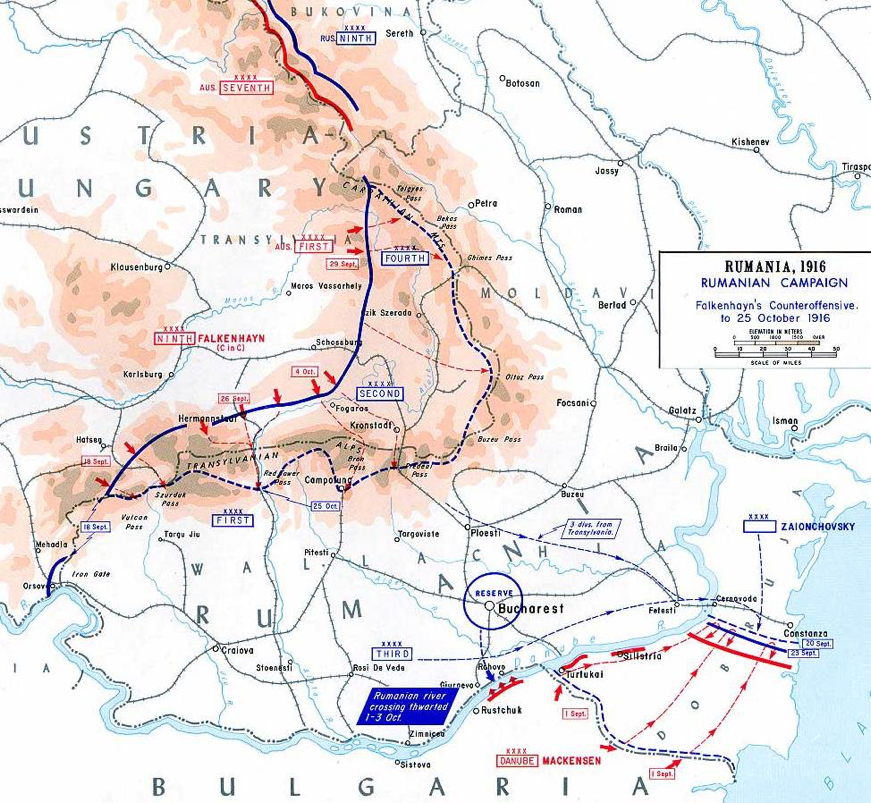
Wikipedia has a good review of Romania’s role in World War I, including this illustration of the borders and campaigns of this front:

Central Powers counterattack, September–October 1916

🗓️
History  •  World War I  •  1916  •  Europe  •  The Guardian

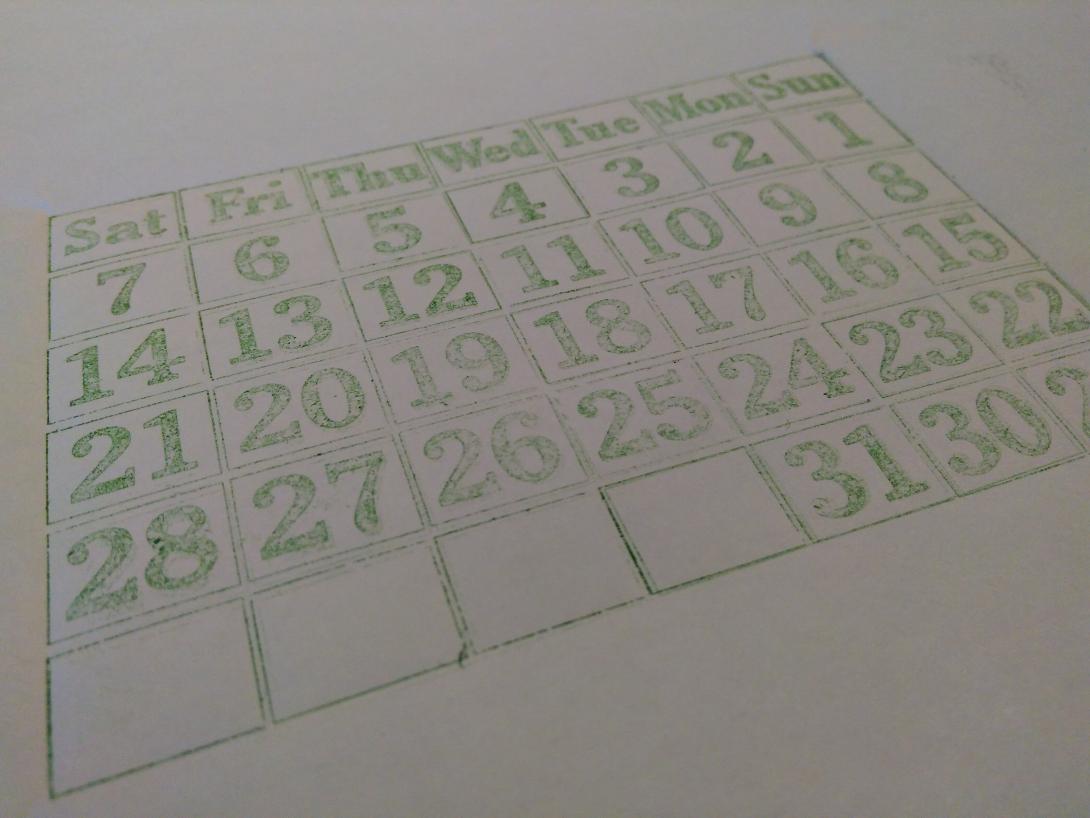
Clearly I have yet to completely grasp how printing works.

🗓️

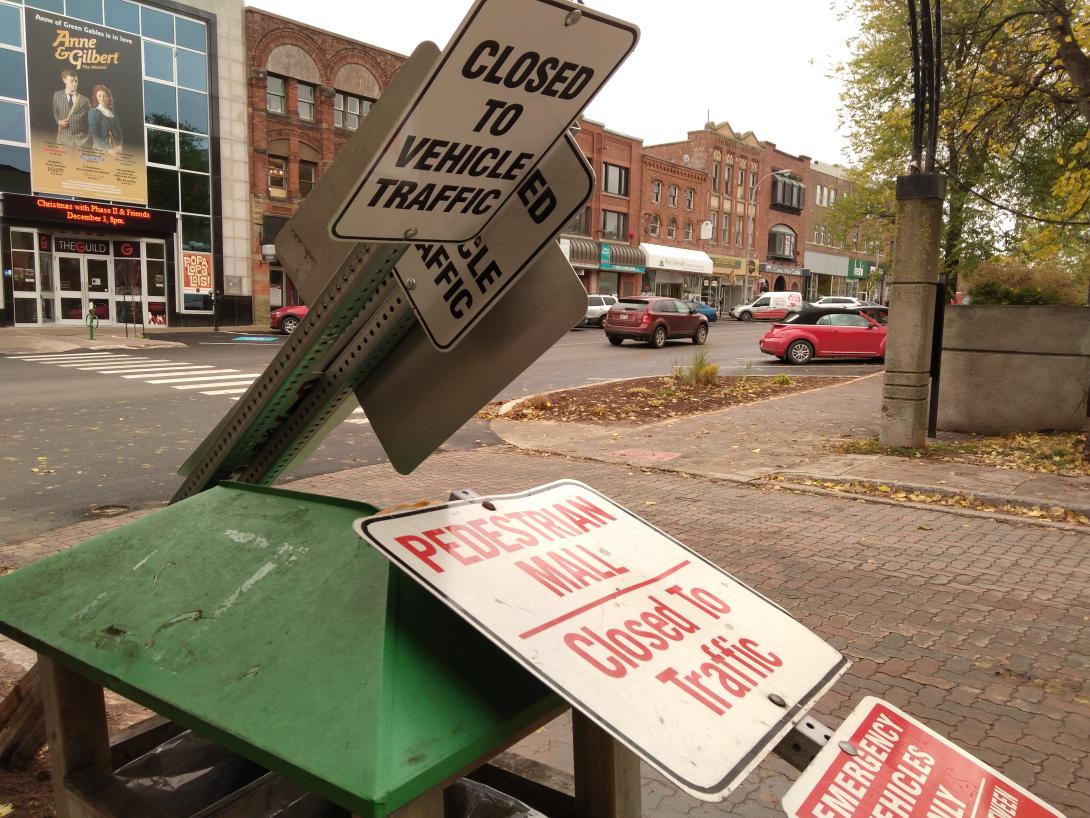
With the end of October comes the opening of Victoria Row in downtown Charlottetown — the spine that connects my house to my office — to vehicles for the winter. Summer truly is over.

🗓️

A few days ago, I mused aloud, both here and on Twitter, “Why do interview subjects say ‘that’s a great question’? I’ve never said that, and never understood it.”

I seems this was an unwitting lie; witness this interview I did just over a month ago with Global News in Halifax about the new edition of The Old Farmer’s Almanac:

To quote from the offending clip:

Interviewer: And you said as well that you’re from PEI, so you’re quite familiar with weather patterns and the way things kind of pan out here in Atlantic Canada with lots of snowfall. I know precipitation-wise, averagely, how much do we typically see here for snowfall?

Me: That’s a good question. I would say “a lot,” which reflects how much I know about the detail of the weather.

That’s a pretty good illustration of what Piya Chattopadhya described as “their brain is telling them to buy time cuz they don’t know what to say.”

I truly had no idea how much snow Prince Edward Island receives in the winter, and I truly did need that few seconds to come up with the best answer I could, which was “a lot.”

Et tu, self?

🗓️
Musing  •  News

Barry Hicken served as Prince Edward Island’s Minister of Environmental Resources in the Catherine Callbeck Liberal government in the mid-1990s, a time when I was working with the province on the first iteration of its website.

Barry was well-regarded in this role, and well known, at least inside the provincial public service, for signing things with a green pen.

I don’t know why this fact about him stuck with me, but it did, and I’ve told the story of “Barry Hicken and his green pen” many times in the years since (I’m the kind of person who has conversations about things like ink and pens, where these things come up more than might be typical).

This morning I was sitting across from a friend in Casa Mia in downtown Charlottetown, and who should come in the door and sit at the next table over, but the selfsame Barry Hicken.

I couldn’t help but bring up the green pen, especially as I myself carry a green pen everywhere I go, one I purchased at MUJI in May in Berlin:

Barry smiled , reached into his pocket, and pulled out his own green pen. Some habits never die.

He then related how his write-in-green-pen system started: when he became Minister, he asked everyone in the office if they had a green pen. When the universal answer was “no,” he replied, “okay, nobody start” and then set down the rule that only he was to use a green pen. As a result, everyone in the department knew that when they saw something in green pen, it had come from the Minister.

Brilliant.

🗓️
Politics  •  Prince Edward Island  •  MUJI

This morning on Twitter I asked “Why do interview subjects say ‘that’s a great question’? I’ve never said that, and never understood it.”

The question brought some interesting responses from journalists themselves, the questioners-being-praised (I’ve corrected some spelling errors to protect the innocent):

Dave Atkinson, freelance journalist:

gives you about seven seconds to think of a real answer. It’s more verbal punctuation than anything.

there are also a bunch of conventions in “tape/talks”, that don’t exist in real conversations. “Well, host-name, blah blah blah…”

I’ve also heard it used in a “oh god, I’ve been asked this so many times” kind of way.

Piya Chattopadhya, CBC Radio and TV Ontario host:

generally their brain is telling them to buy time cuz they don’t know what to say

Steve Rukavina, CBC Montreal reporter (and my brother):

it’s usually a pretty clear signal to me when I’m interviewing that they have no intention of actually answering the question

Kerry Campbell, CBC Prince Edward Island reporter:

I think politicians & bureaucrats told to do that as part of media training. Trying to butter up interviewers? Sound conciliatory?

I remember when the training started to include “say the interviewer’s name as often as possible.” I could live without that

Jessica Doria-Brown, video journalist for CBC Prince Edward Island:

They say it because they think it will butter you up. Instead, it often comes off as condescending and smarmy.

Taken in sum, there’s pretty clear guidance for we-the-potentially-interviewed to simply stop doing this.

You have been warned.

🗓️
News  •  Design

About This Blog

Photo of Peter RukavinaI am . I am a writer, letterpress printer, and a curious person.

To learn more about me, read my /now, look at my bio, listen to audio I’ve posted, read presentations and speeches I’ve written, see things I’ve favourited elsewhere, or get in touch (peter@rukavina.net is the quickest way).

I have been writing here since May 1999: you can explore the 25+ years of blog posts in the archive.

You can subscribe to an RSS feed of posts, an RSS feed of comments, an RSS feed of favourites elsewhere, or a podcast RSS feed that just contains audio posts. You can also receive a daily digests of posts by email. I also publish an OPML blogroll.

Instagram • YouTube • Vimeo • ORCID • OpenStreetMap • Internet Archive • PEI.art • Drupal • Github.