
I’ve just finished reading The Big Necessity: The Unmentionable World of Human Waste and Why It Matters
Water, water everywhere and none of it is infinite. Water is a fixed commodity. At any time in history, the planet contains about 332 million cubic miles of it. Most is salty. Only 2 percent is fresh water and two-thirds of that is unavailable for human use, locked in snow, ice and permafrost. We are using the same water that the dinosaurs drank, and the same water has to make ice creams in Pasadena and the morning frost in Paris. It is limited and it is being wasted.
Some smart feedback from the network on my Facebook + CBC post. First, an anonymous old friend writes:
It would be nice to see something easy and open-source like Facebook that people like my mom and that girl I went to high-school with could use. Perhaps you know of something? I’m glad to have access to the minutiae of your life out in the open. I wish more people outside of Facebook felt they had the skill or platform to do so.
The next message in my in-box was an unknowing response: Olle points to Indymedia and the Enclosure of the Internet, which says, in part:
Activists who would never consider eating meat or crossing a picket line think nothing of putting their entire communications infrastructure into the hands of Google, Yahoo, Microsoft, and Rupert Murdoch. There are enormous practical problems with respect to communications security, data ownership, privacy, censorship of content, and data mining by both corporations and law enforcement agencies. From what I can see everyone from the left-liberal NGOs and environmentalists, to the unions, and over into the extraparliamentary anarchist and communist groups all have the same attitude: there is no problem. Move along. Shut up about it, you’re being a geek.
We need to be explaining these issues to people in a consistent and effective way. Perhaps explaining that it’s like holding all your political meetings at McDonalds, and ensuring that the police come and film you while you do so, would be one approach to take.
I’ve spent the past few days strapping a Drupal around the Quality of Island Life Cooperative. If you’ve ever been curious about my Plazings at Coop board meetings, you’ll find some helpful background information there, with more to come (and if you’re super-keen, you can read what happened at those meetings).
Oliver and I made the final round of site visits to sewer and water stations of the Charlottetown Water and Sewer Department this morning, taking photos and noting exact location of each. The result is a complete map of all locations, with photos.
The only installation the location of which was unclear was the Upton Road Sewer Station, which is listed at 16 McCarville Street: this location is a Diagnostic Chemicals building, and there’s no sewer station in evidence. Please let me know if you have any information about this station and its location.
You can see all 72 photos I took in Flickr.
Our local CBC Radio One morning show, Island Morning, ran a contest this week where listeners were encouraged to join the show’s Facebook group. Of the first 100 listeners to do so, ten were selected at random to receive a prize package of a 2GB USB memory key and a pad and pen set.
If Island Morning had a contest where listeners were encouraged to join the Shoppers Drug Mart Optimum program, or the Canadian Tire Auto Club, or Air Canada Aeroplan we would all be aghast at the commercial activities of a public broadcaster.
And yet, by encouraging listeners to join a Facebook group, Island Morning is engaging in exactly this sort of activity.
Facebook may appear to be a benign public resource, like the public library. But it’s not. It’s a commercial entity that exists fundamentally to harvest psychographic data about its users which it then rents out to advertisers to allow them to market to thinly-sliced psychographic groups. Facebook doesn’t hide this fact: it’s right there, albeit wrapped in “we’re only trying to help”-style language, in their privacy policy:
Facebook may use information in your profile without identifying you as an individual to third parties. We do this for purposes such as aggregating how many people in a network like a band or movie and personalizing advertisements and promotions so that we can provide you Facebook. We believe this benefits you. You can know more about the world around you and, where there are advertisements, they’re more likely to be interesting to you. For example, if you put a favorite movie in your profile, we might serve you an advertisement highlighting a screening of a similar one in your town. But we don’t tell the movie company who you are.
When an Island Morning listener joins the Island Morning Facebook group, they are contributing a part of a psychographic puzzle to Facebook that can then be combined with other information to more finely profile them.
This conceptual bedrock of Facebook is not fundamentally different from the bedrock underlying loyalty programs like Shoppers Drug Mart Optimum: it’s all about harvesting data about consumer behaviour which is then used to target them with finely-tuned marketing messages. Except that while Shoppers may only know that I buy toilet paper and condoms three times a week, Facebook, because it operates under the guise of a sort of safe “gated Internet community,” elicits data on a much more profound and personal level: who I’m friends with, what music I listen to, how I’m feeling. And, now, what radio programs I listen to.
Surely this is something the CBC, as a public broadcaster, should not be aiding and abetting. Indeed if the CBC should be doing anything it’s awakening listeners to the complex often-obscured commercial nature of online sites and the implications on our civil liberties that feeding these services with the minutiae of our lives has.
My current favourite of the so-called “small space” ads in The New Yorker is the one for The Sherry-Netherland:
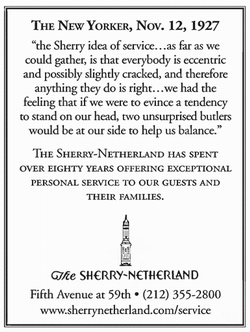
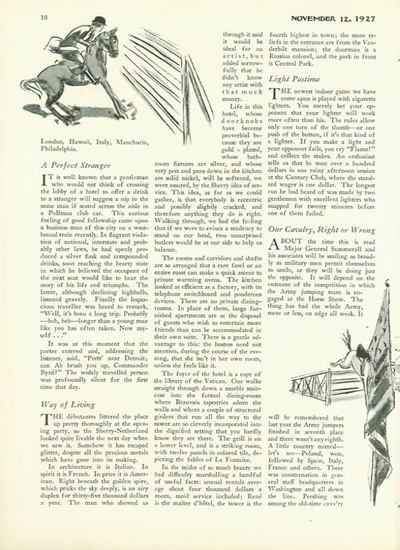
I’d wondered in what context the quote from the magazine appeared, and the release of the digital archive of The New Yorker provided an opportunity to check. It was a Talk of the Town piece on page 18 that begins:
The débutantes littered the place up pretty thoroughly at the opening party, so the Sherry-Netherland looked quite livable the next day when we saw it. Somehow it has escaped glitter, despite all the precious metals which have gone into its making.
This is what the page looks like:
The hotel is also where Christopher Reeve was offered the role of Superman, was the site of the Francis Ford Coppola’s Life Without Zoe contribution to New York Stories, and was a victim of a daring 1972 robbery and hostage taking. The hotel also has a Muppet character named after it. So there’s ample material for additional New Yorker ads.
You can take a look at the hotel in Google Streetview.
The rate for the “small space” ads in The New Yorker, by the way, is $3,525 an inch if you purchase just one but as low as $2,679 and inch if you contract for 96.
If you happen to find yourself in Dushanbe, the capital city of Tajikistan, needing to drive up to Tashkent, the capital of Uzbekistan, you can take the scenic M34 highway.
Eventually you will come to the Anzob Pass, about which the foreign office says:
The Anzob Pass is still closed but it is possible to drive from Dushanbe to the North via a tunnel still under construction. Embassy staff are prohibited from using this tunnel when driving on official business. This road is particularly dangerous in winter due to icy conditions and frequent avalanches and drivers can be trapped for a long time if caught in an avalanche because of the uninhabited mountain terrain.
So if the Anzob Pass is closed, you can take the tunnel. Although the Anzob Tunnel is “still under construction,” apparently it’s possible, by times, to drive through it, as demonstrated by this this round-the-world cyclist who shot video of his trip through the tunnel.
If the Anzob Pass happens to be open, it will take some time; according to the United Nations Development Program you can:
Drive from Tashkent via Khujand and over the passes to Dushanbe - spectacular, best done by driving first to Khujand and spending the night there in the UNDP guest-house, then leaving the following morning. The drive from Khujand takes 7 hours, but one should not hurry, so allow a full day. However, the southern of the two passes, the Anzob pass. Normally the pass opens for regular traffic in the last week of May or thereabouts.
I have come to know all this because I suddenly became entranced with the idea of attending BarCamp in Dushanbe on November 26, a dream that, alas, I’m fairly confident I won’t realize.
Nokia unveiled the beta of a new location-based micro-blogging tool today called Friend View. Although it bears some conceptual similarly to Plazes, it’s actually a project of Nokia Research, and isn’t based on the Plazes platform.
There are two parts to Friend View, a mobile client that runs on S60 devices (like my Nokia N95) that pulls location data from cell id or GPS and allows status updates from the road (via wifi or GSM data connection) and a website that is like a stripped-down Twitter, albeit with a slippy map that georeferences the “tweets” (“fveets”) of you and your friends.
With a little bit of reverse engineering I was able to add Friend View support to PresenceRouter, and I’ve just released version 2.97 with this baked in. To start off with I’ve concentrated authentication and status updating, so this initial support doesn’t actually involve updating the Friend View location from the Plazes location, just the status message.
Feedback welcome. If you want to befriend my on Friend View, I am ruk.
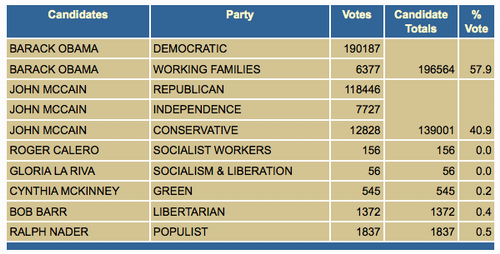
I voted for Barack Obama on the Working Families ticket in Monroe County, New York. Unofficial results show Obama with 6,377 Working Families votes, plus 190,187 Democratic votes, for a total of 57.9% of the popular vote to John McCain’s 40.9%.
David Mamet and Shawn Ryan were interviewed about The Unit, the CBS drama they created in 2006 (air Sunday nights this season).
About This Blog
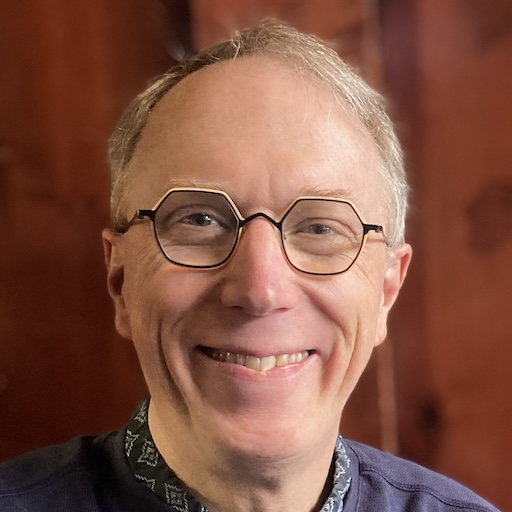 I am Peter Rukavina and this is my blog. I am a writer, letterpress printer, and a curious person.
To learn more about me, read my /now, look at my bio, listen to audio I’ve posted, read presentations and speeches I’ve written, or get in touch (peter@rukavina.net is the quickest way).
I have been writing here since May 1999: you can explore the 25+ years of blog posts in the archive.
You can subscribe to an RSS feed of posts, an RSS feed of comments, or a podcast RSS feed that just contains audio posts. You can also receive a daily digests of posts by email.