
I happened by a page that listed cashback rewards for a particular credit card the other day, and at the bottom I found this fine print:
To earn the rate in each category, eligible purchases must be made with merchants assigned to that category. Categories are assigned based on merchant category codes (MCC) set by Mastercard. The payment networks assign each merchant to one MCC, even if they offer a variety of products and services. For example, gas stations, grocery stores and drug stores all sell several different products, but all purchases from these merchants — regardless of the type of product — are always categorized under the merchants MCC.
I’d never heard of merchant category codes before, and so got curious.
It turns out that, by virtue of accepting credit cards via Stripe for our Queen Square Press online shop, we have one of our own, 2741 for Miscellaneous Publishing and Printing.
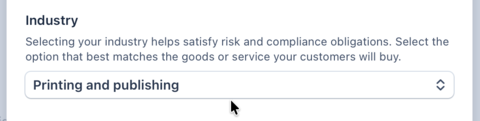
I had to set this when I first signed up for a Stripe account, and I wasn’t aware that it might affect things like the interchange fee.
Or, as in the case of the credit card I was looking at, whether or not purchasers would receive cashback rewards for their purchases. In our case, they won’t: 2741 isn’t in the list of eligible MCCs.
Confusingly—a word that can be used for a lot of credit card-related things—per Stripe:
A frustrating aspect of MCCs is that there is not one universally accepted set of merchant category codes used by all entities and organisations.
Also confusingly, although whole industries—5812, Eating Places and Restaurants—are covered by a single MCC, in certain industries, like hotels and restaurants, one MCC is assigned to individual businesses, like 3009, Air Canada and 3600, Saddlebrook Resort–Tampa.
It all has the flavour of something made up on the fly, as it all likely was, with edge cases and exceptions evolving over time. A good reminder that while international standards bodies can appear arcane and overly complex, what they produce is, well, standard.
 I am
I am  You can subscribe to an